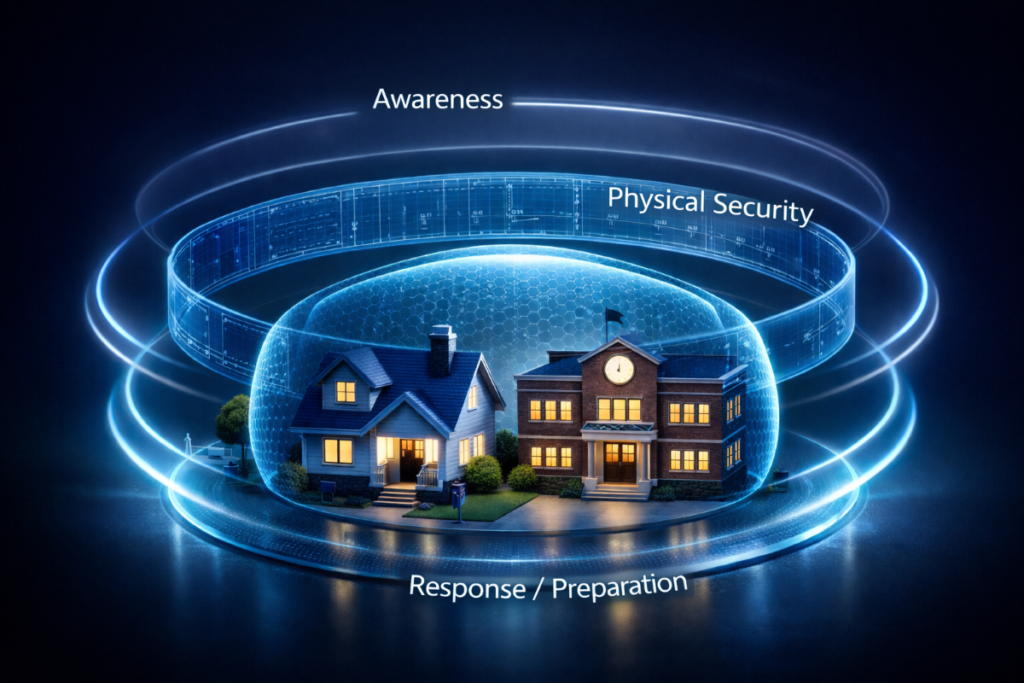
Layered security means using multiple lines of protection instead of relying on one product or one decision to do everything. The goal is simple: create backup at every critical point so if one measure is delayed, limited, or bypassed, another layer is already working to reduce risk.
That matters because real emergencies do not follow a perfect script. A camera may record an event, but it does not physically stop entry. A lock may secure a door, but it works best when paired with a strong frame, protected glass, and a clear response plan.
At home, that could mean combining safety locks for doors, reinforced entry points, security window film, and practiced family routines. In schools, it means pairing physical classroom protection with clear procedures, staff training, and dependable lockdown hardware that works without delay.
The strongest safety strategy is not built on one feature. It is built on connected layers that support each other. When homes and schools prepare this way, they create a more reliable response and a safer environment when seconds matter most.
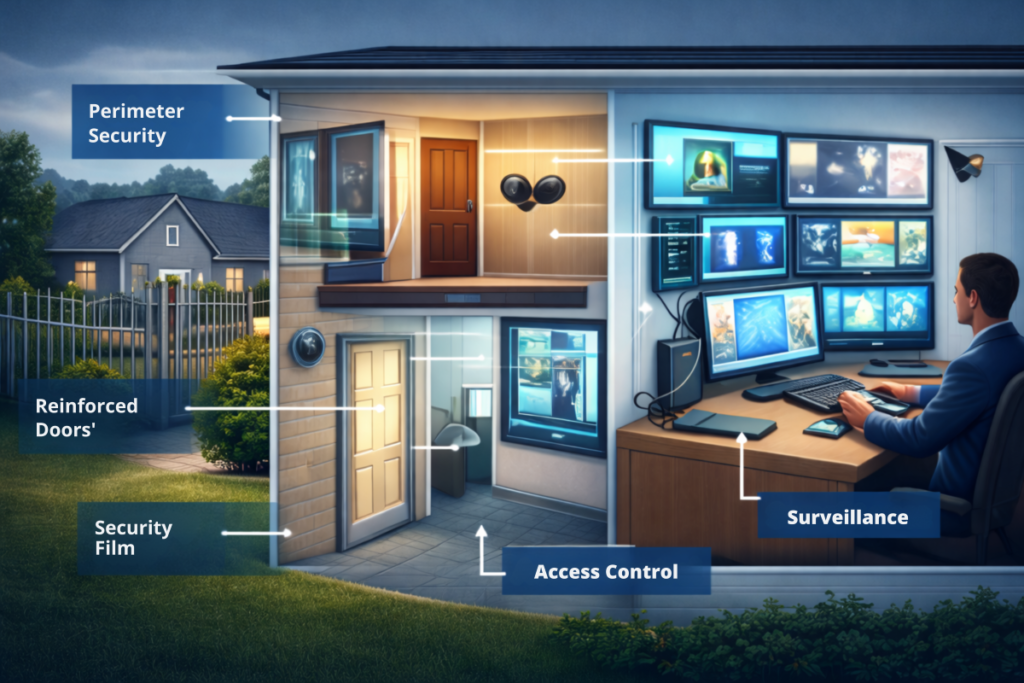
What Does Layered Security Mean?
Layered security means building protection through multiple elements that work together. Instead of depending on a single lock, camera, or policy, this approach creates overlapping support at the points where people are most vulnerable.
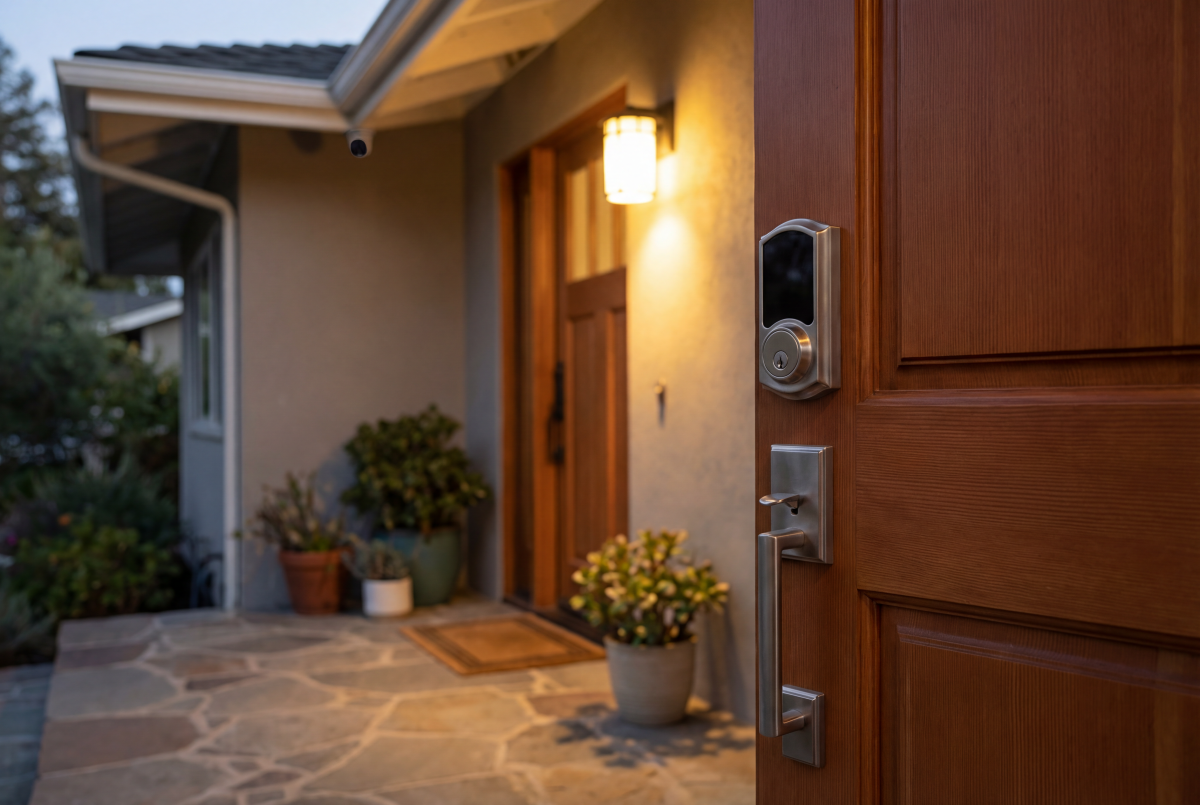
At home, the first layer often begins at the entry. Strong doors, reinforced frames, dependable locking hardware, and protected glass all contribute to resistance. If one part is weak, the rest of the system becomes less effective. That is why a lock alone is rarely enough.
In schools, layered security works the same way. Policies and drills matter, but they cannot replace immediate physical protection at the classroom door. A school safety and security plan becomes stronger when reliable door hardware, staff readiness, communication, and building awareness all support one another.
The value of this approach is consistency. Each layer adds stability, and together those layers help people respond faster and with more confidence.
Why Physical Protection Must Come First
Physical protection is the foundation of layered security because it creates the first real barrier between people and a threat. If the physical layer is weak, every other layer becomes less dependable.
At home, that includes strong doors, quality door hardware, reinforced frames, and window protection. Security window film can add another level of resistance at vulnerable glass areas, while safety locks for doors help strengthen the point of entry without making daily use difficult.
In schools, the same principle applies at a higher level of urgency. Classroom door locks, emergency classroom locks, and lockdown locks should support fast action from inside the room. In a stressful moment, staff need hardware that works immediately and consistently, without relying on power, Wi Fi, or extra steps.
Technology can add support, but it should not replace physical protection. The barrier at the door is still what matters most when immediate security is needed.
How Awareness And Preparedness Strengthen Every Layer
Hardware is essential, but layered security works best when people know what to do and when to do it. Awareness and preparedness turn physical tools into a complete safety strategy.
At home, that means having a clear family plan. People should know how to secure entry points, where to go during an emergency, and how to communicate if something unexpected happens. The more familiar the routine is, the easier it becomes to act without panic.
In schools, preparation is just as important. Staff members need clear procedures and hardware they understand how to use. Training is more effective when the locking method is simple, repeatable, and easy to perform under stress.
Strong Preparedness Includes
- Clear response steps
- Familiar routines
- Simple communication
- Reliable hardware
Preparedness does not need to be complicated. It needs to be realistic, easy to remember, and supported by physical solutions that work the same way every time.
Why Schools Need More Than Technology Alone
Technology can improve visibility, communication, and access control, but it is only one part of a complete safety plan. Schools are safer when technology supports physical security instead of trying to replace it.
Cameras, alerts, and monitoring systems can help staff understand what is happening. They can support awareness, build oversight, and administrative control. These are valuable functions, especially across larger campuses and multiple entry points.
Still, during a classroom emergency, the most important need is immediate protection at the door. A classroom must be able to secure quickly from the inside with dependable tools. If staff have to troubleshoot a device, wait on a system, or rely on outside infrastructure, response time can be lost.
That is why layered security in schools should always include direct physical protection. When classroom security hardware is simple and dependable, staff can focus on protecting students and following procedures instead of managing equipment.
How FlipLok Fits A Layered Security Strategy
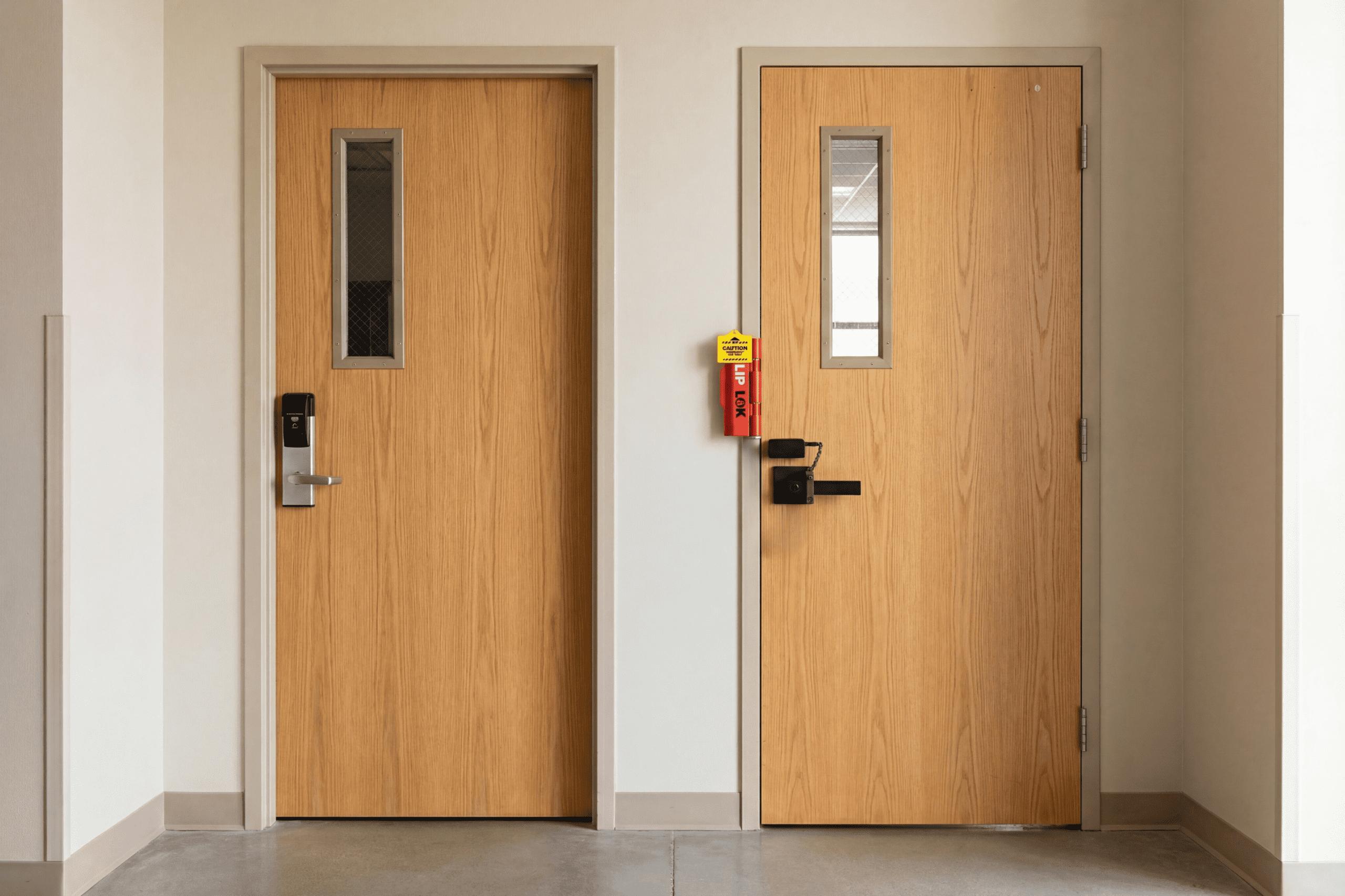
FlipLok supports layered security by strengthening the physical protection layer where it matters most, at the door. For schools, that means a classroom can be secured from inside the room with one motion, helping staff act quickly in a high-stress situation.
Because FlipLok does not rely on power, electronics, or connectivity, it fits well into a broader plan that may also include communication tools, monitoring systems, and emergency procedures. It adds dependable physical resistance without adding unnecessary complexity.
FlipLok also supports accessibility and ease of use. Its ADA-compliant design helps people of different heights and abilities operate it more confidently, which matters during fast moving emergencies. Once engaged, it is designed to create strong resistance at the door.
Layered security is strongest when each part has a clear role. FlipLok helps provide that role by giving schools a simple, immediate, and reliable layer of classroom protection.
FAQ
What Is Layered Security For Homes And Schools?
Layered security is a safety approach that uses multiple forms of protection instead of depending on one solution. At home, that can include door hardware, reinforced frames, window protection, and family planning. In schools, it often includes classroom door security, staff procedures, communication systems, and emergency preparedness. Helpful public resources include SchoolSafety.gov and CISA school safety guidance.
Why Is One Security Product Not Enough?
One product can help, but it cannot address every weakness on its own. A lock does not fix weak glass, and a camera does not physically stop entry. Layered security works better because each measure supports another one. That creates a more dependable response when conditions change quickly, or one layer is limited.
How Do Safety Locks For Doors Fit Into Layered Security?
Safety locks for doors strengthen an important entry point, but they work best as part of a larger plan. At home, they should be paired with strong frames, clear routines, and other protective measures. In schools, dependable classroom door locks and lockdown locks should be supported by training, communication, and emergency procedures.
Why Are Simple Security Solutions Important In Emergencies?
Simple solutions are easier to remember and easier to use under stress. During an emergency, people need to act quickly without confusion or extra steps. Hardware that works with a clear, repeatable action supports better response and stronger confidence. Accessibility standards and door hardware guidance can also be reviewed through [ADA Standards] and [NFPA resources].
Can Technology Still Be Part Of A Layered Plan?
Yes. Technology can improve awareness, monitoring, and communication, which makes it a valuable support layer. The key is using it alongside physical protection instead of relying on it alone. In both homes and schools, the strongest approach combines dependable hardware with clear preparedness and practical response planning.
Why Layered Security Matters
Layered security works because it builds protection through dependable, connected measures instead of placing all trust in one product. At home, that can mean stronger entry points, protected glass, and familiar routines. In schools, it means combining physical classroom protection, clear procedures, and reliable emergency readiness.
FlipLok supports that strategy by adding a simple, immediate, and dependable layer at the classroom door. Contact us for more information and to learn more about our school safety solution and how layered security can strengthen protection when it matters most.