Fast enough during an emergency is not about panic or speed for the sake of speed. It is about knowing exactly what to do and being able to do it without hesitation. In real emergencies, the difference between safety and harm is often measured in seconds, but those seconds are shaped by preparation, clarity, and reliable safety measures, not adrenaline alone.
When people assume that reacting instantly is the goal, they often overlook what actually slows response time. Confusion, uncertainty, and poorly designed safety tools create hesitation. Fast enough means recognizing the situation, making one clear decision, and taking the correct action immediately.
Why “Fast Enough During an Emergency” Depends on Preparation
Hesitation is one of the biggest threats during emergencies. People freeze when they are unsure what to do or worry about making the wrong choice. Preparation removes that pause.
When adults and children practice simple, repeatable actions, the response becomes automatic. This is especially true in schools, where classroom security relies on teachers being able to act quickly under stress. Clear procedures, practiced routines, and intuitive safety tools allow people to respond without overthinking.
According to the Federal Emergency Management Agency (FEMA), preparedness and familiarity with emergency actions significantly improve response outcomes during high-stress events. You can review FEMA’s guidance on emergency preparedness here: https://www.ready.gov
Fast Enough During an Emergency Requires the Right Tools
Fast enough during an emergency is not possible if safety tools slow people down.
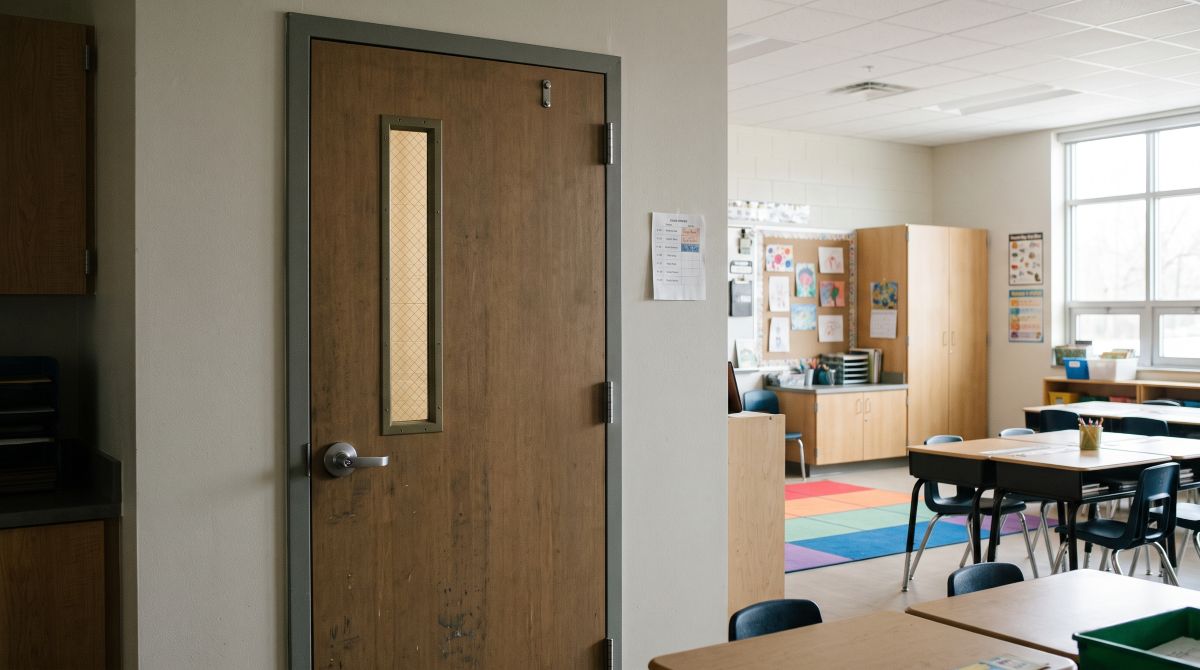
In classrooms, a door that can be secured from inside the room allows teachers to act immediately without stepping into the hallway or waiting for instructions. Emergency classroom locks and lockdown locks designed for schools support correct action because they work the same way every time. They do not rely on power, Wi-Fi, batteries, or complex steps.
When safety tools require troubleshooting, fine motor skills, or multiple decisions, response time suffers. Simple, mechanical solutions reduce hesitation and support faster, safer action.
Different Emergencies Require Different Response Speeds
Fast enough during an emergency looks different depending on the situation. A fire, a medical emergency, or a security threat each demands a different first step.
Teaching that one response does not fit every emergency helps prevent mistakes caused by rushing. Understanding the first correct action matters more than moving quickly without direction. This is why emergency planning should focus on clarity, not speed alone.
Why Classroom Design Affects Emergency Response Time
In school safety planning, design matters. When teachers know how to secure their classroom, when students know where to go, and when physical safety measures work instantly, valuable seconds are preserved.
Outward-opening classroom doors, for example, require security solutions designed specifically for that condition. When locks and doors function together as a system, response time improves naturally and predictably.
To learn more about purpose-built school safety hardware designed for real emergency conditions, you can explore FlipLok’s commercial school safety lock solutions here: FlipLok School Safety Locks
Fast Enough Is About Readiness, Not Fear
Teaching the concept of fast enough during an emergency shifts the focus from fear to readiness. Instead of asking how fast someone can move, the better question is how quickly they can think clearly and act correctly.
Emergencies are unpredictable, but response does not have to be. When people understand their role, trust the plan, and have reliable safety tools in place, fast enough becomes achievable and lifesaving.