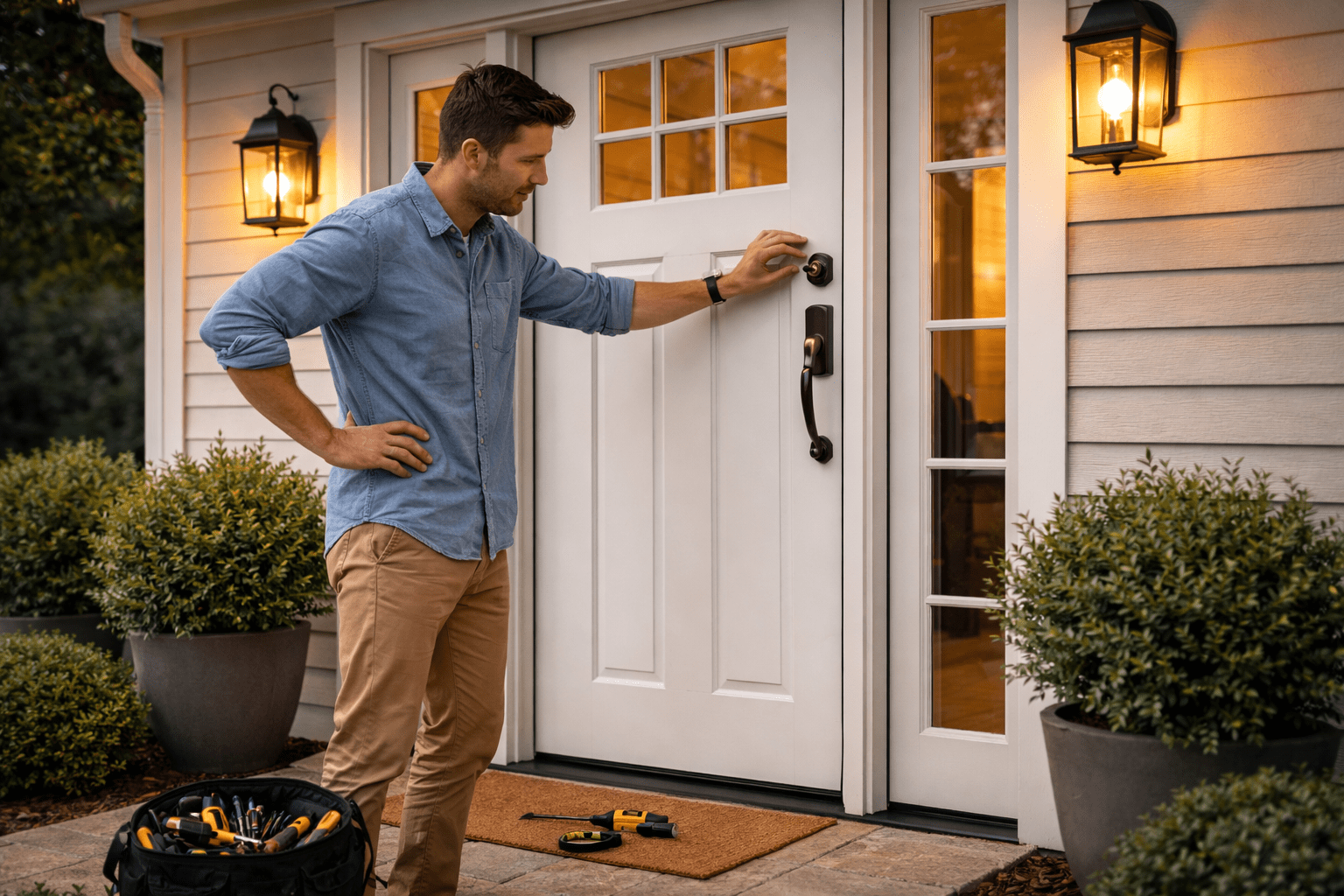
The first line of defense for your home starts at the door. Doors are the most accessible and safest locations to provide an upgrade to reliability. A majority of safety plans benefit when they begin at the door. There, a small number of upgrades can provide significant improvements without requiring extensive systems.
A strong lock provides much of the protection; however, locks comprise only one portion of the barrier. The door, the surrounding frame, the strike location, the hinges, and the glass located in proximity to the door all function together. If one component of the system is weak, the remaining portions of the system become easier to breach, even if the lock is high-quality.
Therefore, effective safety is typically more about being practical rather than extreme. In order to achieve this goal, a homeowner’s goal should be to increase the strength of the entry point in such a manner that it feels natural, consistent, and easily maintained.
As a result, once a homeowner focuses on the door as their primary safety concern, a dependable foundation has been established. Following that development, additional elements, lighting, increased awareness, routines, and preparedness, can then become more effective.
Why the Door Is Important, More Than Most Homeowners Realize
Every day, you make decisions regarding your home’s safety through its door. Additionally, almost all attempted entries into an unwanted space begin with a door. As such, investing some attention toward strengthening your home’s door is crucial.
When a door is solidly constructed and properly anchored, it produces time. That time allows individuals to respond calmly, retreat to safer spaces within their home, and call for assistance if necessary. When a door rapidly fails to protect against unauthorized entry, that time disappears.
Common Mistakes Regarding Doors
Many homeowners assume that a lock will serve as their sole means of protection. Others neglect to evaluate how well their door fits within its frame. Finally, many fail to recognize that glass panels and loose hardware can represent potential weaknesses within their door.
When you address your home’s entry point as a comprehensive system and not merely as a single piece of hardware, you can create a more secure living environment. This is an important part of treating the door as the first line of defense for your home.
Basic Checks Prior to Upgrading Your Door Hardware
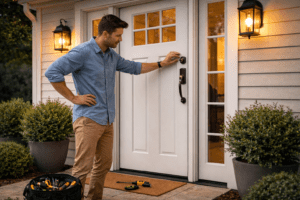
Prior to making any additions to your existing door hardware, conduct basic inspections. By simply correcting any misalignment issues and tightening your hardware, you may find that your home can immediately experience improved levels of security.
Examine:
- Latch engagement: Ensure that the latch completely engages
- Loose hinges, hinges that operate freely or wobble
- Gaps along the edges of the door
- Smooth closure, the door operates smoothly
Should your door stick, shift, or not engage cleanly when closing, even a high-quality lock will not function effectively. Correcting these issues first ensures that each subsequent addition will function more effectively and dependably.
In the event that you rent your property, inform your landlord or property manager of any door alignment or latch issues so that he or she may correct them. Oftentimes, corrections require little to no permanent alterations to the door or hardware.
The Strength of an Entire Door System
A door is only as strong as its individual components. Common failure points exist in both the strike plate and anchor hardware due to the fact that they absorb forces when the door is subjected to pressure.
Anchor reinforcement of strike plates and proper anchorage of hardware enhance resistance. Furthermore, hinge performance is also critical, particularly when dealing with heavily utilized doors. Over time, weakness in hinge fasteners creates opportunities for leverage that can lead to breaching.
Therefore, the determination of entry protection based solely upon visual appeal is misguided. A seemingly sturdy door could contain vulnerable anchorages or worn out components that would compromise its overall effectiveness and longevity. Improvements to these components will enable the door to withstand greater amounts of force and provide greater reliability.
Avoid Disregarding the Glass Located Near Doors
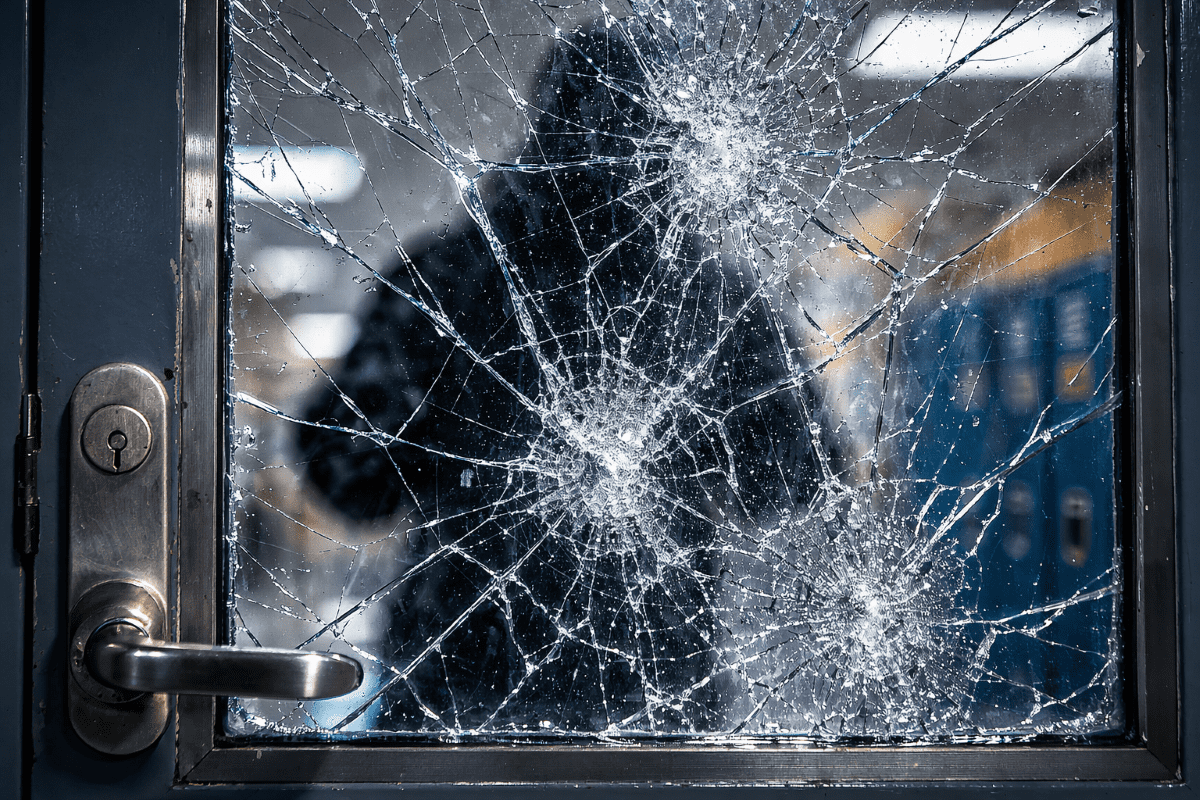
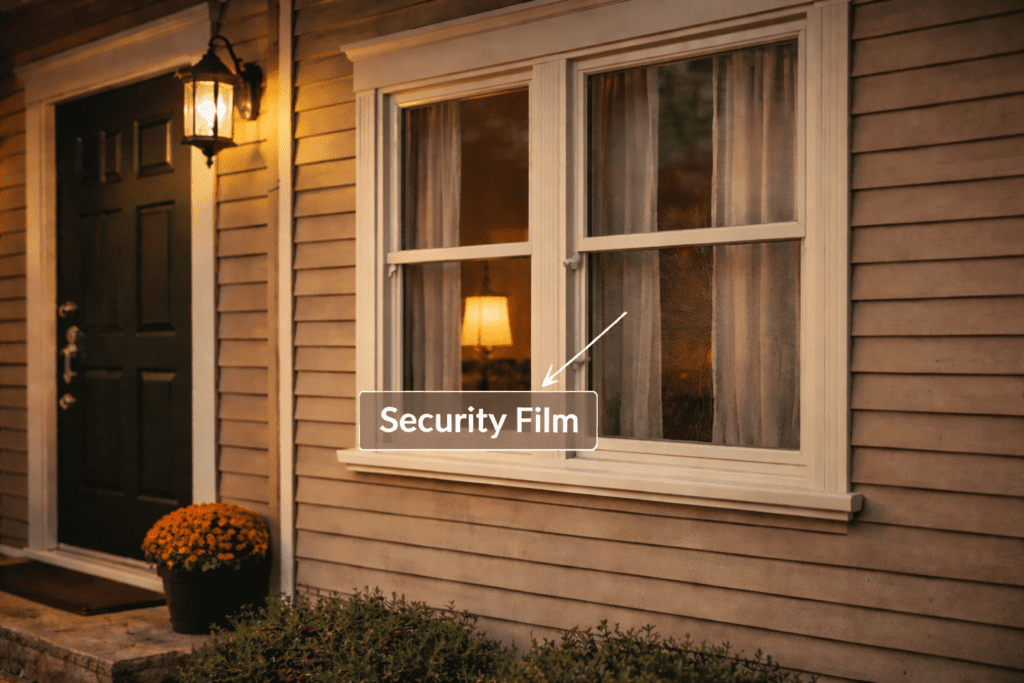
Glass positioned adjacent to entry points represents one of the most frequently neglected vulnerabilities. Side lights, doors with glass panes, and adjacent windows offer expedited pathways to bypass locked doors.
If there exists glass adjacent to your home’s entry point or entry points, consider implementing privacy enhancing solutions and barrier reinforcing strategies to limit visibility and bolster barriers. For example, many homeowners have applied security films designed specifically for glass surfaces to impede shattering glass fragments caused by impacts, thereby slowing entry and potentially reducing injuries from broken glass shards.
You do not necessarily need to replace doors or windows to improve this aspect of security. Simply focusing on targeted enhancements can create stronger barriers while maintaining normalcy in your daily activities.
Daily Routines Enhance the Safety Provided Through a Secure Door
An optimal level of safety provided by a secure door system is significantly enhanced by developing consistent habits. Consistent habits eliminate the decision-making processes associated with actions taken in a specific situation.
Practical examples of safe practices include always using the deadbolt when exiting your home, confirming that the latch has engaged prior to departing, utilizing a peephole or viewing window prior to opening the door for visitors, and controlling access to house keys, collectively contributing to creating safe practices that promote increased confidence in the security features built into a particular door.
Safe Practices Associated With the Daily Use of a Door
- Always use the deadbolt
- Ensure latch engages
- Utilize peepholes or viewing windows before opening the door
- Control keys
These practices are simple enough to develop into consistent behavior patterns and contribute toward increasing confidence in the ability of a particular door to prevent unauthorized access into your home.
Implement Additional Layers Around a Secure Door System
Once your entrance door is secure, additional layers become more productive and more valuable. Properly illuminated areas near entry points allow for improved visibility and clarity in understanding what lies ahead when entering or exiting your home at night. Creating clear paths for travel through unobstructed areas minimizes confusion and promotes smoother transitions between different areas within your home. Having developed a family emergency response plan fosters a sense of familiarity among members of the household, allowing for a more rapid response in emergency situations.
FAQs
What defines an effective door as your home’s initial layer of defense?
An effective door is a door that is installed in the correct manner, is able to close completely and latch every time you want it to; has reliable locks and hardware, has a working strike plate and area; and a hinge assembly that all function as an overall system. Maintaining a consistent method of closing and latching your door will help reinforce this layer of security.
Must I replace my door in order for it to be more secure?
No. Although many doors could benefit from some type of repair or reinforcement to their existing structure, there are many ways to improve upon what already exists. Such methods include adjusting the proper fit within the door frame, adding additional reinforcing hardware, securing the door to the surrounding walls or studs through means such as screws or bolts, and simply changing some of your daily habits regarding how you operate your door.
If your rental property’s door does not feel as secure as you want, what should you do?
You should immediately contact your landlord or property manager and describe the issue or issues you have found concerning the door’s ability to properly align, close, and or stay closed. In many cases, property management companies can make adjustments or upgrades without violating your lease agreement. Additionally, many renters find they can use products designed specifically for rental properties that provide added strength and security without damaging the door.
Will adding light near doors actually provide any additional benefit, even if your door system is very strong?
Yes. While a well-secured door system provides a high level of security, adding light near the entrance areas helps increase awareness and decreases the opportunity for concealing activity around those entrances. Therefore, when combined with a strong door system, lighting increases both layers’ effectiveness.
What improvements can most homes complete within a short period of time?
Some of the quickest improvements homeowners can make involve ensuring that the door closes completely, developing a consistent deadbolt usage habit, and making other small repairs and habits to the door system. These types of simple improvements typically produce results quickly.
A Door Is the First Line of Defense
The door is the initial layer of defense for your home. A first line of defense for your home is the first item or barrier your home uses to protect you. When a home’s door system is secure, the lock is reliable, and your habits are consistent, maintaining safety at home becomes much easier, safer, and more trustworthy.
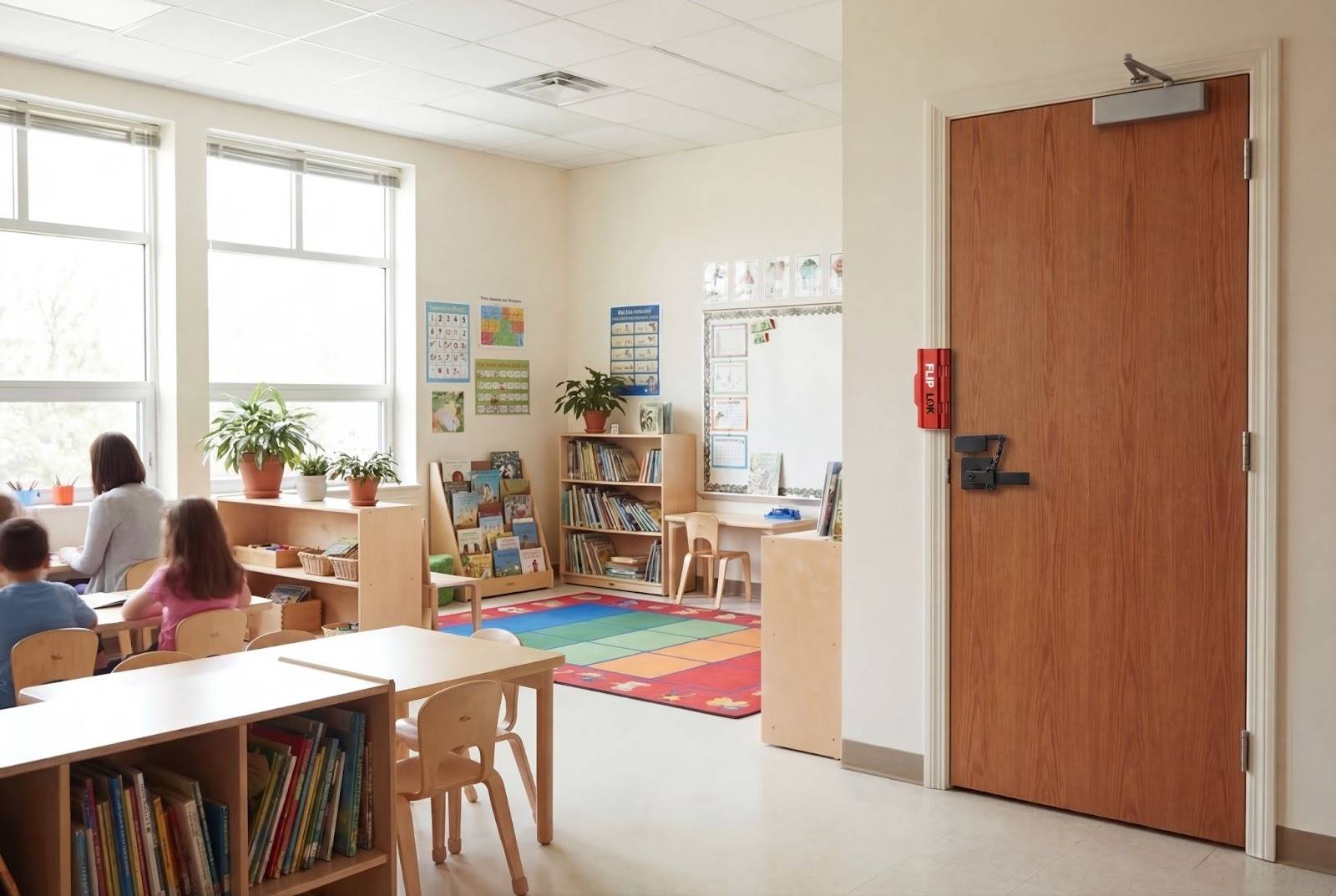
At FlipLok, we believe the first line of defense for your home should be practical, dependable, and easy to understand. We would welcome the opportunity to discuss our residential solutions further with you and show how strengthening your door system as part of a layered safety plan can help create greater protection, confidence, and peace of mind within your home.