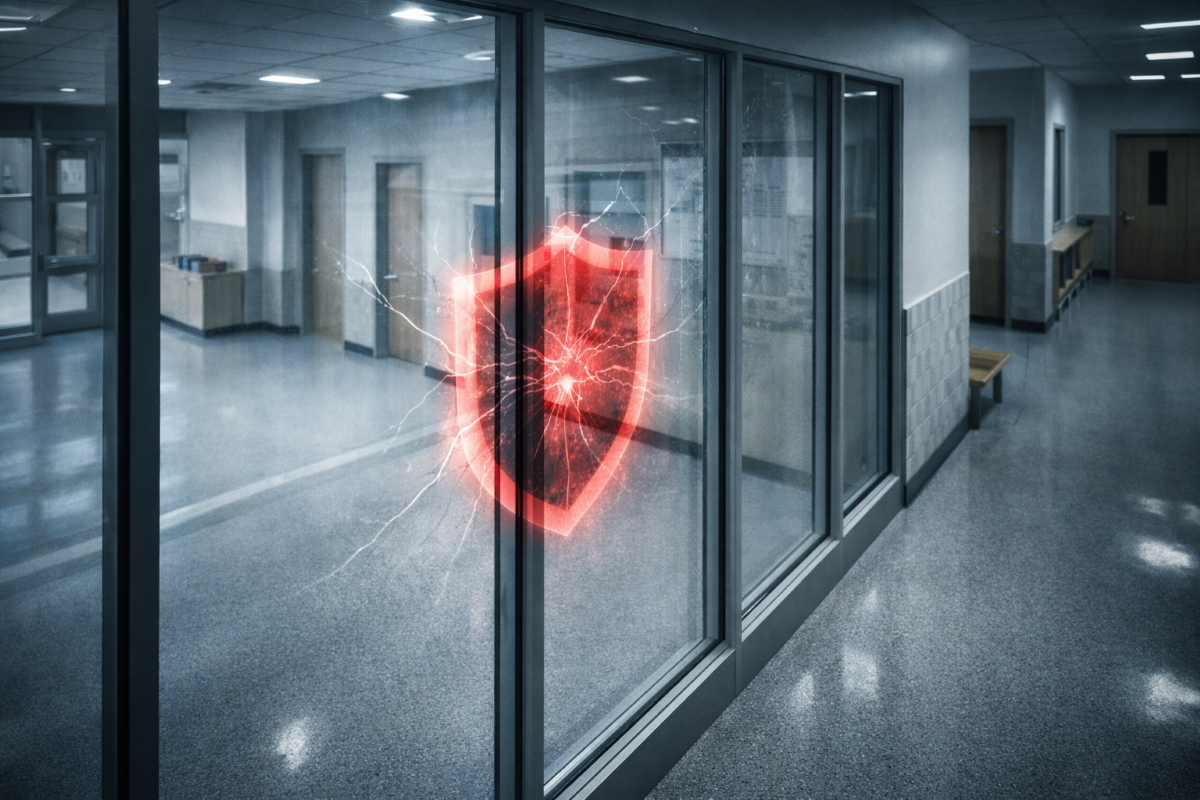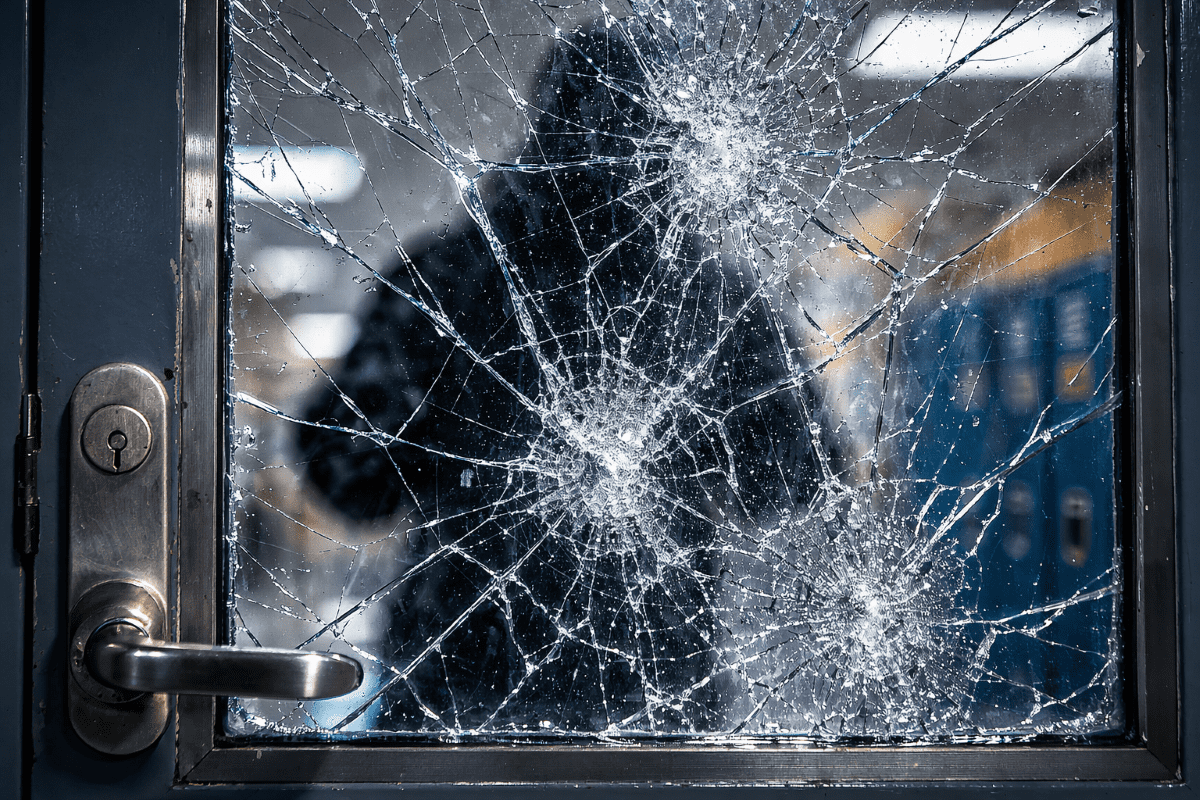
Glass shatters during an invasion attempt faster than many schools expect, and that rapid failure can happen before the doors and other hardware components have failed. As a result, even a properly locked door may no longer act as a physical barrier if the surrounding glazing has been breached.
Broken glass creates secondary risks through potential injuries, disruption of calm responses by creating distractions and noise, and changing the ability of a classroom or hallway to be safely utilized immediately after the breach. Many schools have invested in various aspects of their entry systems, including locks, access controls, and procedure-based protocols. However, glass remains largely absent from discussions regarding entry systems. By viewing glazing as a component of the protective perimeter, schools can begin to address some of the fastest-failing points and create environments that allow for greater consistency and predictability when seconds count.
How Does Glass Failure Change the Timelines Associated With an Incident?
An incident characterized as a delayed-entry event can become an immediate-access incident based on the rapid failure of glass. This is especially true for vision panels, sidelights, and adjacent windows, as they are typically located near door hardware and can create a bypass opportunity regardless of whether the door itself is locked.
Time is critical in many safety plans. Time allows staff to secure rooms, direct student movements, and implement emergency procedures using established protocols rather than relying solely on individual initiative and decision making. While the overall effectiveness of a safety plan may remain intact when glass failures rapidly occur, the execution of those plans becomes increasingly difficult to accomplish in a calm and controlled manner.
To view additional information related to planning and implementing effective safety practices, schools may visit SchoolSafety.gov or review CISA’s K–12 safety guidance.
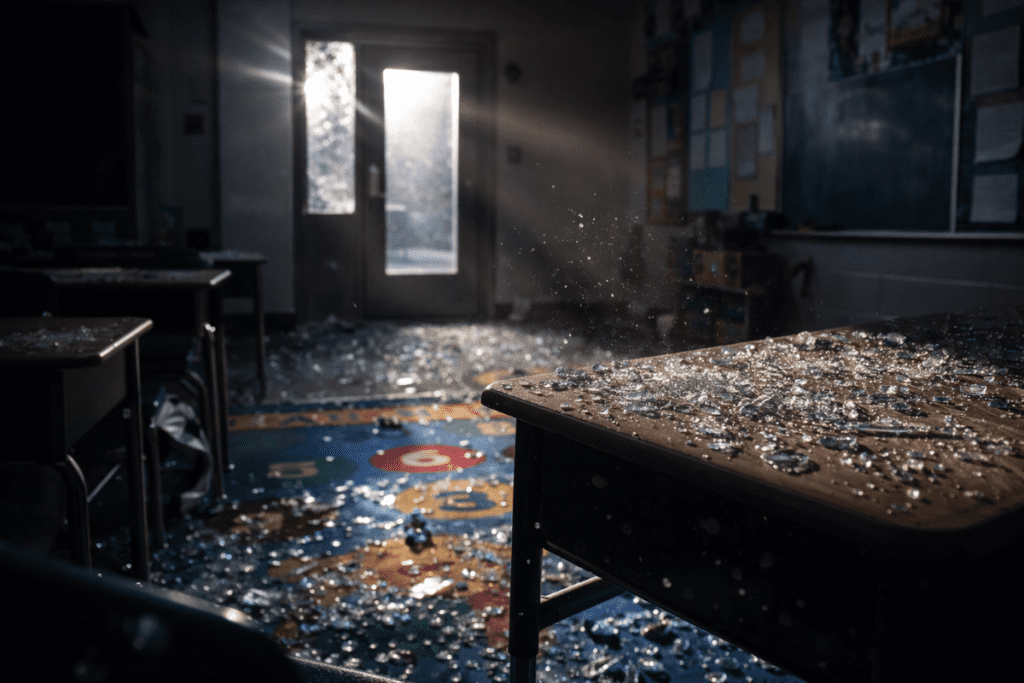
Immediate Safety Concerns Following a Breach of Glass
Following a breach of glass, the first concern is people. Broken glass presents a variety of hazards, including lacerations, slipping hazards, and panicked students and staff moving within an environment with broken glass. Additionally, the noise created by breaking glass can contribute to confusion among students, parents, and staff and can hinder staff members from providing clear instructions.
In addition to presenting hazards for students, broken glass in classrooms can limit the number of viable options for students to move to a safe location. In corridors, halls, and near entries or breach points, broken glass can restrict student, parent, and staff movement during evacuations and create delays for staff attempting to respond effectively to a crisis.
School districts that have developed strategies to account for these concerns often focus on limiting fragmentation and eliminating opportunities for common glazing areas to become fast failure points. Resources provided by the Centers for Disease Control and Prevention, focusing on preventing injuries and reducing hazards in educational settings, can provide useful context for developing comprehensive hazard mitigation and prevention strategies.
Where Are Schools Most Vulnerable to Being Targeted?
While all glass carries inherent vulnerabilities, certain types of glass present significantly higher levels of risk than others. Generally speaking, the highest-risk areas are those that either serve as part of a locking boundary or serve as an access point to occupied areas.
Some examples of high-risk glazing areas include:
• Door vision panels
• Door sidelights
• Main entrance glazing
• Interior corridor windows
One possible method to determine which areas to prioritize first involves asking one question: Will the glass shatter compromise your ability to quickly lock down or secure a room or area? If the answer is yes, then that area should be placed at the top of the list for evaluation. This is especially important when glass shatters during an invasion attempt, and staff must respond immediately.
Can Schools Make Significant Improvements to Glazing Security Without Major Construction?
School districts do not always require significant renovations to improve glazing-related security issues. Many communities begin with cost-effective upgrades that maintain visual integrity and normal operational functions while improving their overall security boundaries.
By utilizing a multi-layered approach, schools can evaluate their door performance as a complete system including the door, frame, hardware, and surrounding glazing. When each layer works in concert, schools can achieve increased reliability in delaying intruders and improved predictability in how their building performs under stress.
As schools contemplate upgrading their hardware, they must also take into consideration compliance with accessible design standards and ensuring safe egress routes. ADA standards provide valuable information concerning accessible design expectations, and NFPA publications are frequently cited references for designing buildings that meet life safety codes and egress requirements.
How Does FlipLok Fit Within a Multi-Layered Approach for Securing Door and Glass Boundaries?
Protecting your school’s glass is one layer. Protecting the interior of your school is another layer. When both layers are viewed as part of the school’s entry boundary, staff can react with confidence knowing there are fewer unknown variables and less reason to hesitate when seconds count.
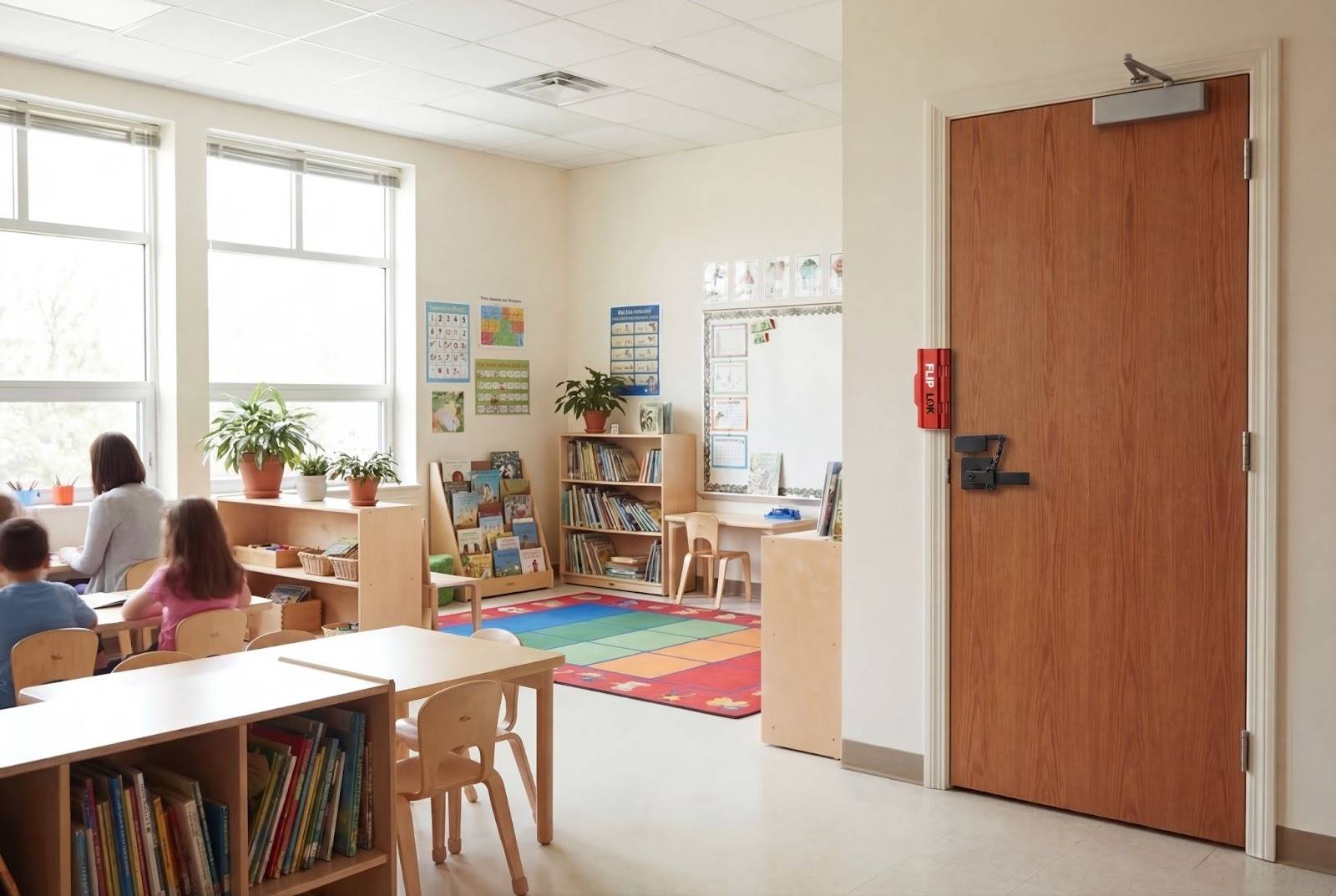
FlipLok was designed to allow educators to securely lock classrooms from within the room with one single action requiring neither electricity nor connectivity. Designed to withstand forces exceeding 2,000 lbs., FlipLok provides reliable interior locking capabilities when seconds truly matter.
Using a multi-layered approach does not mean addressing every vulnerability. It simply means identifying the areas most vulnerable to failure and enhancing them enough to create an environment that will support teachers and staff during genuine crises.
FAQs
What do staff need to do right after the window glass has broken?
Staff’s initial priority needs to be safety and control. Staff should immediately begin following established protocols, isolate students from broken glass, and refrain from entering dangerous zones unless instructed otherwise. When clearly defined policies are in place and practiced, schools are better able to respond effectively. SchoolSafety.gov also provides resources to assist in developing practical emergency plans.
Why is there such a big danger in having glass near entrances and doors?
A major reason is the glass’s proximity to locks and handles. In many cases, these areas become bypass routes regardless of whether the entrance is locked. As soon as glazing fails rapidly, it can prevent the door from functioning as the primary line of defense against entry and create a much shorter time frame for a school’s response plan.
Is the risk of injury increased solely by the presence of broken glass, even without anyone attempting entry?
Yes. Broken glass creates fragmentation that can lead to cuts, hazardous paths of travel, and panic movements among individuals, increasing overall risk. CDC injury prevention resources provide useful guidance on methods to minimize hazards and prevent injuries.
Can schools improve glass safety without undertaking large renovations?
In most instances, yes. Many schools initially focus on the most critical, high-impact locations and use focused enhancement techniques that maintain the normal operation of the facility. The methods used depend on glazing type, location, and code requirements, so accessibility and egress must also be considered.
If schools can only correct a few locations at this time, where would be the best places to begin?
Schools should prioritize areas containing glazing that protect a locked boundary, along with high-traffic areas. Common starting points include door vision panels, sidelights, and main entrances, as these can provide immediate access opportunities if they fail.
Glass Shatters During an Invasion Attempt
During an invasion attempt, when glass shatters during an invasion attempt, the situation escalates very quickly. This escalation occurs because once glass fails, a previously secure locked door can no longer provide the time necessary for a safety plan to respond effectively. Schools can mitigate risk by addressing doors and glazing together as one barrier area, strengthening critical failure points, and emphasizing predictable performance during stressful conditions.
FlipLok promotes safer classrooms with one-motion interior locking and stable physical resistance. Contact us today for additional information about our school safety solutions and ideas for mitigating glass failures during an intrusion attempt through practical layers of protection.