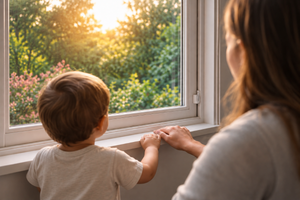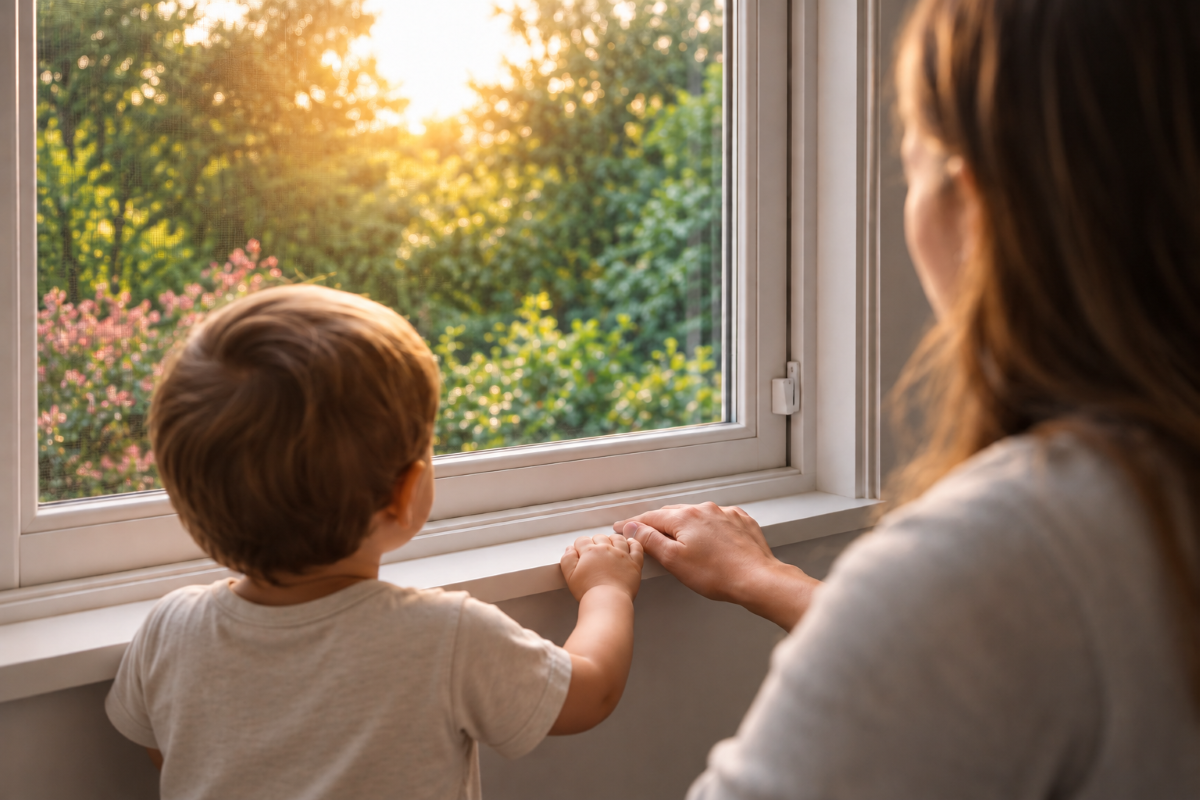
Window safety tips for homes with children should start with one simple goal: reduce fall risk without making everyday life feel restrictive. Children are naturally curious, and windows, screens, furniture, and low sills can quickly become areas they want to explore.
The safest approach is layered. Families can improve protection by limiting access, moving climbable furniture away from windows, and building simple habits that are easy to repeat. These steps are especially helpful in older homes, rentals, and homes with large windows or low sills.
Window safety should feel calm and practical. When the environment supports safer behavior, parents do not have to depend on constant supervision. A few consistent changes can make windows less accessible, reduce unnecessary risk, and help keep the home comfortable, functional, and family friendly.
Why Windows Can Be A Hidden Risk For Kids
Windows feel normal to adults, but they can be an invitation to children. A child can learn to climb quickly, and furniture placement can unintentionally turn a window into a reachable ledge.
Screens are another common point of confusion. Many children assume a screen will hold them like a barrier. Screens are designed for insects and airflow, not for child safety. Treat them as ventilation, not protection.
Seasonal routines also affect risk. In warm months, windows are opened more often and families spend more time moving between indoor and outdoor areas. A consistent plan for how windows are used, which ones open, and who can access them reduces mistakes.
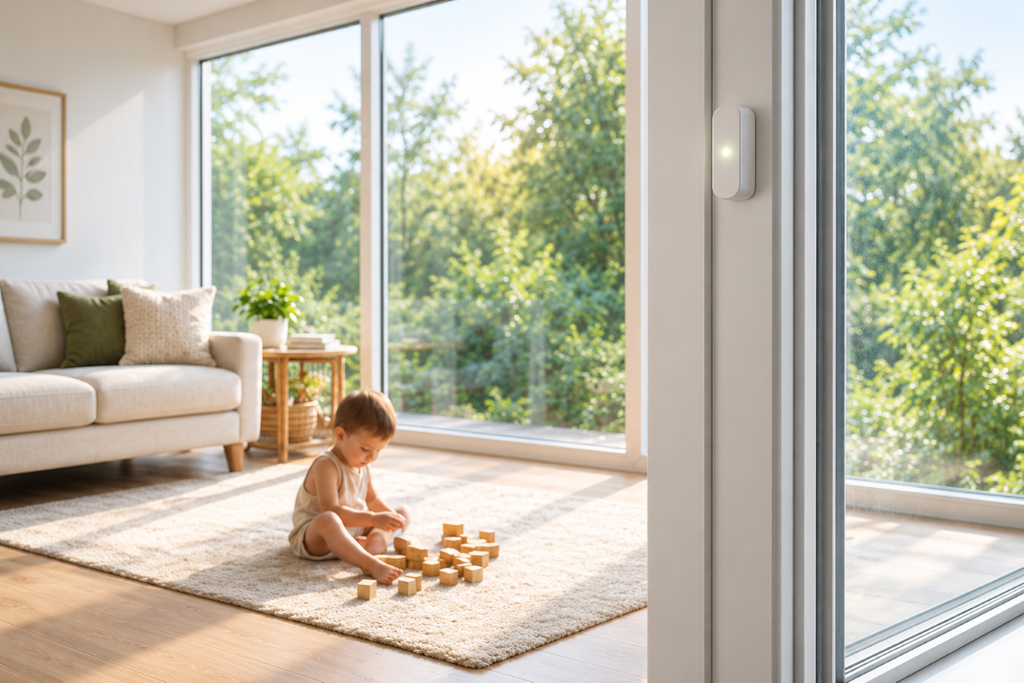
Set Up The Room So Windows Are Harder To Reach
The most effective window safety upgrade is often free. It is changing what sits under or near a window. Kids climb what is available, and a window becomes more reachable when there is a bed, chair, toy bin, or low shelf underneath it.
Start by walking each room and identifying climbable “launch points.” Pay special attention to bedrooms, play areas, and any space where children are unsupervised for short periods, such as nap time or early morning.
If you cannot move large furniture, adjust the window access. Some families keep those windows closed or use limited opening strategies depending on what is allowed in the home. The goal is reducing opportunity.
Helpful Setup Reminders
- Move climbable furniture
- Keep sills clear
- Remove toy storage
- Create safe play zones
Children should also learn to recognize potential hazards around the home. Beyond securing windows, teaching children age-appropriate situational awareness can help them recognize and respond to potential hazards around the home. Learn more in our guide to Teaching Kids Situational Awareness.
Use Smart Habits That Make Window Safety Automatic
Habits matter because they remove decision making. When families use the same window rules every day, children learn patterns and adults make fewer accidental choices.
A simple habit is doing a quick evening check. Confirm lower level windows are closed or set to the safest position for overnight use. If you have older children, teach them clear boundaries around windows and make the rules consistent.
Another habit is choosing the same windows for ventilation. When you always use certain higher or less accessible windows for airflow, you reduce risk without removing comfort. Consistency is especially helpful in busy households where routines change quickly.
If you have caregivers, babysitters, or family members helping, keep the expectations clear. Window safety works best when the whole household follows the same approach.
Teach Kids Simple Window Rules Without Creating Fear
Children do not need scary warnings to learn safety. They need short, clear rules that are repeated calmly. Keep the message focused on what to do, not what could happen.
For young children, simple language works best. Explain that windows are for light and air, not for playing. Reinforce that screens are not for leaning, pushing, or climbing.
For older children, add reasoning and responsibility. Help them understand that safe choices protect them and make the home safer for everyone. If you live in a multi story home or apartment, emphasize that higher windows need extra care, but keep the tone calm and practical.
If a child asks why, a steady answer helps. You can say the goal is to keep everyone safe, and the rules help prevent accidents. Confidence from adults tends to create confidence in kids.

Add Layers That Improve Safety Without Major Renovations
You do not need major construction to improve window safety. Many families build safer routines through small, realistic steps that fit their home and lifestyle.
Start by identifying windows that are lowest, most accessible, or most often opened. Focus there first. If you rent, prioritize changes that do not damage property, like furniture placement, habit routines, and household rules.
Window safety also connects to general home readiness. A calm plan for what to do in an emergency, where to meet, and how to contact family members supports overall safety without adding fear.
If you are improving multiple parts of the home, it helps to think in layers. Strong entry habits, clear routines, and practical planning work together. Window safety becomes stronger when it is part of an overall approach rather than a one time fix.
FAQ
How Can I Prevent Window Falls In A Home With Children?
Start with access control. Move climbable furniture away from windows, keep sills clear, and use consistent household rules. The CDC provides general injury prevention information that can help families understand common household risks.
Are Window Screens Enough To Keep Kids Safe?
No. Screens are designed for airflow and insects, not as safety barriers. Children should be taught not to lean on screens, push them, or treat them like a guardrail. The American Academy of Pediatrics shares child safety guidance that can support family conversations.
What Is The Most Important Room To Check First?
Bedrooms and play areas are usually the first priority because children spend time there with less direct supervision. Start with any room where a bed, chair, toy bin, or low shelf sits near a window.
What If I Live In An Apartment Or Rental?
Focus on renter friendly steps such as moving furniture, creating clear rules, and using consistent ventilation habits. If you notice a window that does not close properly or feels unstable, report it to management. Ready.gov also provides a simple family plan framework that supports calm preparedness at home.
How Do I Talk To Kids About Window Safety Without Scaring Them?
Use short, calm rules and repeat them often. Explain that windows are for light and air, not for playing. Keep the tone steady and practical, and focus on what children should do rather than describing frightening outcomes.
Window Safety Tips for Homes With Children
Window safety tips for homes with children work best when they are simple, consistent, and built into everyday routines. When you reduce access, keep climbable furniture away from windows, and teach calm household rules, you create safety that feels natural and easier to maintain.
FlipLok believes reliable protection should feel clear, practical, and easy to trust. Contact us for more information and to learn more about our residential solution and how window safety tips for homes with children can fit into layered home planning that supports everyday peace of mind..
Want to learn more about FlipLok and our home safety solutions? Visit our Contact Us page to get in touch with our team.