The most effective budget-friendly home security upgrades will always be those that strengthen the most common vulnerable entry points, including a solid entrance door, clear visibility, and basic routines. Many believe safety must come with an entire home system, subscription-based monthly monitoring, and complex systems. However, the truth is, most families require nothing but affordable tools and habits that they already practice regularly in order to significantly enhance their protection.
When one protective layer is paired with multiple other protective layers, a home becomes much less likely to allow for rapid entry while allowing your family to react calmly and confidently when something appears to be suspicious. Therefore, the most useful approach to developing safe home practices involves identifying the most common vulnerabilities that surround your home’s entrances and finding ways to reinforce these vulnerabilities without complicating your family’s daily lives.
To develop practical budget-friendly home security solutions that really work, you must begin with what is most important, namely the front door, its frame and glass area, and the ability to see clearly outside the house. Next, identify and implement simple plans that everyone in your household understands.
Strengthening Your Front Door Without a Replacement
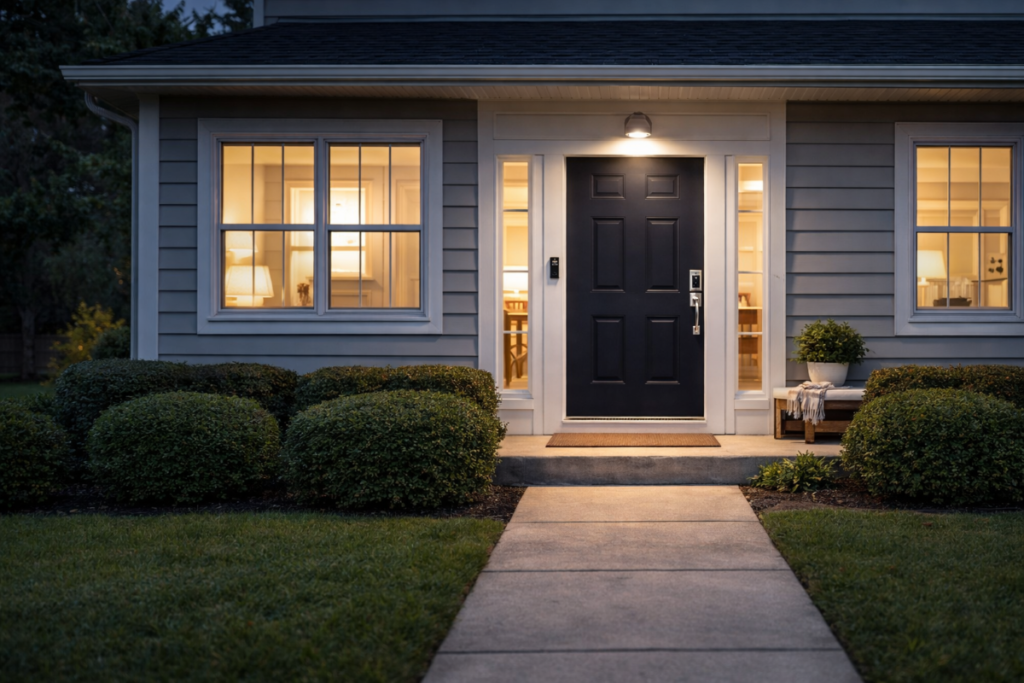
Your front door is usually the primary entry point into your home, which makes it the first place to focus on for improving security. Fortunately, you don’t need to completely replace your front door to make significant improvements to its security. Upgrades to the hardware and reinforcing parts of the door can improve the strength and reliability of your front door system at a lower cost.
Check whether your front door seals tightly against its frame when closed and whether it securely latches. If your door doesn’t seal well or if it has gaps, it is far too easy for unauthorized individuals to enter your home. Improving the strike plates, where the deadbolt enters the door, and screws that anchor hardware to the frame will both improve your front door’s resistance to forced entry.
Adding a secondary lock that is easy for your household members to use will also provide additional security, especially at night or when everyone is inside. The best type of secondary lock will be one that is consistently used by your household members. This is one of the simplest steps in budget-friendly home security.
Protecting Windows From Bypass Attacks
Although most homeowners think of their front doors when thinking of securing their home, many overlook their windows. As long as your front door is securely locked, there remains potential for someone to easily gain access to your home through adjacent windows or glass sidelights.
There are several budget-friendly methods available to protect your windows from being bypassed. These include:
- Window locks
- Improved latches
- Practical window treatments, i.e., curtains and blinds
If you have ground-level windows, focus primarily on making entry into your home through this area less feasible and less rapid. These upgrades fit well within a budget-friendly home security plan.
Glass Window Film: Additional Glass Protection
In addition to installing window locks, you may also wish to consider using security window film on glass surfaces. Similar to tempered glass, this product holds glass fragments together after impact. This increases the amount of time required for an individual attempting to break into your home, which reduces the risk of injury caused by broken glass. Although glass repair and replacement costs vary depending upon size and quantity, applying this film to glass surfaces is generally more affordable than repairing or replacing broken glass.
Improving Lighting to Increase Awareness
Lighting is one of the least expensive security upgrades you can make. You do not need an extensive outdoor lighting system to create increased awareness around your home. Installing motion-sensitive lighting in areas around doors and walkways will decrease shadows and concealment and give you earlier warning of any activity within sight.
Since you want any new lighting added to your home to become second nature, look for lighting upgrades that seem like they belong in daily life. Examples of practical lighting upgrades include:
- Motion-activated porch lights
- Well-lit paths leading up to doors
- Lit house numbers
- Fewer dark “blind” spots
All of these lighting upgrades will help discourage anyone approaching your home undetected and help keep you aware of your surroundings at night. For many families, this is an easy win for budget-friendly home security.
Using Daily Routines That Help Reduce Risk
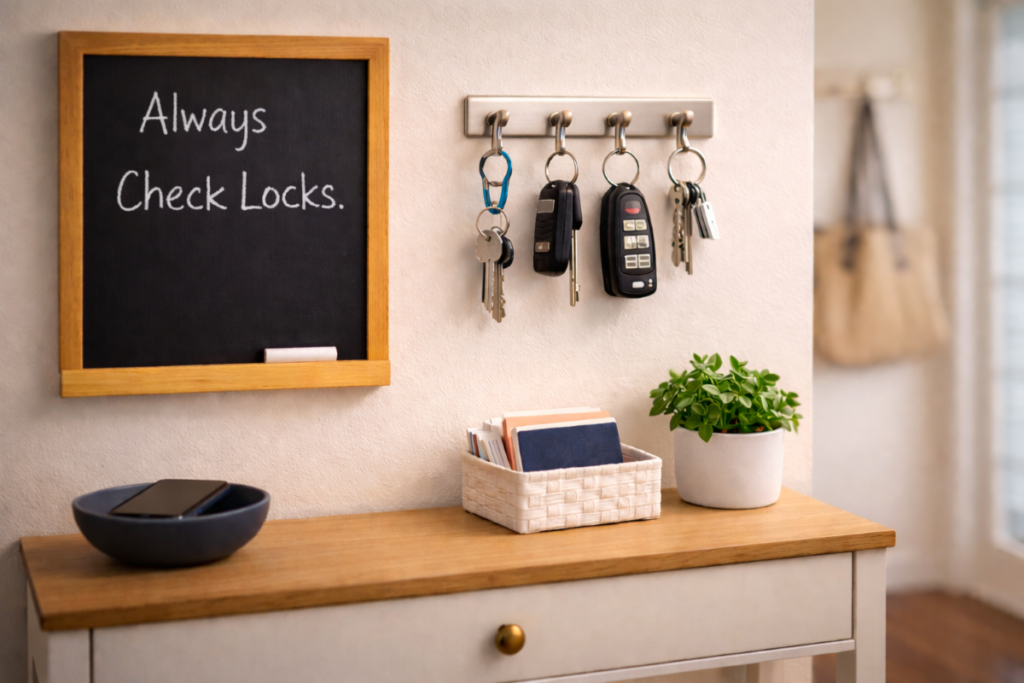
Perhaps the most successful protective measure is the one that you already perform on a regular basis. Using consistent habits on a regular basis can minimize your exposure to risk.
Examples of risk-reducing habits include:
- Locking your doors at a similar time every night
- Keeping a plan for where you store spare keys, i.e., do not leave them hidden outside
- Teaching children what actions to take when someone knocks on the door unexpectedly
If you have children living with you or roommates, define some clear rules for behavior that everyone agrees upon. Consistency promotes cooperation in terms of preparedness and response. These habits are an important part of budget-friendly home security.
Creating a Calm Household Response Plan That Does Not Promote Fear
Having a household plan can promote preparedness since it enables people to respond with confidence when a situation occurs. The goal is not to turn every conversation into an emergency scenario. Instead, develop agreed-upon calm steps to take initially so that your household does not spend valuable time trying to figure things out during a chaotic event.
An example household plan could include:
- A designated meeting spot, e.g., if someone hears something strange, for family members
- Which parent or adult should you contact immediately
- How communication should occur when someone is not present in the home
Children tend to function best when they understand routine behaviors. Utilizing Ready.gov resources, you can find pre-formatted plans designed specifically for families that are straightforward and adaptable for use in your daily lives.
Adding Affordable Monitoring Solutions Without Monthly Subscription Fees
You can raise awareness of situations without subscribing to costly services. Some examples of affordable options include:
- Door and window sensors
- Battery-operated motion detectors
- Low-cost cameras with local data storage capabilities
If you decide to purchase cameras for enhanced surveillance purposes, install them strategically throughout your property so they contribute to awareness without compromising personal privacy. These options can support budget-friendly home security without adding ongoing monthly costs.
Q&A Section
What are some budget-friendly home security upgrades?
There are many ways to make your home safer without spending money on an entire security system. One of the simplest options is improving the strength of your home’s entry points. Installing a solid, latchable door, upgrading your lock hardware with high-quality products, and developing a consistent habit of locking your doors will be the strongest value-added protection for most homeowners. Another very affordable option is adding better outdoor lighting. This could either be installing new fixtures or simply replacing old ones. Both methods will add to overall awareness and alertness.
Do I Need A Full Security System To Be Safe?
You do not need to purchase a full-blown security system in order to protect yourself and your loved ones. In fact, many families have developed their own layer of protection by combining the following elements: strong locks, protective glass, good external lighting, and basic routines.
Is Motion-Activated Lighting Worth It?
Yes, motion-activated lighting provides improved visibility at your home’s entrance and exit and can give you an earlier warning if someone is outside trying to gain access. While it is not inexpensive, it is typically considered one of the lower cost and easier-to-implement upgrades to help prevent unwanted visitors from entering your property.
How Can I Make My Home Safer Without Scaring My Kids?
When discussing home safety with children, keep the conversation casual, brief, and realistic. Explain what safety precautions exist, but don’t go into too much detail. Emphasize the idea that safety measures are used to create a safe environment for both parents and children alike. Also, emphasize that preparing for emergencies demonstrates your love for each other.
What Does Layered Home Security Mean?
The term “layered” refers to using multiple types of security and entry points simultaneously. By doing this, no single area has total exposure to potential risks. For example, an individual might install strong doors, use secure locks, apply protective film to windows, use light to enhance visibility, and establish routines that involve working together as a family. When each type of layer functions together to protect a household, they become more reliable as a whole.
Budget-Friendly Home Security That Works in Real Life
In terms of practicality and simplicity, a layered approach to securing a home is often the most effective way to achieve dependability while keeping costs down. Focusing on entry points that are easily accessed, such as front doors, providing adequate illumination around those areas, and establishing routine behaviors that are easily followed by family members will offer more reliable protection than relying on expensive systems or complex technologies. This is what makes budget-friendly home security so practical for everyday life.
At FlipLok, we believe that reliable protection should always be perceived as logical and easy to understand. We would welcome the opportunity to discuss our residential solutions further with you and demonstrate how implementing a layered safety plan can assist in creating even greater protection within your home.