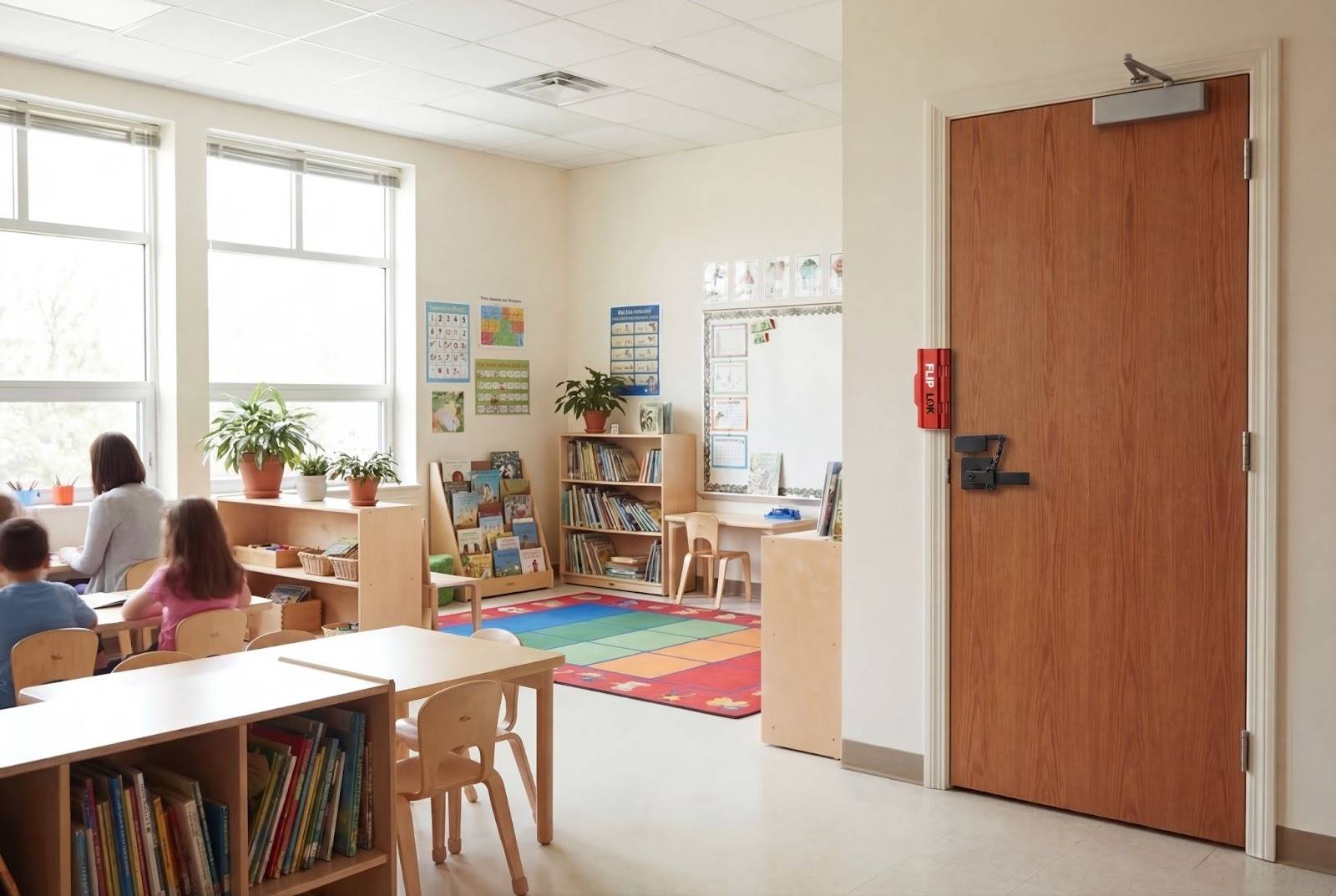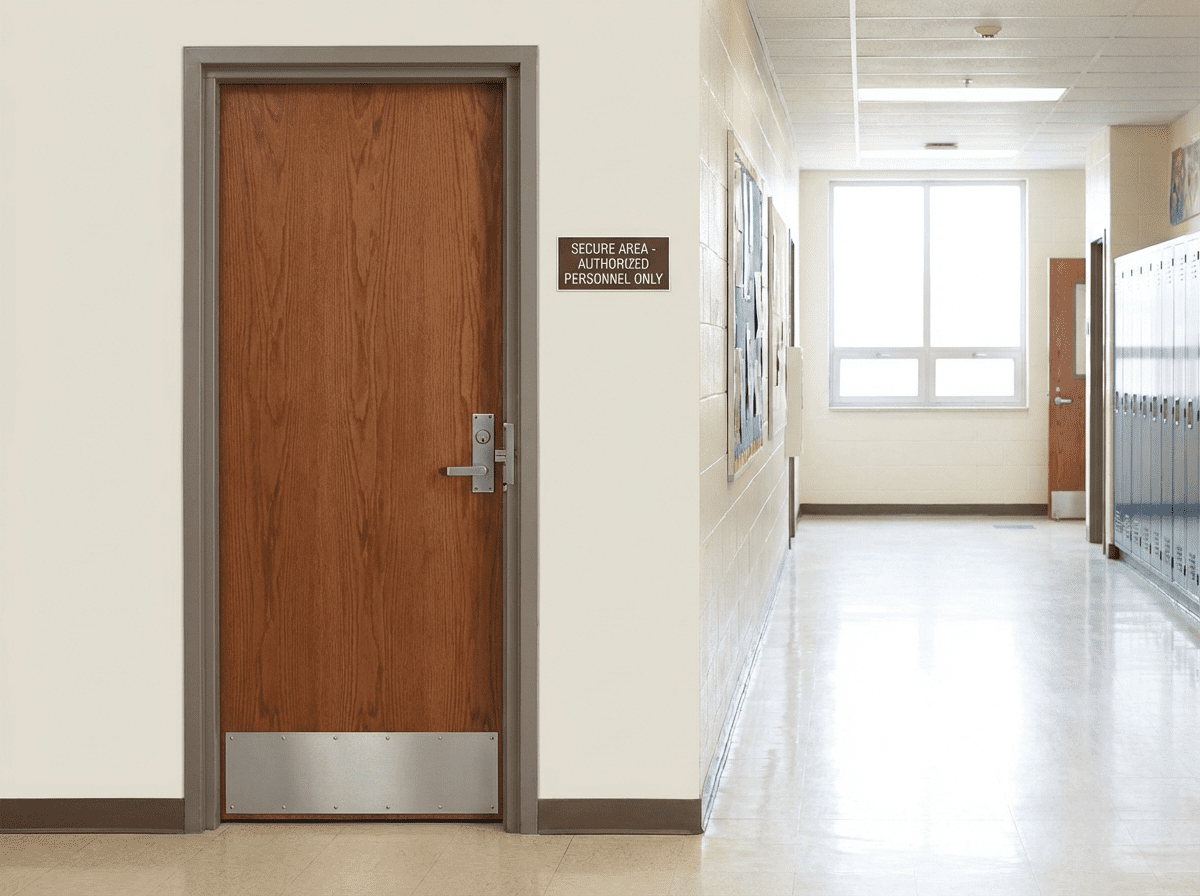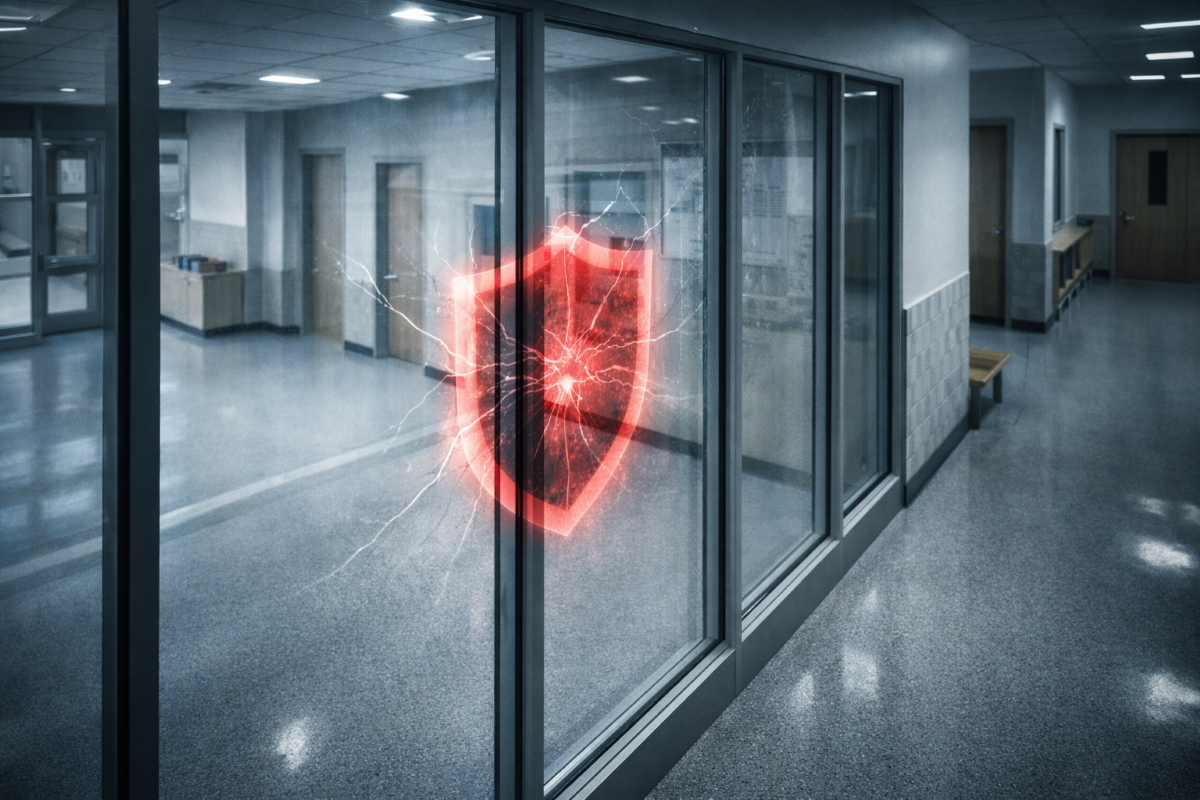
School safety and security planning should include more than doors, locks, and emergency response procedures. Broken glass can open up a school’s back door. While a classroom door is intended to provide an additional layer of security by locking out intruders, nearby glazing can fail quickly, create access, cause injuries, and create chaos during a critical time when a school requires time and control.
While schools spend a lot of time discussing hardware, access control systems, and emergency response plans, all of these elements are important; none of them can function effectively if the physical barrier created by the door is breached by broken glass. Additionally, treating glass as an element of the entrance system, rather than an afterthought, will result in safer doors and better emergency preparedness for teachers and students.
Why Does Glass Fail More Quickly Than School Doors?
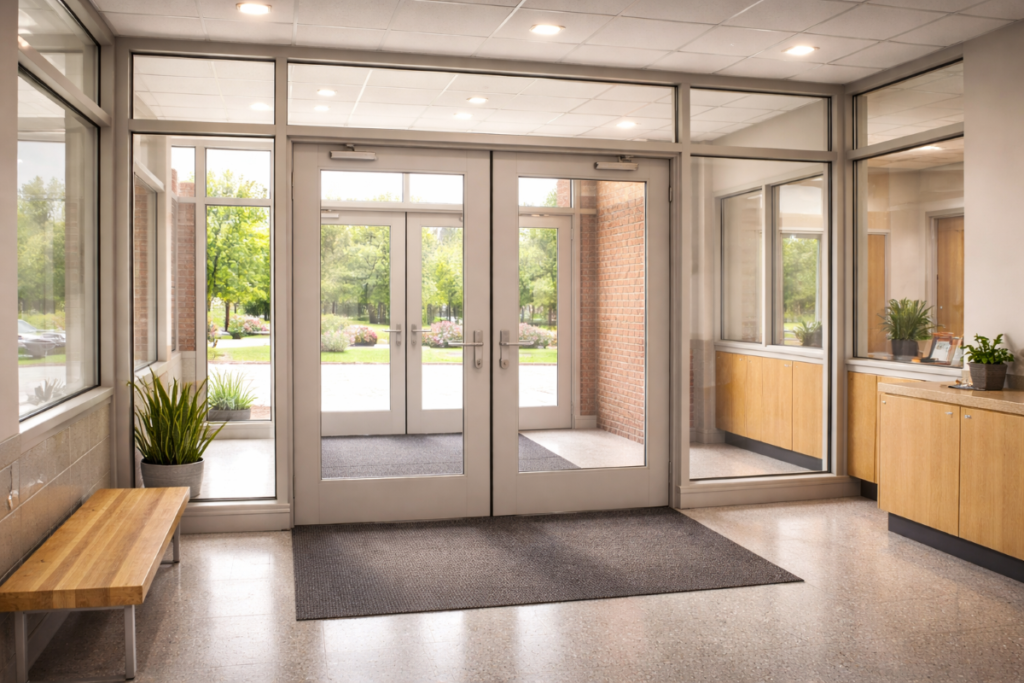
Glass is made to allow natural lighting and visibility, not to withstand a breach. Glazing is commonly installed in high traffic areas such as hallways, in front of or next to door hardware, and in corridors adjacent to classrooms. All of these locations increase the potential for damage and the subsequent effects from broken glass.
There are two reasons that glass fails more quickly than doors. The first reason is speed. When the glass breaks quickly, there is less time available for the door and its lock to operate. This reduced time frame affects how quickly a teacher can secure their classroom, how quickly students can get to a safe location, and how well trained staff members can follow established protocols.
Secondly, there is fragmentation. Fragments of broken glass create an immediate hazard for injury and distraction, regardless of whether access has been granted. During stressful events, distractions slow down responses and create confusion among staff members. Identifying glass as a first-tier vulnerability allows schools to identify realistic vulnerabilities rather than focusing solely on the components that appear strongest in theory.
Where Schools Should Begin Assessing Vulnerabilities Due to Glass Failure
Schools generally do not have to assess every possible vulnerability simultaneously. Therefore, the smartest strategy would be to begin evaluating the areas where glass failures create the largest impact on access and response.
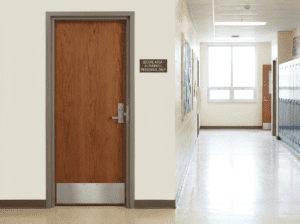
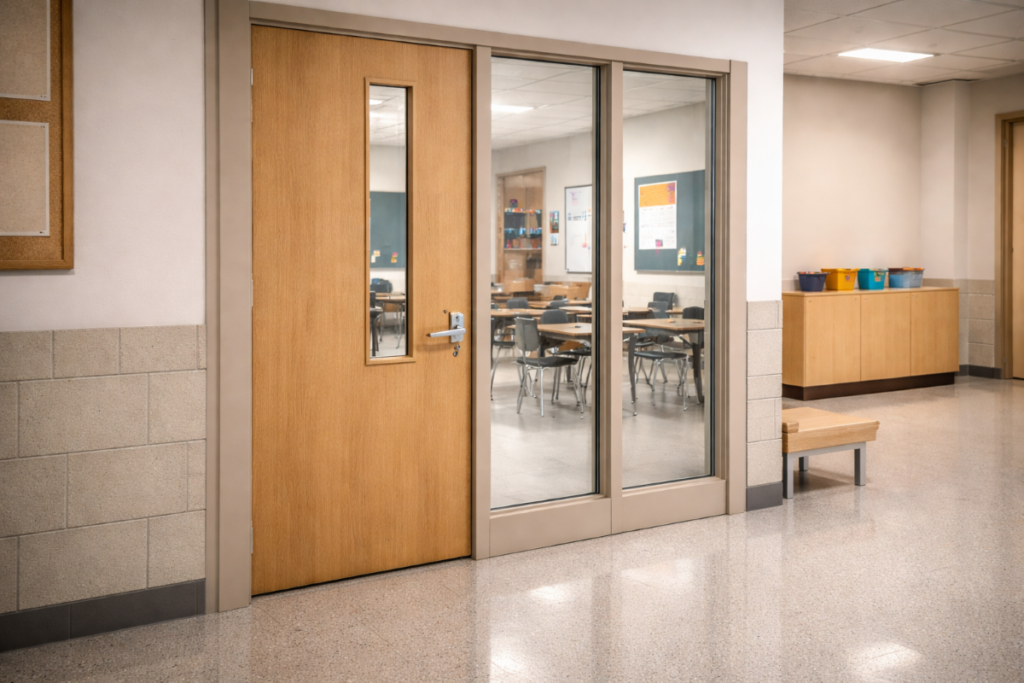
Begin with classroom door sidelights and vision panels. Vision panels and sidelights typically have proximity to locks and handles; therefore, they present a rapid means of accessing beyond security measures. Review main entries and vestibules where large glazing surfaces are typical, particularly near secured doors.
Additionally, you may want to consider assessing interior corridor windows and office reception glazing based upon your school’s specific design. Ask yourself simply: “If this glass breaks, does it change how quickly we can maintain a secure zone?” A focused evaluation provides districts with the ability to implement upgrades that reduce risks without having to completely renovate their campuses. This is an important part of effective school safety and security planning.
How Protecting Glass Provides Support for Safer Responses
Protective measures applied to glass can provide a greater barrier against breaches and reduce hazards caused by sharp fragments of broken glass. Both factors contribute to reducing panic, promoting faster decision-making, and clearer movements. The ultimate goal is not to transform schools into fortresses. Instead, the goal is to protect schools from the fastest potential vulnerabilities that detract from all other layers of safety.
Protective measures also promote consistency. Consistency promotes predictable behavior from staff members who can perform routine duties with confidence. An example of inconsistency arises when a door locks correctly, yet the adjacent glass fails instantaneously. The resulting discrepancy creates uncertainty among staff members about what actions to take.
Therefore, schools frequently combine enhancements to improve security through strengthened door-based improvements with enhancements related to glass-based layers. By strengthening door entry systems through enhancing doors, frames, hardware, and glass together in unison as a unified barrier, schools can develop a stronger overall security entry system. Ultimately, reinforcing vulnerable glass strategically is often a simpler solution than replacing doors or remodeling school layouts, thereby providing a tangible improvement in planning.
FAQs
Why is glass a security concern even when doors are locked?
When glazing fails faster than a door, there is an opportunity for a bypass route to occur at the same location as the lock or handle. While the time staff has to react before entering through a failed glazing panel will likely be very limited, the potential loss of time could cause significant problems. The layered approach to security discussed in resources like SchoolSafety.gov and the CISA K–12 School Security Guide includes physical vulnerabilities, specifically entry points such as doors and glazing, such as windows.
Where do schools typically begin to protect their glass?
Classroom door vision panels and sidelights are common starting places for schools since they are generally closer to the access controls than other parts of the building. Main entrance glazing is another priority for many schools due to its proximity to where students, teachers, and visitors enter the building. An analysis of high-traffic corridors and reception areas can help schools identify additional areas to assess and protect first.
Can protecting glass from breakage also provide some level of injury risk mitigation?
Yes. Broken glass creates a hazard immediately upon breaking. According to health-related resources provided by the Centers for Disease Control and Prevention, the presence of hazardous conditions such as broken glass can increase injury risk. By reducing the amount of debris created by broken glass, schools can promote safer movement and clearer responses during emergency situations.
What are some ways schools can protect their glass without major renovations?
There are numerous ways schools can add protective measures to their existing glass without disrupting normal operations. The method used will depend on the type of glass currently installed, where it is located, and what local regulations require. Additionally, schools need to think about how any changes will affect egress routes, accessibility issues, and whether those changes comply with relevant codes. Resources such as ADA standards and NFPA guidelines can assist schools in developing compliant plans.
School Safety and Security Planning Should Include Glass
Although the idea of securing doors seems apparent to everyone, one reason the importance of glass is often overlooked in school safety and security planning is that while doors seem like the most important barriers in an emergency, they are sometimes the slower failure point compared to glass. For this reason alone, school safety plans should incorporate assessments and strengthening of glazing in high-risk locations. Schools that take steps to secure glazing in key areas are increasing entry-point strength, decreasing the likelihood of injuries from broken glass, and creating greater consistency within their ability to respond effectively in emergency situations.
FlipLok provides effective solutions for classrooms with a focus on reliable products that perform well in real-world scenarios. We encourage you to contact us if you would like more information regarding our school safety solution and how incorporating school safety and security planning into your district’s policies can increase overall effectiveness in protecting students, faculty, and staff.