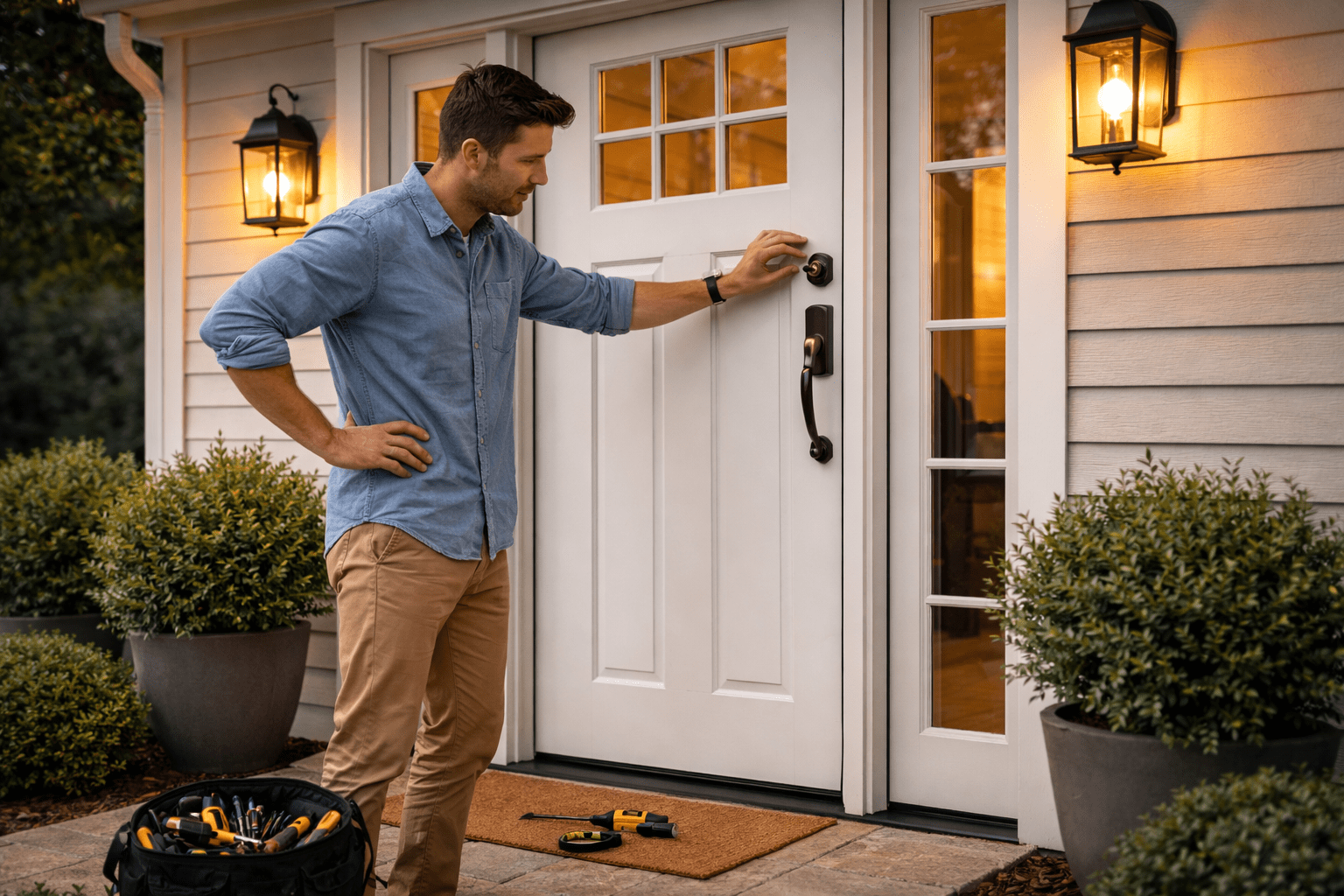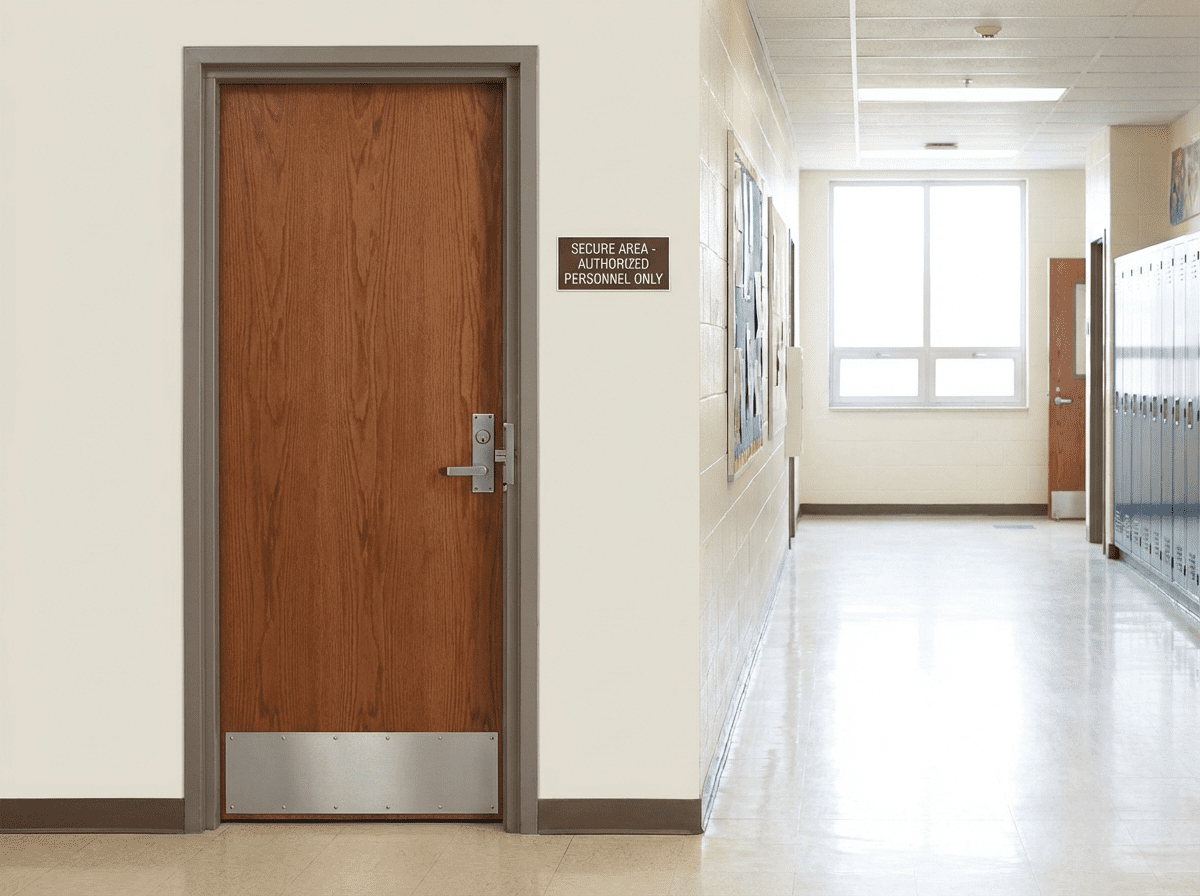
Total door system security matters because most forced entry problems are not due to a bad lock. The majority of problems occur because the door system fails, the frame splits, the strike area pulls loose, the hinges loosen, or nearby glass becomes the fastest bypass. That is why so many times, the door will fail before the lock will in a real world incident.
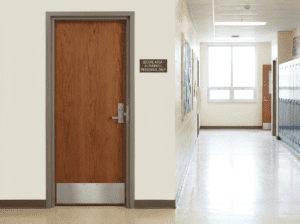
A good lock can only perform as well as what it is mounted to. For example, if the latch is screwed into poor quality wood, or a worn frame, or a poorly supported strike plate, the lock may continue to function properly while the entry point continues to give way. This can also be seen in schools with vision panels or sidelights that can compromise an entry point even though the classroom door is locked.
As it pertains to safety planning, the goal is not features but rather predictable resistance. The best method to achieve this is to evaluate the entire door system, door, frame, strike area, hinges, and nearby glass, and to reinforce the components that tend to fail first.
When schools and homeowners focus their efforts on improving their entire door system, then security becomes more consistent, easier to manage, and ultimately easier to rely upon when every second counts. This is the core reason a total door system approach matters.
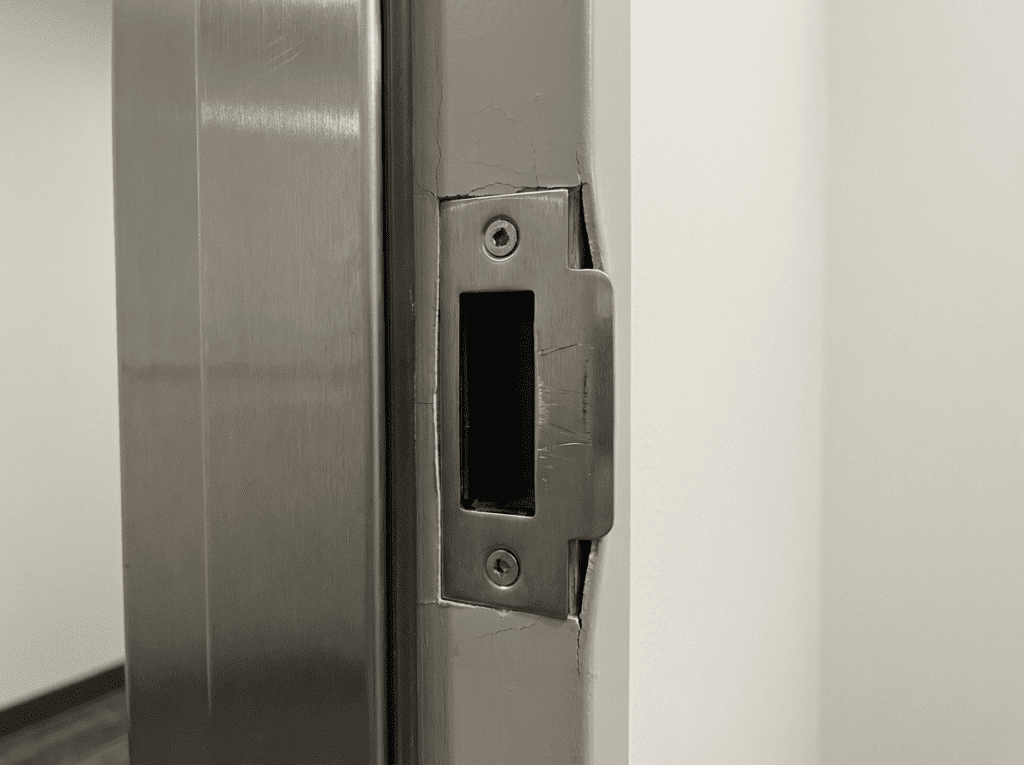
Frames and Strike Plates Are Typically the First Components to Fail During Forced Entry
Force typically applies directly across the latch side of a door. Even if a lock functions normally, the frame can still crack, the strike plate can bend or break, or the screws that anchor the strike plate can work themselves loose. Once that occurs, there is nothing for the latch to hang onto, regardless of whether or not the lock has failed.
However, the major problem is in how items are anchored. There are countless examples of strike plates being installed using very short screws that barely penetrate into structural framing. As soon as force is applied to these items, they tend to tear completely free from softer trim materials or shallow anchoring.
By focusing on creating a strong connection between the frame and strike area of a door, you essentially make them act as one item. This is especially critical for schools and other commercial properties because doors are opened and closed repeatedly. Over time, wear and tear, alignment shifting, and repeated slamming or closing of doors can cause the latch to not engage fully. An easy way to determine whether a potential threat exists is to inspect whether the door latches smoothly and consistently without rattle, stickiness, or excessive force required.
Hinges and Door Misalignment Can Create Silent Threats Against Security
A lock is only effective when the door closes smoothly. However, if your hinges have come loose, pins are excessively worn, or your door is sagging, this can prevent the latch from engaging completely. Thus, you could potentially have a door that appears locked but is not actually engaged in the strike area.
Additionally, a door that does not align properly increases failure risk when force is applied. If a door shifts under pressure due to a lack of proper alignment, it can cause the latch to disengage from its mating piece, deforming the strike plate or cracking the surrounding frame material. All of these issues exist within a complete door system, not individual lock components.
It is quite typical to find heavy use environments, such as schools, exhibiting this type of degradation. Repeated impacts from closing heavy doors, coupled with high volumes of traffic, create conditions conducive to slow dimensional changes in fit. Additionally, even minor gaps found along the edges of doors can contribute to decreased overall performance when subjected to increased levels of stress.
The solution is simple inspections and adjustments to ensure proper functioning. By tightening hinge screws, correcting sags in doors, and providing a smooth operation of the latch into its mating piece, you can restore functionality without needing to replace the lock. When a door operates properly, all hardware associated with it will operate much more reliably and predictably. These are important parts of maintaining a total door system.
Glass Near Doors Frequently Becomes the Quickest Route Through the Boundary
Vision panels, sidelights, and windows adjacent to doors frequently become the quickest path through a school’s boundary. This occurs when the glass near a door is compromised, even though a classroom door remains locked. Therefore, when planning for door security in schools and residential areas, consideration needs to be given to glass located near entrance points.
If glass is compromised quickly, and thus creates an immediate access opportunity, it will also introduce both injury risks and disrupt calm responses. Addressing glass as part of the total door system and not just as an independent element results in improved overall outcomes since you are first identifying those components most likely to fail rapidly.
There is a useful question that will help guide priorities. Does breaking this glass immediately provide access to bypass a locked door? If yes, it goes on your list for reinforcement.
Practical Reliability of Secure Door Systems in Actual Use Cases
Reliable security equates to predictable performance. Reliable security provides the means to secure quickly, sustain significant amounts of pressure and failure mode testing, and produce identical performance characteristics during normal operating modes and during stressful situations. This type of reliability can be achieved when enhancing security encompasses reinforcing the total door system and not solely relying on added complexity.
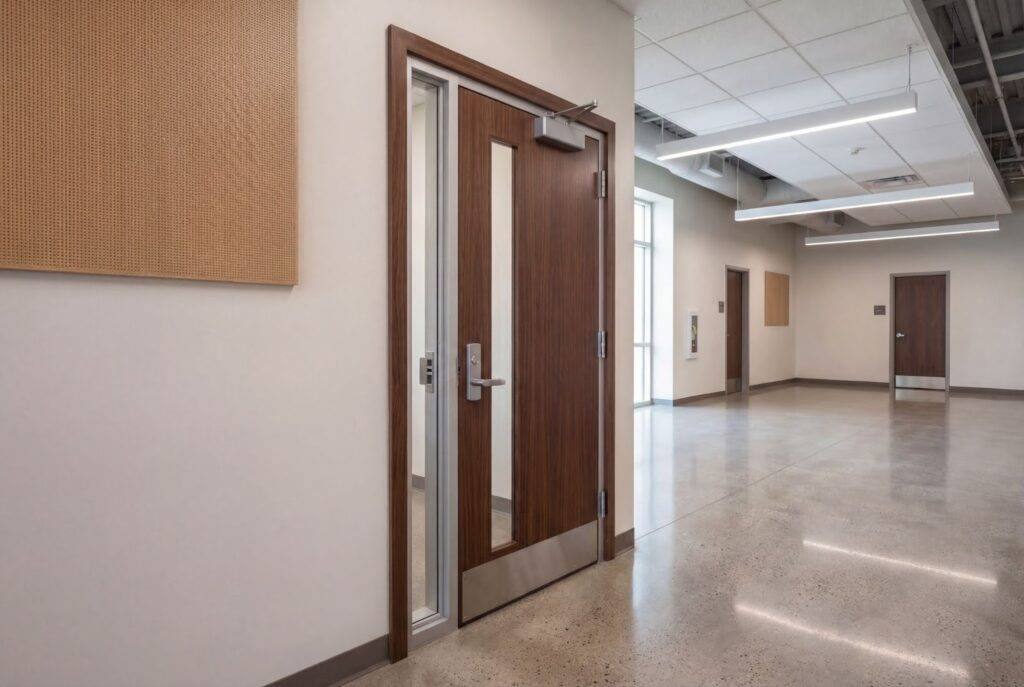
Interior Lock Capability Is Key to Classroom Security, Since Teachers Should Be Able to Secure a Room From Inside Without Stepping Into Hallways or Managing Multiple Steps to Do So
Mechanical solutions generally offer higher reliability since they do not require power or connectivity. Interior locking capability allows for rapid room closure, which is key in emergency situations. This makes mechanical solutions attractive for classroom doors.
FlipLok was developed specifically for one-motion interior locking and meets ADA compliance guidelines. It has been tested and proven capable of withstanding in excess of 2000 lbs of pressure. When combined with enhanced frames and smooth functioning doors, FlipLok enhances classroom boundaries that reduce hesitation.
ADA Compliance Guidelines and Life Safety Requirements Must Also Be Considered When Evaluating Options for Accessibility and Safe Exit Requirements
Widely referenced for accessibility and egress planning purposes are ADA design standards and life safety references. These should be considered alongside performance, predictability, and ease of use when evaluating any total door system improvements.
FAQs
Do all types of doors have the same level of forced-entry resistance?
While locks are designed to provide a barrier to intruders, it is surprising that most door breaches occur at the hinges, strike plates, and or the doorframe itself. While a lock may remain intact, the surrounding material may tear, come loose, or pull away during a breach. Once the structure behind the latch tears or comes loose, there is no longer anything for the lock to apply its strength against; therefore, reinforcing the door system is just as important as selecting a good-quality lock.
What type of door upgrade will give me the greatest amount of improved security?
Typically, the biggest impact upgrade you can make to your door system is to reinforce the frame, doorjamb, and strike area. A strong anchor point and a reinforced strike plate allow for the latch to withstand more force for a longer period of time. This is particularly important if you use your door frequently, as repeated usage can cause the door to shift slightly over time, resulting in less engagement with the latch.
How does glass affect door security in schools?
In addition to the quality of the lock installed in a school’s doors, glass panes located near doors, typically referred to as sidelights and vision panels, can be used to gain quick and easy entry into buildings, even if the lock remains locked. Therefore, school administrators should consider treating all glass within proximity to their entrance points as additional barriers to entry. SchoolSafety.gov and CISA offer numerous resources supporting a multi-layered and systems-based approach to analyzing both doors and adjacent glass.
Will mechanical locks be better than electronic locks in emergency situations?
In general, mechanical locks offer more predictability in an emergency situation because their operation does not depend on electrical energy (or its delivery), Internet connections, or operating software. In addition to supporting access control functions, electronic locks may create additional failure modes that could inhibit effective responses by the user during times of urgency. Overall, regardless of whether the lock used at a particular door entry is either mechanical or electronic, it is the overall performance of the complete door assembly that determines if the individual entry point will effectively serve as designed.
Why the Total Door System Matters
When security planning focuses only on the lock, critical weaknesses can remain in the frame, strike area, hinges, and nearby glass. A total door system approach creates more predictable resistance, stronger reliability, and better performance under real-world pressure. By evaluating the entire entry boundary and reinforcing the parts most likely to fail first, schools and homeowners can create security that is easier to manage and more dependable when it matters most.
At FlipLok, we believe reliable protection should be practical, predictable, and easy to trust under real-world conditions. We would welcome the opportunity to discuss our school safety solutions further with you and demonstrate how strengthening the total door system can help create more dependable boundaries, reduce hesitation, and support safer environments when every second counts.