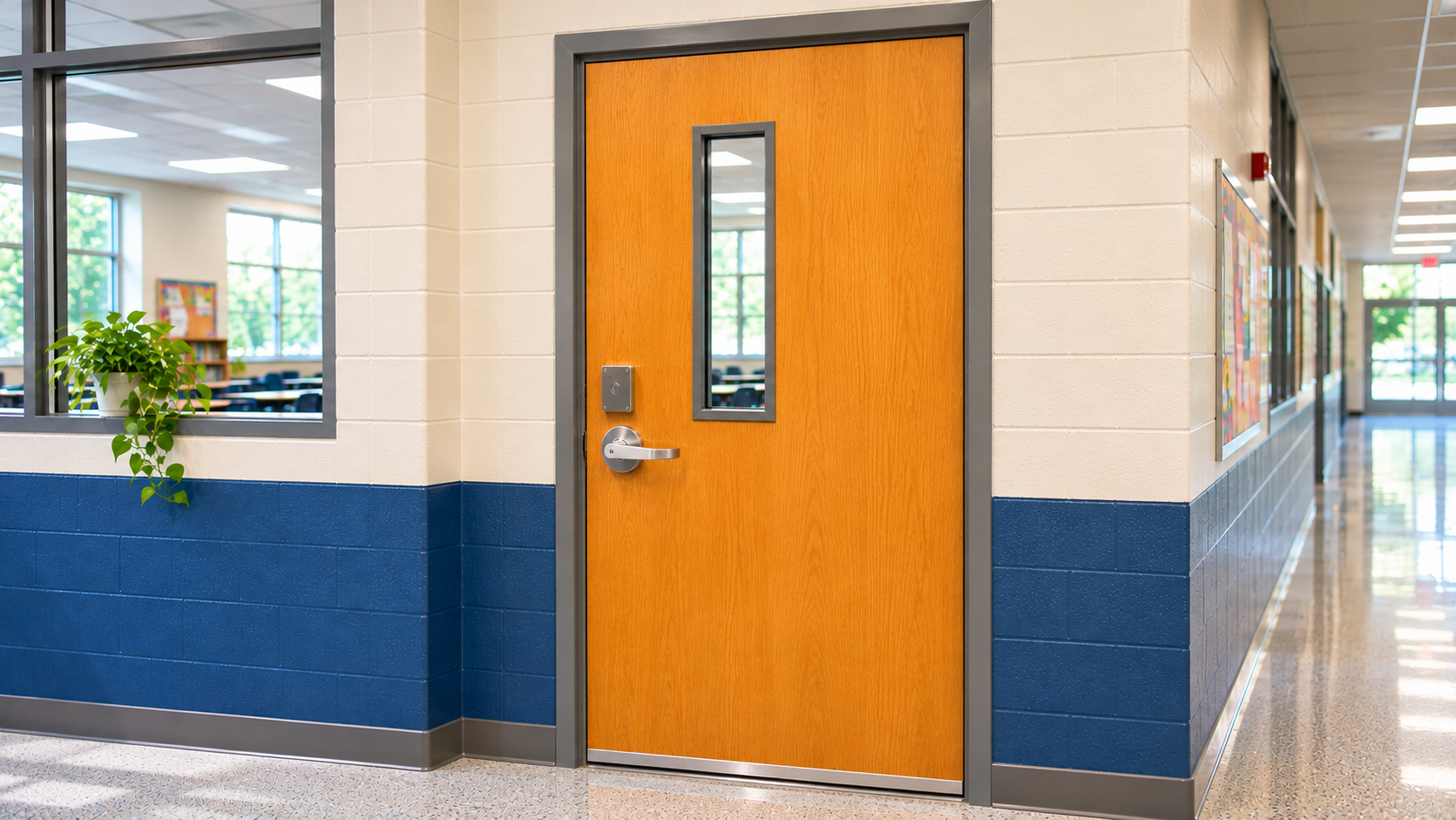
Why More Features Don’t Mean More Safety is an important principle for schools evaluating classroom security systems. A locking device with advanced technology, multiple controls, and additional functions is not automatically more effective than a straightforward system designed to perform essential tasks reliably.
During school emergencies, teachers may need to secure classrooms while communicating with staff and caring for students. Complicated equipment can introduce unnecessary steps, especially when users are unfamiliar with its operation.
Effective classroom protection should prioritize dependable locking hardware, accessible controls, strong door assemblies, and clear safety procedures. Technology can provide meaningful benefits, but every additional feature should serve a specific security purpose.
Understanding why more features don’t mean more safety helps administrators evaluate security investments based on practical performance rather than product complexity.
The goal is not to avoid innovation. It is to choose solutions that provide reliable protection without creating unnecessary responsibilities for teachers or interfering with everyday school operations.
Why More Features Don’t Mean More Safety in Classrooms
Additional features do not automatically improve protection because security depends on how reliably equipment performs its intended purpose.
A classroom locking system might offer electronic controls, remote management, status indicators, and multiple operating modes. These capabilities can be valuable, but schools should evaluate whether they address actual security needs.
This explains why more features don’t mean more safety when essential functions such as dependable locking and straightforward operation receive less attention.
Schools should prioritize:
- Reliable interior locking
- Simple daily operation
- Strong door compatibility
- Accessible hardware
- Safe emergency egress
The CISA K-12 School Security Guide recommends evaluating security measures as part of an integrated system rather than relying on individual products.
A lock with fewer features may be appropriate when it fulfills its intended security function dependably. Additional capabilities remain beneficial when they address identified vulnerabilities.
Understanding why more features don’t mean more safety encourages schools to evaluate equipment based on meaningful protection instead of lengthy product specifications.
How Can Complicated Security Features Create Challenges?
Complicated equipment can create challenges when essential actions require multiple steps, specialized knowledge, or unnecessary troubleshooting.
During an emergency, teachers may need to respond quickly while maintaining responsibility for students. A locking system requiring several unfamiliar actions can increase the demands placed on staff.
This is one reason why more features don’t mean more safety when usability becomes an afterthought.
Security systems should make essential actions straightforward and predictable.
Teachers should be able to engage classroom locks without stepping into the hallway or searching for additional equipment.
FlipLok provides a one-motion mechanical classroom locking solution designed for quick interior operation without electricity, batteries, Wi-Fi, or electronic connectivity.
Its straightforward design emphasizes dependable physical security without requiring complicated electronic controls.
For additional information, read why speed and simplicity matter under stress.
Recognizing why more features don’t mean more safety helps schools prioritize intuitive equipment that teachers can operate confidently while following established emergency procedures.
Why Does Reliable Hardware Matter More Than Extra Functions?
Reliable hardware is essential because classroom locks must work correctly with the doors, frames, hinges, and other components supporting the opening.
Even advanced locking technology cannot compensate for a damaged frame, poorly aligned door, or weakened strike area.
This demonstrates why more features don’t mean more safety when schools overlook basic physical security.
Important components include:
- Door construction
- Frame reinforcement
- Strike plate anchoring
- Hinge condition
- Lock engagement
Schools should also assess nearby glass, which may introduce additional vulnerabilities around classroom entrances.
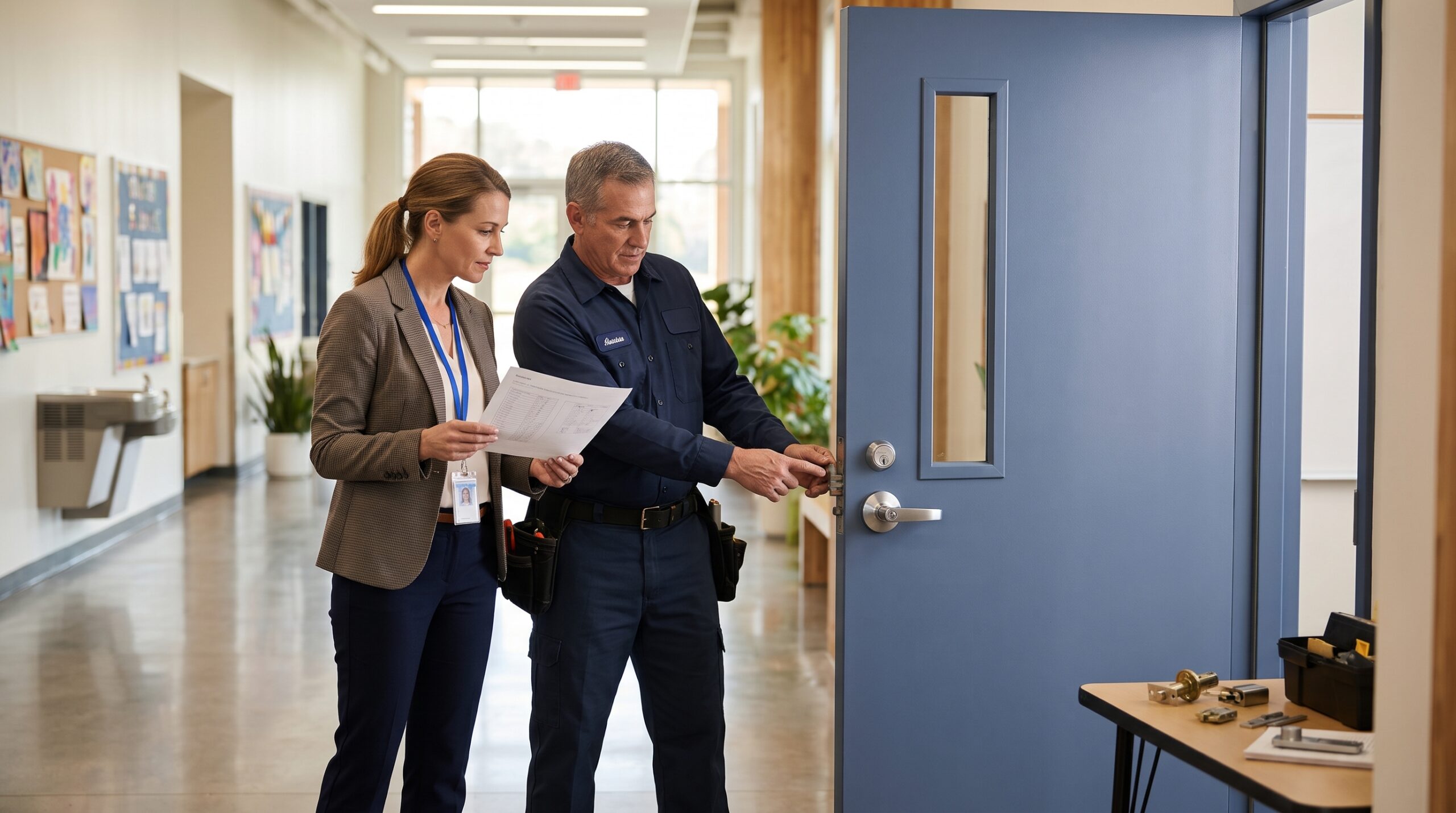
Proper installation and regular inspections are important for maintaining dependable security.
Our guide on hardening a classroom explains why strengthening the entire door assembly matters.
Another example of why more features don’t mean more safety is a sophisticated lock installed on an improperly maintained door. Reliable classroom protection depends on the complete system functioning correctly, not simply the capabilities of one component.
Why Must Accessibility and Emergency Egress Come First?
Classroom locking systems must support protection without preventing students and teachers from exiting safely.
Accessibility and emergency evacuation requirements further demonstrate why more features don’t mean more safety when additional locking mechanisms introduce unnecessary complexity.
The U.S. Access Board provides guidance on accessible door hardware, including one-hand operation without tight grasping, pinching, or twisting of the wrist.
The National Fire Protection Association also explains important considerations for permissible egress door locking arrangements.
Schools should verify that proposed hardware satisfies applicable fire, building, accessibility, and emergency access requirements before installation.
Administrators should also evaluate modifications to fire-rated door assemblies and consult the appropriate local code authority.
Additional security features are useful only when they improve protection without compromising safe operation.
How Can Schools Choose Security Systems Based on Practical Needs?
Schools should compare security solutions by evaluating reliability, usability, compatibility, and long-term performance.
Understanding why more features don’t mean more safety encourages administrators to focus on practical requirements rather than marketing claims.
A useful evaluation should consider whether a product:
- Addresses identified vulnerabilities
- Supports quick operation
- Fits existing doors
- Preserves accessible egress
- Requires manageable maintenance
Mechanical and electronic systems can both provide valuable security benefits.
Electronic access controls may offer centralized management and monitoring, while mechanical locks can operate independently of electrical power or network connectivity.
Neither approach should be considered universally superior without reviewing the school’s specific requirements.
The SchoolSafety.gov resource library offers information to support school security planning and preparedness.
For more information, explore how classroom locking systems support stronger classroom protection.
The most important lesson behind why more features don’t mean more safety is that every security component should perform a meaningful function within the school’s broader protection strategy.
FAQ
Why Don’t More Security Features Always Improve Safety?
Additional features may increase complexity without improving essential security functions. Their value depends on reliability, usability, compatibility, and the specific risks they address.
Schools should determine whether each feature provides a practical benefit instead of assuming that additional technology automatically creates stronger protection.
Are Simple Classroom Locks More Reliable?
Simple mechanical locks can reduce reliance on electricity, software, and network connectivity. However, reliability depends on design, installation, maintenance, and door compatibility.
Electronic systems can also provide dependable protection when correctly specified and maintained. Schools should compare actual performance rather than the number of available features.
Can Too Many Locking Features Make Emergencies Harder?
Complicated controls and unfamiliar procedures can make security equipment more difficult to operate during stressful situations.
Straightforward activation and release procedures help reduce unnecessary steps. Schools should also provide appropriate training and verify that every locking system preserves required emergency egress and accessibility.
Should Schools Avoid Electronic Security Systems?
No. Electronic systems can provide useful capabilities, including centralized access management and monitoring.
The important consideration is whether those features address identified security needs. Schools should understand backup operation, maintenance requirements, and hardware compatibility before choosing an electronic or mechanical solution.
Why More Features Don’t Mean More Safety When Choosing Classroom Locks?
Why More Features Don’t Mean More Safety becomes clear when schools compare additional functions with essential security performance.
Reliable interior locking, strong doors, accessible operation, and safe emergency egress often deserve greater attention than optional capabilities. The best choice is a system that meets the school’s actual security needs while remaining dependable and practical.
Why More Features Don’t Mean More Safety: Choosing Reliable Protection
Why More Features Don’t Mean More Safety reinforces an important principle: effective classroom security depends on dependable performance rather than unnecessary product complexity.
Strong doors, intuitive locking mechanisms, accessible hardware, and consistent maintenance work together to support safer learning environments.
FlipLok provides a one-motion mechanical classroom locking solution designed for straightforward interior operation without batteries, electricity, or network connectivity.
Contact FlipLok to learn more about our school safety solution and how simple, reliable classroom security supports practical school preparedness.