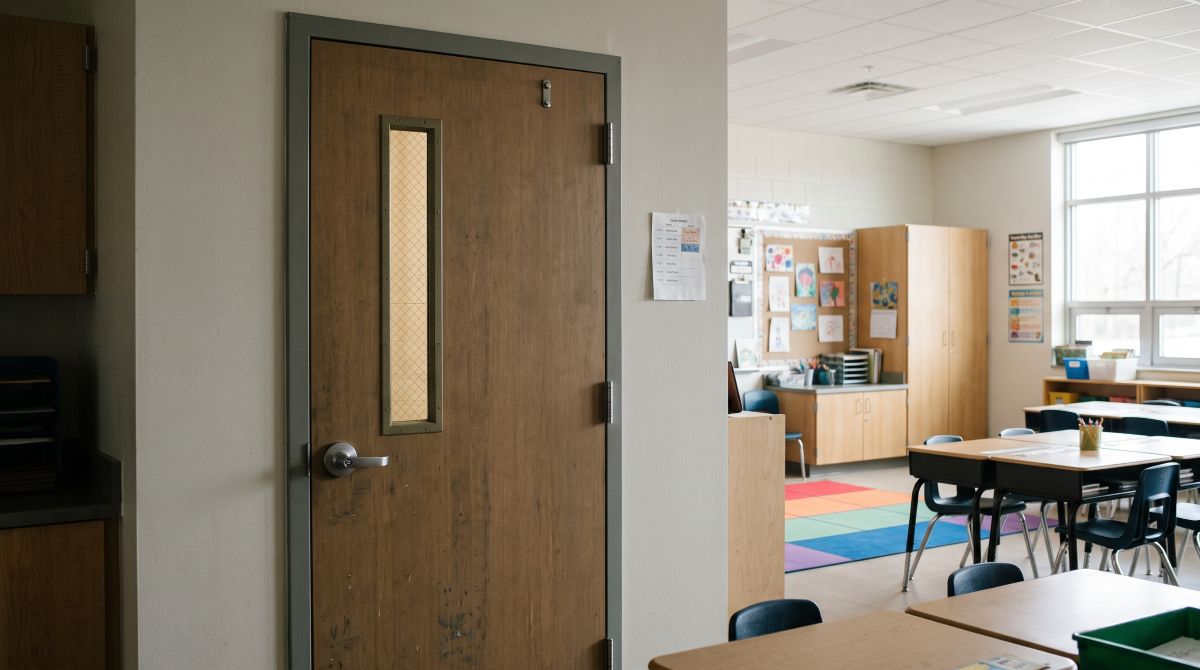
Classroom locking systems play an essential role in turning ordinary classrooms into more secure spaces during emergencies. These systems help teachers secure doors quickly from inside the room, create stronger physical boundaries, and provide additional time for students and staff to follow safety procedures.
Effective classroom security is not about installing complicated equipment or making schools feel intimidating. It is about combining dependable locks, strong doors, reinforced frames, and protected glass to support a safer learning environment.
The best classroom locking systems are designed for simplicity, accessibility, and consistent operation. During an emergency, teachers should not have to step into the hallway, search for special equipment, or remember complicated locking procedures.
A classroom becomes better protected when its security measures work together. From one-motion interior locks to dependable door hardware and layered protection, schools can create stronger classroom boundaries while maintaining an environment where students feel comfortable learning.
What Does Turning a Classroom Into a Safe Room Mean?
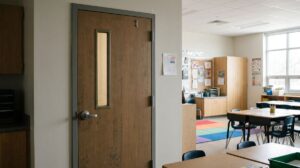
Turning a classroom into a more secure space means improving its ability to resist unauthorized entry while allowing occupants to follow emergency procedures. The classroom door is the primary physical barrier, but its effectiveness depends on the complete opening.
Reliable classroom locking systems help create this protective boundary by securing the door from inside without requiring teachers to leave the room.
A safer classroom should also have a properly maintained frame, functional hinges, dependable door alignment, and an appropriate plan for nearby glass.
It is important to distinguish this use of “safe room” from a formally engineered storm shelter. A classroom locking upgrade alone does not create a FEMA-certified safe room or guarantee protection against every threat.
Schools should focus on practical, measurable improvements rather than assuming that one piece of hardware provides complete security.
For a deeper look at the physical components, see our article on hardening a classroom.
Why Classroom Locking Systems Are Essential for School Safety
Reliable classroom locking systems help teachers secure classroom doors quickly without stepping into the hallway. By reducing unnecessary locking steps, schools can improve emergency readiness while allowing educators to focus on protecting students.
Effective classroom locking systems should make interior locking straightforward, consistent, and dependable. A teacher should be able to secure the door without opening it or entering the hallway.
Mechanical locks can be especially useful when schools want protection that does not depend on electricity, wireless communication, or software. Electronic locking systems can also offer benefits, but schools should understand their backup operation and maintenance requirements.
FlipLok addresses the need for simplicity with a one-motion mechanical locking mechanism designed for classroom use. Its system operates without batteries, Wi-Fi, or electronic connectivity, helping reduce unnecessary steps during a lockdown.
The role of the lock is to support protection through delay, not promise that entry is impossible. Learn more about why delaying an intruder saves lives and how additional resistance can support emergency response.
How Do Doors, Frames, and Glass Support Locking Systems?
A dependable lock is only one component of a secure classroom door. If the frame, strike area, hinges, or surrounding glazing is vulnerable, the complete opening may not provide the level of resistance schools expect.
Schools should evaluate:
- Door construction
- Frame and strike strength
- Hinge condition
- Lock engagement
- Nearby glass protection
This whole-door approach is essential when assessing classroom locking systems because hardware performance depends on how the components work together.
Vision panels and sidelights also deserve attention. If nearby glass breaks, it may create an opportunity to reach interior hardware or compromise the doorway.
Security window film can help retain fractured glass after impact, potentially increasing the effort required to clear an opening when the glazing system is appropriately designed.
Our article on security film during forced entry attempts explains why glass retention and anchoring matter.
The strongest classroom boundaries combine functional locking hardware with well-maintained doors, frames, and glazing.
What Makes Classroom Locking Systems Reliable During Emergencies?
Effective classroom locking systems should balance strong physical protection with simple operation, accessibility, and safe emergency egress. Schools should evaluate how each locking mechanism works with existing doors, frames, and hardware.
Schools evaluating classroom locking systems should prioritize easy interior operation, dependable release, and compatibility with the existing door assembly.
The ADA Standards for Accessible Design establish requirements for accessible door hardware, while NFPA guidance on permissible egress door locking arrangements provides important context on safe exit operation.
Schools should confirm requirements with their local fire marshal and other authorities responsible for code compliance before installing or modifying locking hardware.
Daily reliability also depends on maintenance and training. Staff should know how to engage and release the lock, and administrators should regularly check that doors close and operate correctly.
The CISA K-12 School Security Guide emphasizes a layered approach to physical security that considers the broader school environment.
A dependable locking system should support that larger strategy rather than function as an isolated solution.
FAQ
How Do Classroom Locking Systems Improve School Safety?
Classroom locking systems improve school safety by helping teachers secure their classrooms quickly during emergencies. When combined with strong doors, reinforced frames, protected glass, and clear safety procedures, these systems create additional physical resistance and support a layered school security strategy.
Should Classroom Doors Lock From Inside?
Interior locking capability is an important feature because it allows teachers to secure a classroom without stepping into the hallway. Schools should choose hardware that is easy to operate and maintains required emergency egress and authorized access.
Are Mechanical Classroom Locks Better Than Electronic Locks?
Both can support school security. Mechanical systems operate without electricity or network connectivity, while electronic systems may offer centralized access management. Schools should compare reliability, maintenance, training, emergency operation, and code requirements before choosing a solution.
Does Adding a Lock Turn a Classroom Into a Certified Safe Room?
No. Additional locking hardware can make a classroom more resistant to unauthorized entry, but it does not automatically create a certified safe room. Formal storm safe rooms have separate engineering and construction requirements, as explained by the Texas Division of Emergency Management.
What Should Schools Check Before Installing New Locks?
Schools should examine door construction, frame condition, hardware compatibility, accessibility, emergency egress, and applicable building and fire codes. Administrators should also consider staff training, authorized emergency access, installation requirements, and ongoing maintenance before selecting a product.
From Classroom to Safe Room: The Role of Classroom Locking Systems
Classroom locking systems are a critical part of transforming everyday classrooms into stronger protective spaces. Reliable interior locking, reinforced door hardware, protected glass, and straightforward emergency procedures can work together to create additional time for protection and response.
FlipLok supports this approach with a one-motion mechanical locking solution designed to help teachers secure classroom doors quickly and reliably. Contact us to learn more about our school safety solution and how dependable classroom security can strengthen protection for students and educators.
FlipLok provides a one-motion mechanical classroom locking solution designed to make interior security simple and reliable. Contact us to learn more about our school safety solution and how stronger classroom security can support a safer learning environment.