Why delaying an intruder saves lives comes down to one critical factor: time. During an emergency, every additional second that a locked door, reinforced frame, or protected glass opening resists entry can give people more time to secure themselves, follow emergency procedures, communicate, and allow responders to act.
Effective school security is not based on a promise that one product can stop every threat. It is based on creating layers that make access more difficult and less immediate. Strong classroom doors, dependable interior locking, reinforced frames, and properly protected glazing can all contribute to that delay.
Teachers require safety devices that are capable of operating quickly without requiring a multitude of steps. Physical security solutions should support safe action and not add more choices during an already emotionally charged event.
Creating safe environments is not about developing classroom doors that appear intimidating. Creating a safe environment is about developing safe borders that can aid in protecting the occupants while enabling them to utilize their previously established safety protocols to a greater extent.
Why Does Time Matter During An Intrusion?
Time gives occupants options. When entry is delayed, teachers can secure students, move away from vulnerable areas, communicate with administrators, and follow established emergency procedures.
Even a strong lock is only part of that equation. The door, frame, strike area, hinges, and nearby glass all determine how long the boundary may continue to resist force.
This is why school security planning should evaluate the complete entry system instead of focusing on a single piece of hardware.
CISA’s school safety resources encourage schools to identify vulnerabilities and use layered physical security measures as part of broader risk management. SchoolSafety.gov also provides planning resources that help schools evaluate security alongside preparedness, training, and communication.
Delay creates the opportunity for these other layers to work.
Why The Classroom Door Is A Critical Barrier
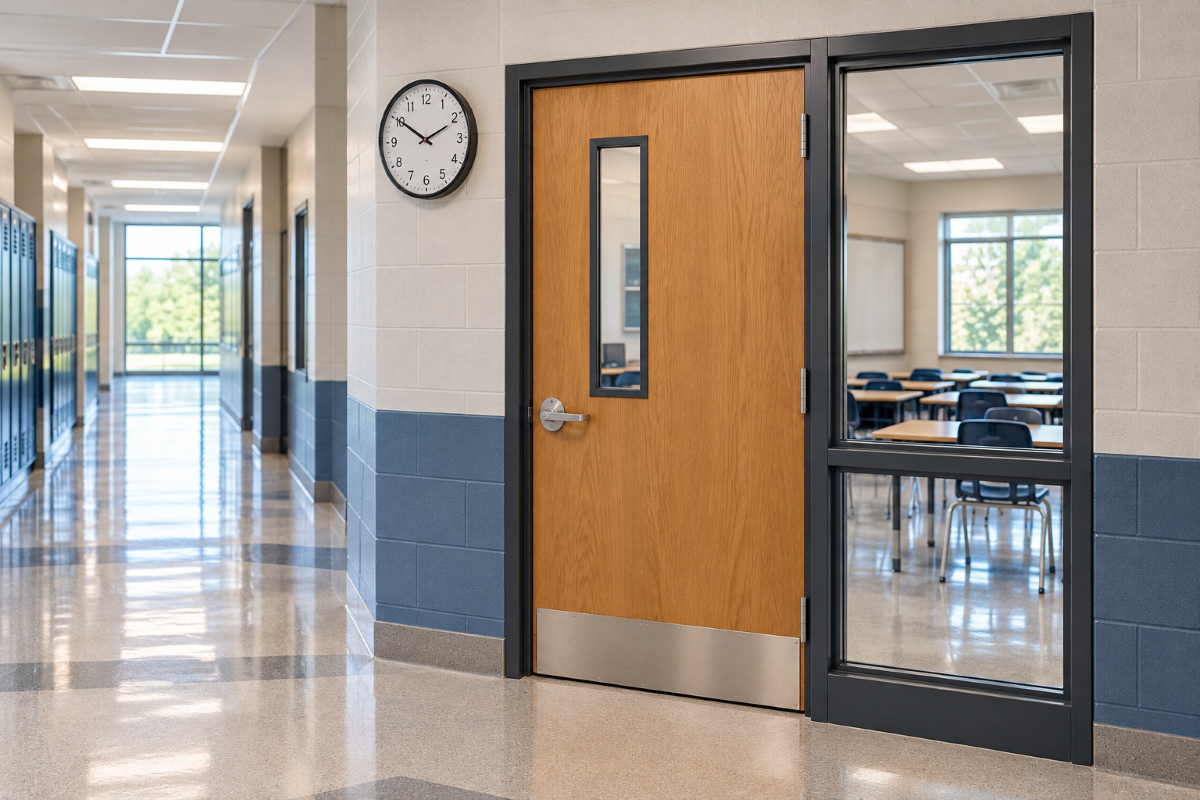
A classroom door creates a physical barrier between students and/or anyone who might attempt unauthorized entry. While a quick acting lock can provide a significant advantage in terms of delaying entry, it must be able to withstand applied pressure while continuing to remain closed.
The effectiveness of the door depends on more than the lock. Schools should evaluate:
- Door construction
- Frame strength
- Strike anchoring
- Hinge condition
- Lock operation
A powerful locking device cannot compensate for a severely weakened frame or damaged hardware.
Interior locking capability is equally important. Teachers should not need to step into a hallway to secure the classroom during an emergency. The locking action should be fast, intuitive, and consistent.
FlipLok supports this approach with a mechanical, one-motion classroom locking solution designed to secure the door from inside the room. Because the mechanism does not depend on power, Wi-Fi, or electronic communication, it can provide consistent operation when immediate action is necessary.
This is an ideal location for an internal link to your classroom door security or FlipLok commercial lock page.
How Strong Door Frames Help Create More Time
The frame and strike area often carry the force transferred through a locked door. If those components move, split, or separate from the surrounding structure, the lock itself may remain intact while the doorway fails.
That is why reinforcement should focus on the complete door system.
A school security review should look for:
- Loose strike hardware
- Frame movement
- Door misalignment
- Damaged hinges
- Worn fasteners
Maintenance matters too. A door that worked correctly when it was installed may become harder to latch as buildings settle or hardware wears.
Reliable security depends on the door closing completely and the locking hardware engaging as intended every day. Schools that regularly inspect classroom doors can identify small mechanical problems before those issues affect emergency performance.
This section is a natural place to internally link door reinforcement or a related FlipLok classroom security article.
Why Reinforced Glass Matters Near Classroom Doors
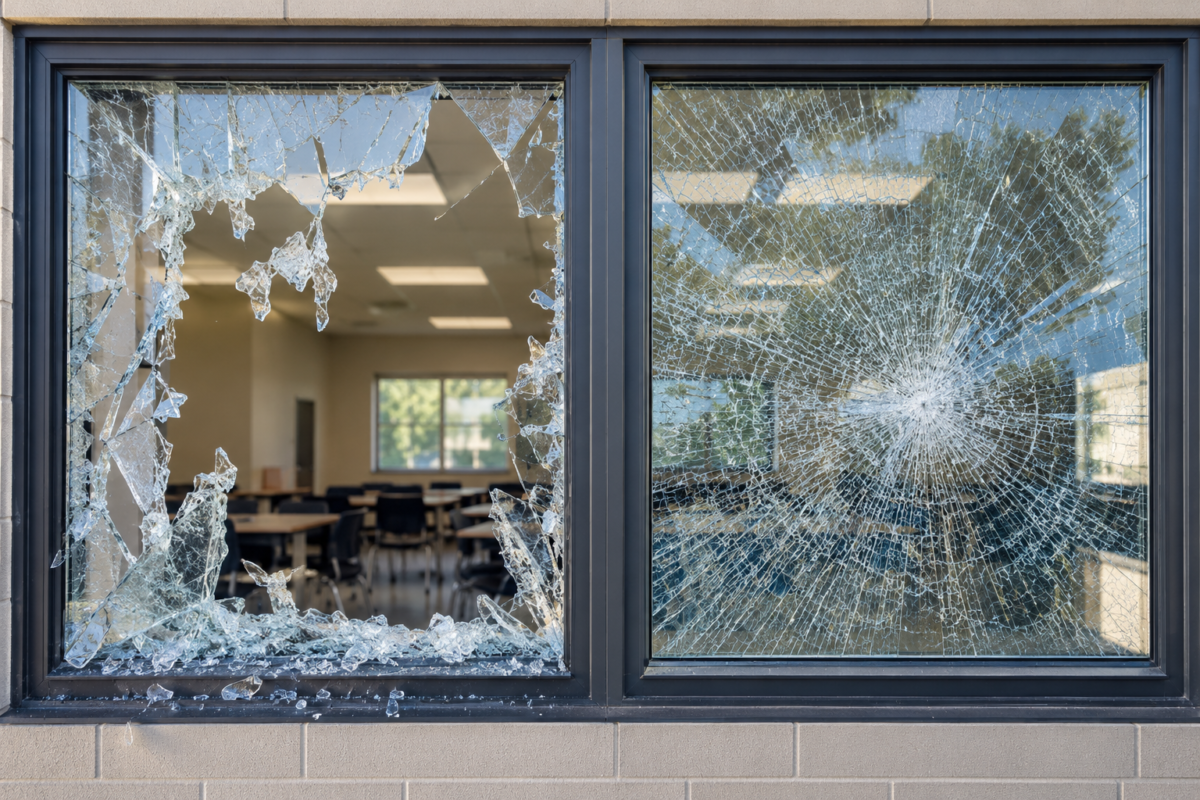
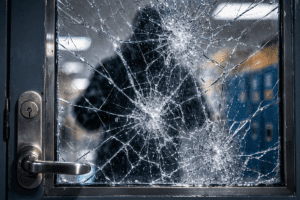
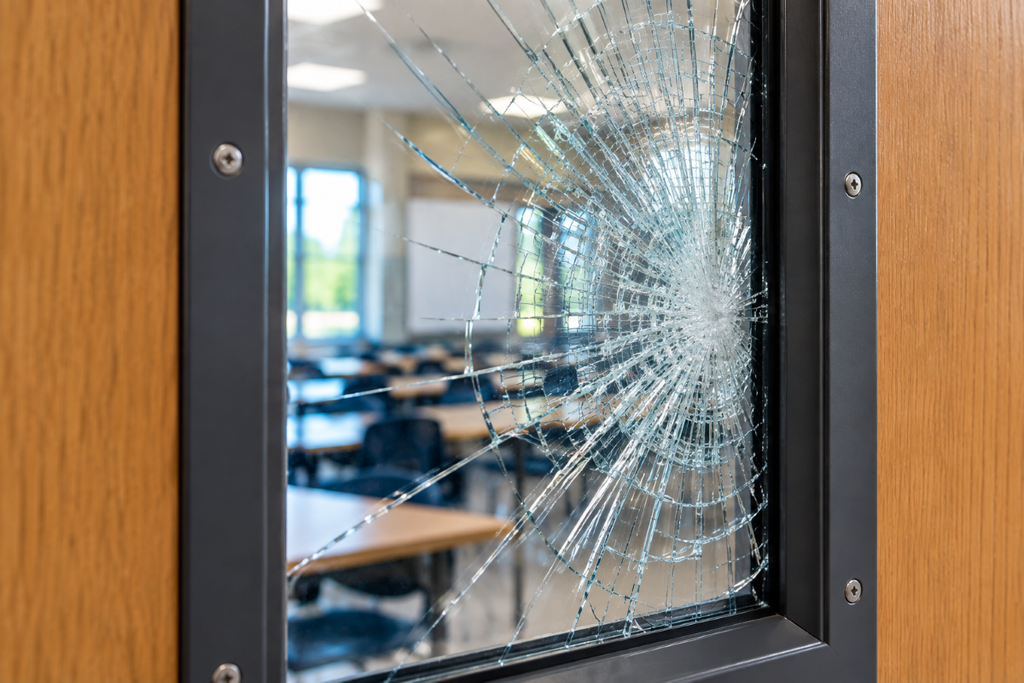
Glass can become a vulnerable part of an otherwise strong classroom boundary. Vision panels, sidelights, vestibules, and nearby windows may provide another path toward interior hardware if the glass can be broken and cleared quickly.
Security window film can help change how glass behaves after impact. Learn more about how security film during forced entry attempts helps hold fractured glass together and support additional delay.
When paired with an appropriate attachment system, the filmed glass may remain within the frame longer. That additional resistance can make it more difficult to quickly create a usable opening.
Security film should not be described as making glass unbreakable. Its role is retention and delay.
Schools should evaluate the door and surrounding glass as one protective boundary. Strengthening the lock while ignoring easily accessible glazing can leave a significant gap in the overall safety plan.
How Layered Security Creates More Reliable Protection
No single safety measure should carry the entire responsibility for protecting a classroom. Layered security combines multiple barriers so that if one layer is challenged, another continues to provide resistance or support response.
A practical classroom strategy may include:
- Reliable interior locking
- Strong door frames
- Protected glazing
- Clear communication
- Practiced procedures
Physical barriers create delay, while procedures help people use that time effectively.
This approach also avoids placing unrealistic expectations on teachers. Staff should not have to improvise physical security during an emergency. The environment should already support the actions they have been trained to take.
FlipLok’s one-motion design fits this philosophy by reducing the number of steps required to secure the classroom. The goal is simple operation so teachers can focus on students rather than troubleshooting hardware.
For broader school security planning, CISA and SchoolSafety.gov provide guidance that schools can use when evaluating physical security as part of a larger preparedness strategy.
What Schools Should Consider When Choosing Security Improvements
Schools should prioritize improvements based on vulnerabilities rather than buying technology simply because it is new.
Start by reviewing the areas that directly influence access:
- Classroom doors
- Exterior entrances
- Frames and strikes
- Door-adjacent glass
- Interior locking capability
Then consider how each improvement works during a real emergency.
Can staff operate it quickly? Does it depend on power? Does it maintain required accessibility and egress? Has the complete system been evaluated for its intended use?
Accessibility should remain part of the decision. The ADA Standards for Accessible Design provide requirements for accessible door operation, while applicable fire and building codes help ensure that security improvements do not create dangerous barriers to exit.
The strongest solution is one that improves resistance without making daily operation or emergency egress unnecessarily complicated.
FAQ
Does Delaying Entry Really Make A Difference?
Yes. Delaying access can give occupants additional time to secure themselves, communicate, and follow emergency procedures. Physical security is most useful when it supports a broader plan involving communication, training, and emergency response.
Is A Strong Lock Enough To Protect A Classroom?
No. A lock works as part of a system. Door construction, frame strength, strike anchoring, hinges, and nearby glass can all influence whether the doorway continues resisting force.
Can Security Window Film Prevent Someone From Breaking Glass?
Security film does not make ordinary glass unbreakable. Its purpose is to help hold fractured glass together after impact. When properly installed and attached, this can make an opening more difficult to clear quickly.
Why Should Classroom Locks Work From Inside?
Interior operation allows teachers to secure the classroom without entering the hallway. A simple locking method can also reduce hesitation because staff do not need to complete multiple unfamiliar steps during an emergency.
Should School Security Depend On Electronic Systems?
Electronic systems can support communication and awareness, but physical classroom protection should not necessarily depend on connectivity. Mechanical security measures can continue functioning during power, network, or software disruptions and can complement electronic systems as part of layered security.
Why Delaying an Intruder Saves Lives
Why delaying an intruder saves lives is ultimately about giving people more time to act. Strong doors, reinforced frames, reliable interior locks, and protected glass can create additional resistance while teachers and students follow established safety procedures.
FlipLok supports this layered approach with a one-motion classroom locking solution designed for dependable interior operation without power or connectivity. Contact us to learn more about our school safety solution and how stronger classroom boundaries can help create valuable time when it matters most.