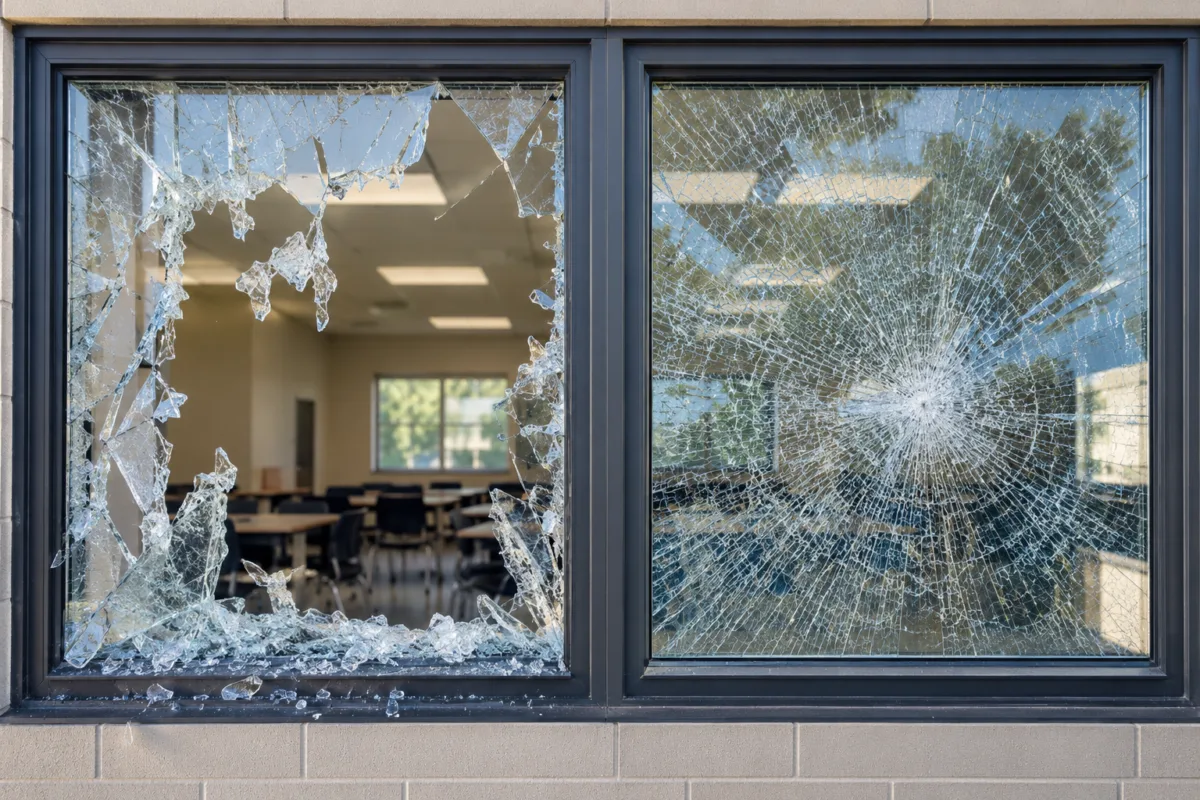
When Glass is impacted during a forced entry event, regular Glass will shatter rapidly (creating a breach) that would allow quicker access. Security film was created to alter what occurs after the Glass fractures; this is achieved via retaining the fractured Glass pieces and providing the glazing to stay intact longer.
The film doesn’t render ordinary Glass unbreakable, nor does it protect against penetration of bullets or other objects. Its advantage lies in delay and retention. Safety and Security films are specified properly to retain shattered Glass fragments, limit the number of loose shards released during the impact and make it more difficult for an individual attempting to force their way in to open up a viable hole through the window or door.
According to The International Window Film Association, Security window film can impede forced entry if it has been properly specified, installed and affixed to the window.
Delaying the time an individual has to gain entry can add another level of Security to a layered Security plan at Schools, homes, etc. Where there are readily available sources of accessible Glass. Effectiveness of Security film depends upon the film itself, but also on the Glass being utilized, frame, installation procedure and attachment method.
What Happens When Security Film Is Applied To Glass?
Security window film is a transparent layer bonded directly to the interior or exterior surface of existing glass. When the glass is hit hard enough to fracture, the film helps keep the broken pieces connected rather than allowing them to separate immediately.
The glass can still crack. What changes is how the fractured glass behaves afterward.
3M describes safety and security window films as thicker polyester films with aggressive adhesive systems designed to help hold broken glass pieces together. 3M Instead of a pane immediately breaking apart into loose fragments, the damaged glass may remain together as a flexible sheet.
This can provide two important benefits. First, it can reduce the amount of loose glass entering the protected space. Second, it can make creating a large opening more difficult because the intruder must continue working through the damaged glazing system.
The exact performance varies significantly depending on the film, glass construction, frame, and installation.
How Does Security Film Help Delay Forced Entry?
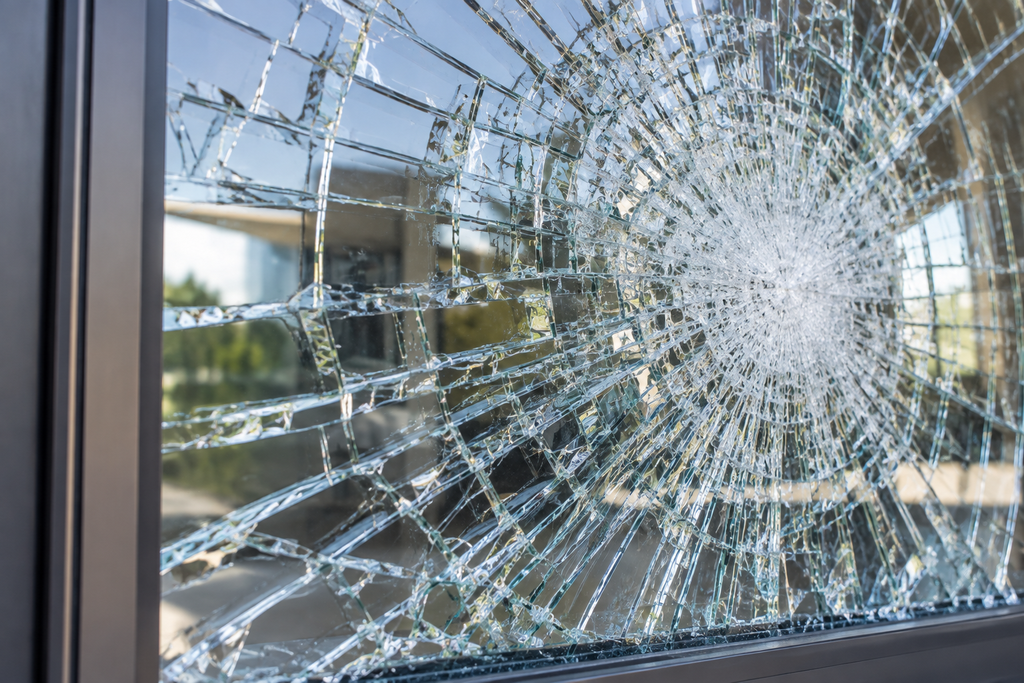
Security film delays entry by making broken glass harder to clear from the opening. An impact may fracture the pane, but the film continues connecting many of the broken pieces.
An intruder may therefore need additional impacts and additional time to create an opening large enough to pass through or reach interior hardware.
That distinction is important. Security film is not intended to guarantee that someone cannot enter. Even manufacturers of security glazing products emphasize that film should be viewed as a delay measure rather than an absolute barrier. 3M, for example, states that its safety and security films do not stop intruders but certain systems can help delay them when used with the appropriate attachment system. 3M
This is why security planning often focuses on delay rather than promises of complete prevention. Every additional obstacle can give occupants more time to follow emergency procedures and allow other safety measures to work.
Why Does Anchoring Matter?
Film applied to the center of the glass is only one part of the system. During a strong impact, the fractured pane may remain attached to the film but still pull away from the surrounding frame.
An attachment or anchoring system is designed to connect the filmed glass more securely to the window or door frame. This can help the damaged glazing remain within the opening instead of separating as one large sheet.
The International Window Film Association specifically identifies film type, installation method, and whether an attachment system is necessary as important considerations when selecting security glazing protection. International Window Film Association
Different manufacturers use different attachment methods, so the system should be specified for the glass and intended application. For example, 3M requires its Impact Protection Attachment Sealant for designated break and entry applications involving its security film systems. 3M
This is also why comparing products based only on film thickness can be misleading. Real performance depends on the complete glazing assembly.
Where Should Security Film Be Prioritized?
Not every pane of glass presents the same level of risk. Schools, homes, and commercial properties can begin by identifying glazing that is easily accessible or positioned near important entry points.
Priority areas may include:
- Door vision panels
- Entrance sidelights
- Ground-level windows
- Glass entry doors
- Accessible exterior windows
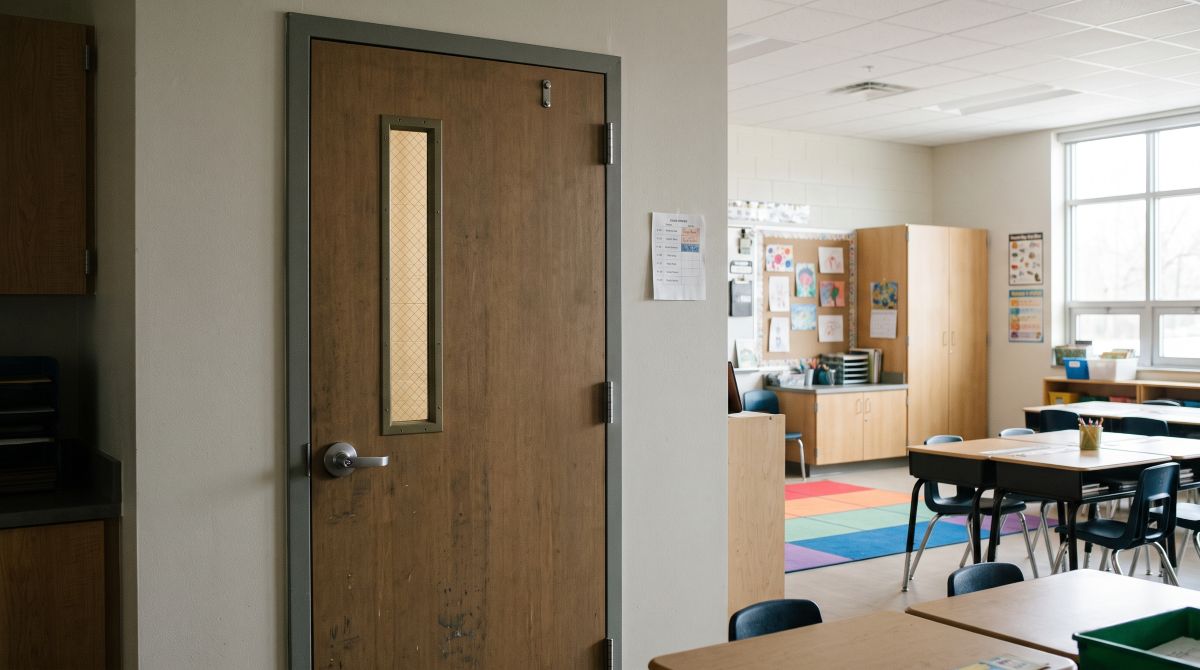
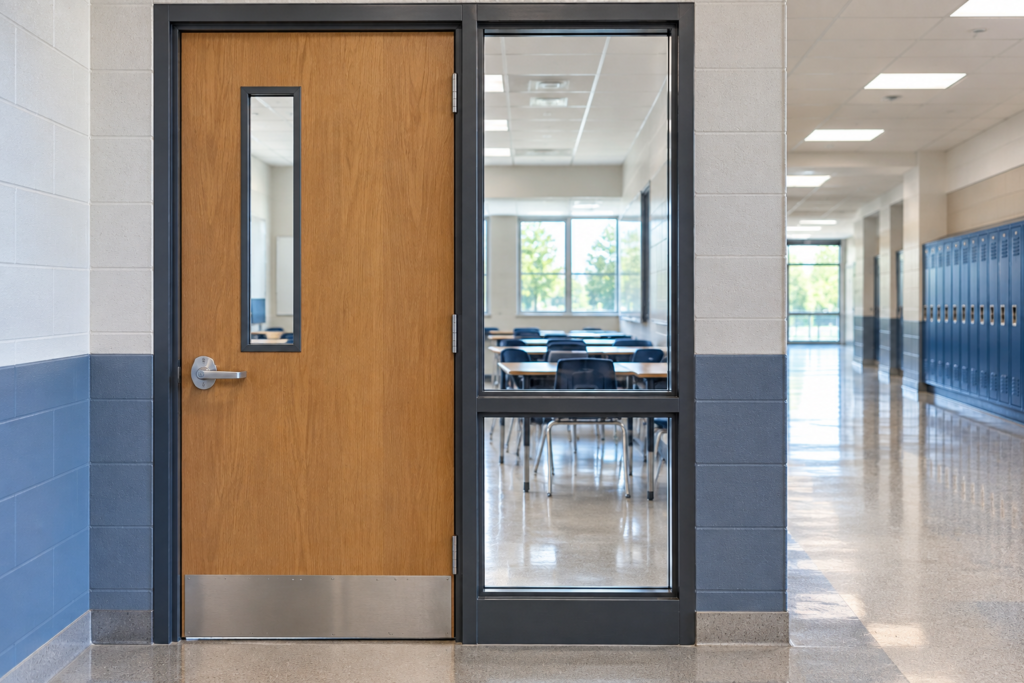
In a school, glass beside a classroom door can deserve particular attention because breaking it may allow someone to reach interior hardware. Entry vestibules and other ground-level glazing should also be considered as part of the overall physical security assessment.
CISA recommends a broader risk-based approach to school security planning that includes assessing threats, identifying vulnerabilities, evaluating existing measures, and choosing practical improvements to reduce remaining risk. CISA
Film should therefore complement strong doors, dependable locks, frames, communication procedures, and staff preparedness rather than replace them.
What Should Schools Know About Testing And Performance?
Security claims should be evaluated carefully. There is a significant difference between film holding broken glass together and a complete window system being tested against a defined forced-entry standard.
ASTM F3561 is one standard used to evaluate the forced-entry resistance of complete fenestration systems under specified testing conditions. ASTM notes that the test applies to the complete system as tested and is not intended to establish absolute prevention of forced entry. ASTM Store
That distinction matters because film, glass, anchoring, framing, and installation all contribute to system performance.
Schools considering security glazing should ask:
- What testing applies?
- Was the full system tested?
- Is attachment required?
- What glass is compatible?
- Who performs installation?
The goal is to understand what a product actually does rather than relying on broad terms such as “shatterproof” or “intruder proof.”
FAQ
Does Security Film Stop Glass From Breaking?
No. The glass can still fracture when struck. The purpose of security film is to help hold broken fragments together so the glazing behaves differently after impact. This can reduce loose shards and make the damaged pane more difficult to clear from the opening.
Is Security Film Bulletproof?
No. Security window film should not be described as bulletproof. 3M specifically states that bullets can pass through its safety and security films. Film is designed primarily for glass retention and, in properly designed systems, may help delay forced entry. 3M
Is Thicker Film Always Better?
Not necessarily. Thickness is only one part of performance. Film construction, adhesive, glass type, frame strength, anchoring, and installation method can all affect how the glazing behaves. The entire system should be evaluated for its intended application.
Can Security Film Be Added To Existing School Windows?
In many situations, film can be applied to existing glazing, making it an option for schools that do not want to replace every window. Compatibility and installation requirements vary, so the existing glass and framing should be evaluated before selecting a system.
Why Is Professional Installation Important?
Security applications depend on proper preparation, film placement, edge treatment, and sometimes an attachment system. Poor installation can reduce performance. A qualified installer can evaluate the glazing and follow the specific manufacturer’s requirements for the selected system.
How Security Film Works During Forced Entry Attempts
Security film works by helping broken glass remain together after impact, reducing loose fragments and making it more difficult to quickly clear an opening. When the film, glass, frame, and anchoring system work together, that additional resistance can support a stronger layered security strategy.
FlipLok provides security film solutions alongside physical door security options to help schools strengthen vulnerable entry points. Contact us to learn more about our school safety solution and how doors, locks, and glass protection can work together.