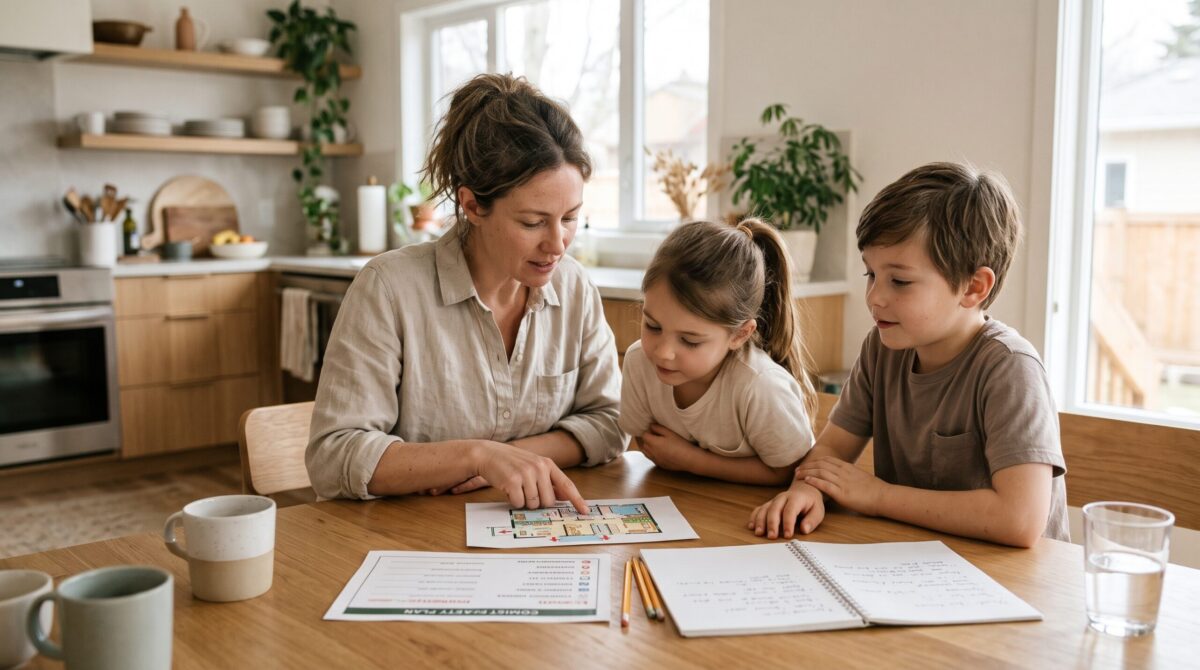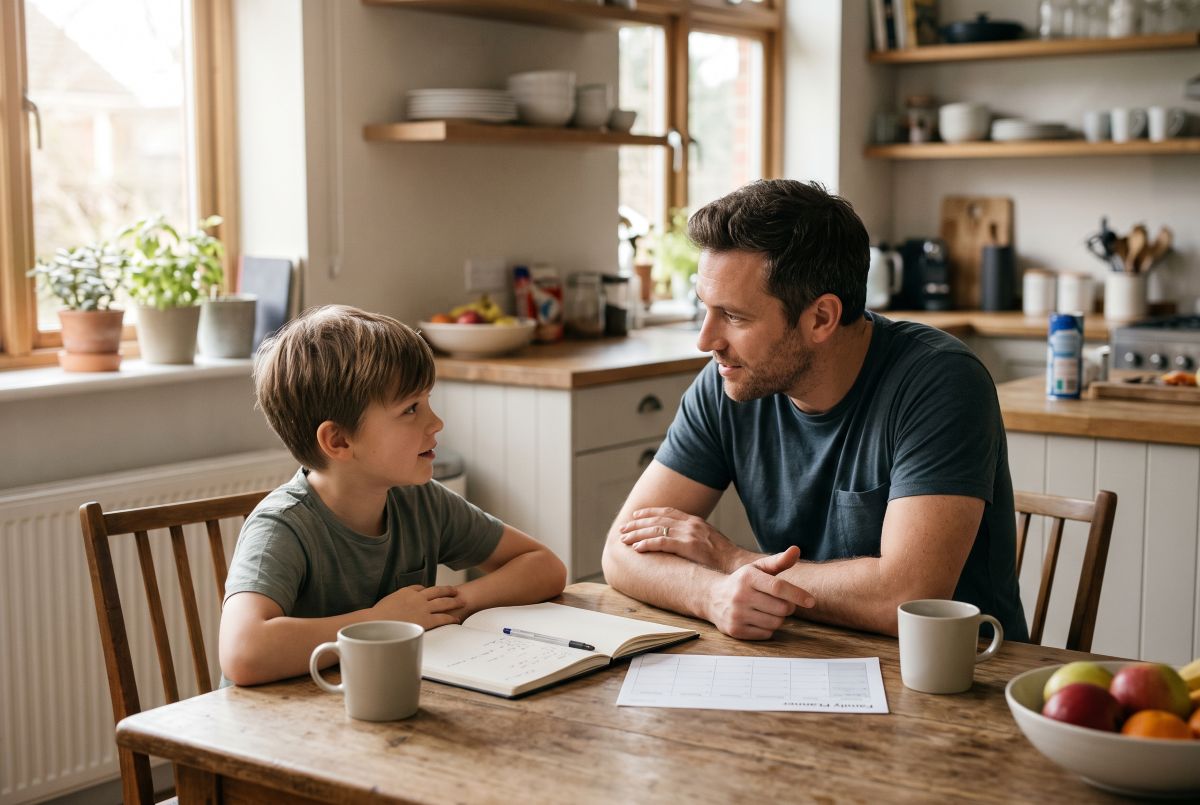
Learning how to talk to kids about safety calmly starts with keeping the conversation simple, reassuring, and focused on what children can do. Kids do not need every detail about possible emergencies. They need clear first steps, trusted adults, and confidence that the people around them have plans to help keep them safe.
Children often respond as much to an adult’s tone as to the words being used. If a safety conversation sounds frightening or urgent, kids may focus on the fear instead of the lesson. Calm language helps them understand that preparedness is a normal part of everyday life.
The goal is not to make children constantly alert. It is to give them a few practical habits they can remember at home, at school, and in public spaces.
Short conversations, familiar routines, and simple safety language can help children build confidence without making them feel responsible for situations adults are meant to manage.
Why Is It Important To Talk To Kids About Safety Calmly?
When adults talk to kids about safety calmly, children are more likely to understand the message without becoming overwhelmed. Fear can make it harder for kids to process instructions, particularly when the subject already feels unfamiliar.
Instead of beginning with everything that could go wrong, start with what the child should do.
For example, a parent might say, “If something unexpected happens, stay with a trusted adult and listen to their instructions.” That gives the child a clear action without introducing unnecessary details.
The American Academy of Pediatrics recommends giving children basic, age-appropriate information without unnecessary details that may increase fear.
The same principle works in schools. Teachers can explain that safety routines are practiced so everyone knows what to do, just like practicing a fire drill.
Helpful messages might include:
- Stay with trusted adults
- Listen to instructions
- Stay with your group
- Ask for help
- Follow the first step
Safety conversations should make children feel supported, not responsible for protecting everyone around them.
How Should You Explain Safety To Younger Children?
Younger children usually benefit from short, concrete explanations. Long discussions about risks can create confusion because younger kids may not yet understand probability or context.
When you talk to kids about safety calmly, use examples they already understand.
You might say:
“Teachers have plans to help everyone stay safe.”
“We practice so we know what to do.”
“If you are unsure, find a trusted adult.”
These phrases emphasize support and direction rather than danger.
Children also learn well through repetition. Instead of having one large safety conversation, repeat one or two simple messages during ordinary moments. A car ride, school drop-off, or family walk can be enough.
Keep questions open too. Asking, “Who would you go to if you needed help?” can reinforce the lesson without making the discussion feel serious or frightening.
How Can Parents Avoid Creating Fear?
The simplest way to reduce fear is to keep the focus on preparation instead of threats.
Parents do not need to describe frightening scenarios unless a child asks a direct question. Even then, answers should be honest but limited to the amount of information the child needs.
Avoid phrases that suggest danger is everywhere. Instead of saying, “You always have to watch out,” try, “Pay attention to where you are and know which adults can help you.”
That difference matters.
A healthy approach to talk to kids about safety calmly teaches awareness without encouraging children to distrust everyone or constantly scan for danger.
Parents can also model the behavior they want children to learn. Calmly locking doors, checking plans, or explaining a routine shows children that safety is simply part of responsible daily life.
Why Short Safety Conversations Work Better
One long conversation can make safety feel like a major event. Short discussions spread over time usually feel more natural.
Children also retain information better when the message is simple enough to repeat.
Try focusing on one topic at a time:
- Who is a trusted adult?
- Where do we meet?
- What happens during a drill?
- What should you do first?
When adults talk to kids about safety calmly in small pieces, children have time to process each idea without being overloaded.
Short conversations also give children more opportunities to ask questions. A question that comes up naturally often reveals what the child actually wants to understand.
If a child seems worried, avoid adding more details immediately. Answer the question that was asked, reinforce the plan, and return to the normal routine.
Preparedness should feel familiar, not like a constant warning.
How Should Parents Talk About School Safety?
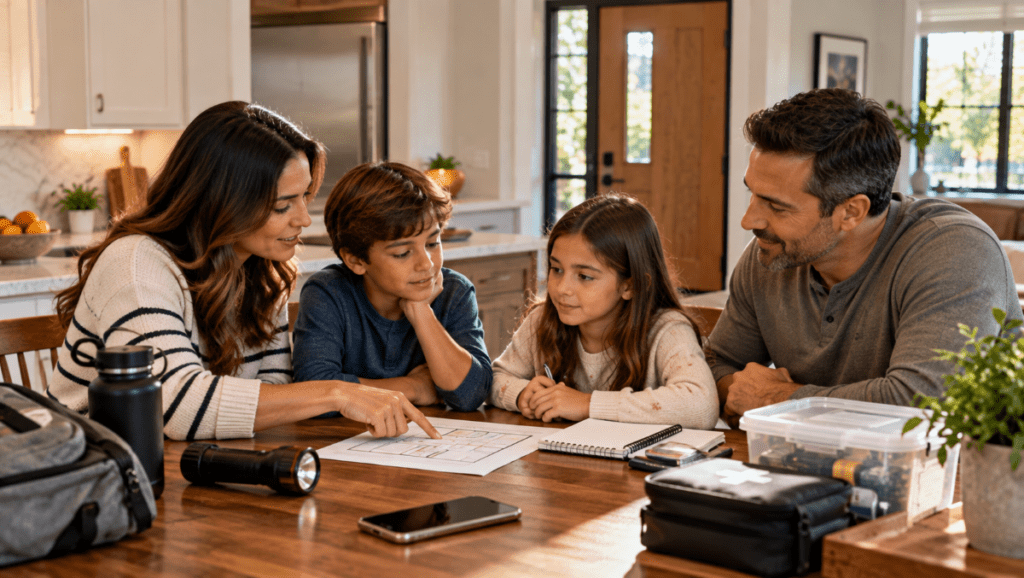
School safety conversations should reinforce that teachers and staff have plans, procedures, and tools to help protect students.
A child does not need to understand every physical security measure in the building. They do need to understand their role, which is usually to listen, stay with the group, and follow the teacher’s instructions.
This is also a good opportunity to avoid portraying teachers as heroes who are expected to take extraordinary risks.
Instead, explain that teachers are supported by school procedures and safety systems.
You might say:
“Your teacher knows what to do and has tools to help keep the classroom secure.”
That message creates trust without suggesting that safety depends on one person improvising under pressure.
This approach also supports preparedness without fear, which focuses on calm routines and confidence instead of frightening messaging.
How Reliable Safety Tools Support Calm Conversations
Children do not need technical explanations about door hardware, but adults benefit from knowing that dependable physical security can support the calm message they are giving kids.
If teachers have a straightforward way to secure a classroom, they can focus on students rather than troubleshooting equipment.
FlipLok supports this approach with a one-motion mechanical classroom locking solution that works without power, Wi-Fi, or electronic connectivity. A simple physical security measure can reduce hesitation and support consistent classroom procedures.
That matters because safety conversations are more reassuring when adults trust the systems around them.
The broader message for children remains simple: adults have plans and tools to help.
How To Answer Difficult Questions From Kids
Children sometimes ask direct questions after hearing something at school, online, or from other people.
Start by finding out what they already know.
Try asking, “What did you hear?” or “What are you wondering about?”
Their answer can help you avoid giving them information they were not asking for.
Then respond with one clear truth and one practical reassurance.
For example:
“Schools practice different safety routines so teachers and students know what to do.”
Then return to the child’s role:
“If something unexpected happens, your job is to listen to your teacher and stay with your class.”
When you talk to kids about safety calmly, you do not have to answer every possible follow-up at once. Give children enough information to understand the plan and let them guide how much more they want to know.
FAQ
What Age Should Parents Start Talking About Safety?
Simple safety conversations can begin when children are young enough to understand basic directions. Start with trusted adults, staying together, and asking for help. More detailed discussions can be introduced gradually as children mature.
Should Parents Talk To Kids About School Emergencies?
Yes, but keep the discussion age appropriate. Focus on drills, listening to teachers, staying with the group, and following instructions rather than describing frightening scenarios in detail.
What If My Child Becomes Anxious During Safety Conversations?
Shorten the conversation and return to simple first steps. Ask what is worrying them instead of assuming. Reassure them that adults have plans and that children are not expected to manage emergencies on their own.
How Often Should Families Discuss Safety?
Brief reminders throughout the year are usually more useful than one intense conversation. Review plans when routines change, children change schools, or the family updates its emergency information.
What Is The Best Way To Talk To Kids About Safety Calmly?
The best way to talk to kids about safety calmly is to use short, age-appropriate language, focus on trusted adults and first steps, and avoid unnecessary details. Safety should feel like a familiar routine rather than a frightening subject.
How to Talk to Kids About Safety Calmly
Knowing how to talk to kids about safety calmly helps families build confidence without making fear part of everyday life. Clear language, short conversations, trusted adults, and familiar routines give children useful guidance while allowing adults to carry the responsibility for preparedness.
FlipLok believes school protection should be dependable, simple, and easy for teachers to use. Contact us to learn more about our school safety solution and how reliable classroom security can support calmer preparedness for teachers, students, and families.