Budget conscious school safety starts with practical investments that protect classrooms today and remain sustainable over time. In order to be effective, budget planning for safety and security needs to address both the immediate and the long-term. Districts need to make sure that their investments will protect them today and tomorrow.
There are many safety and security discussions that revolve around the use of very expensive technologies. However, much of effective school safety and security is built by investing in practical improvements that strengthen the most critical aspects of the school’s defense. For many districts, budget conscious school safety means focusing on the areas that deliver strong protection without requiring the highest cost solutions.
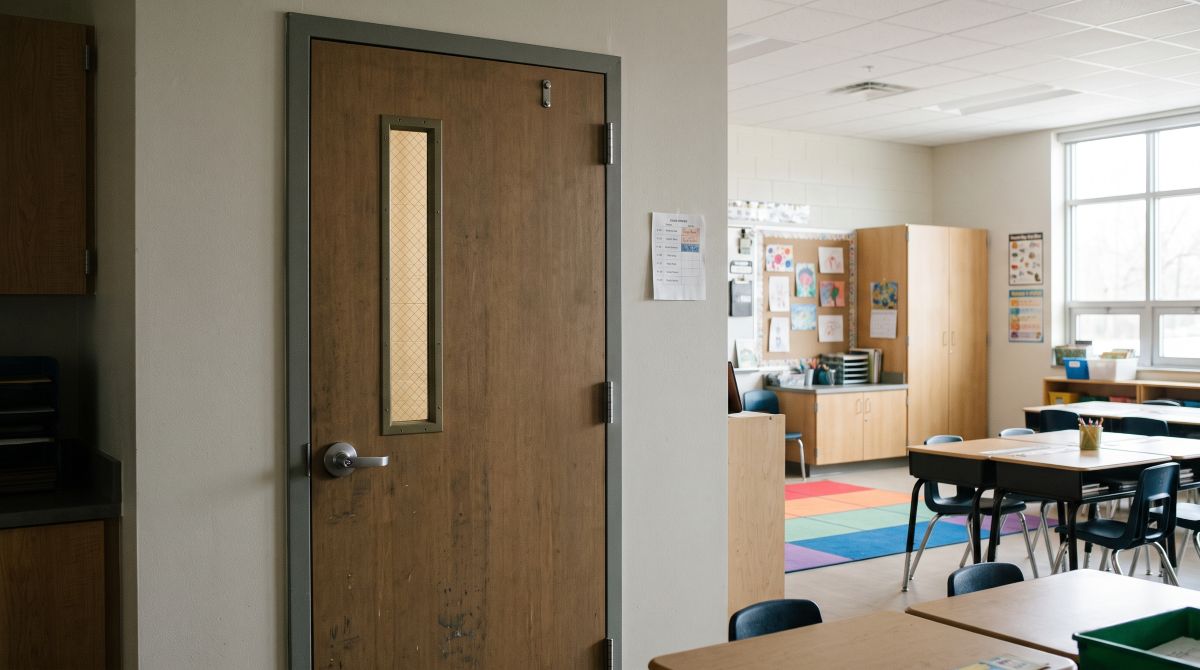
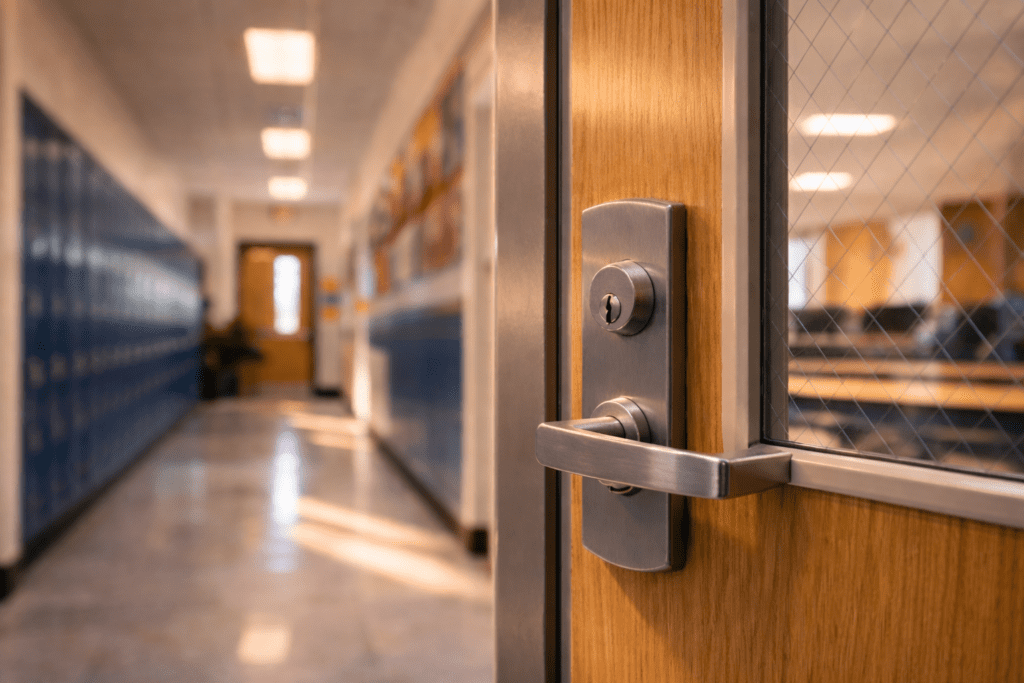
For most schools, the foundation of those defenses begins at the classroom door. If a teacher can quickly lock down the classroom from within, the response to an emergency becomes quicker and more consistent. That is a fundamental aspect of protection that does not need to rely on expensive technology to function effectively.
When districts make budget conscious decisions, they want to make sure each dollar spent counts. By focusing on reliable locking mechanisms, physical strength, and simple designs, districts can implement safer and more secure learning environments that are realistic, quantifiable, and easier to maintain over time. This is the foundation of budget conscious school safety.
What Should Budget Conscious Districts Prioritize First?
First and foremost, budget conscious districts should focus on securing the classroom door. The classroom door is where the staff member responsible for securing the classroom needs to respond the fastest. In a lockdown situation, no teacher should ever have to step out of the classroom, look for a key, or wait for a system response before they can lock the door.
The classroom door locking mechanism and the emergency classroom locking mechanism need to allow for the staff member to take immediate action. When locking is quick, intuitive, and consistent, the staff member can secure the classroom, focus on the students, and minimize potential disruptions. Improving classroom door locking typically provides more security than developing features that require power, connectivity, or multiple steps.
By beginning with these types of improvements, budget conscious districts can begin to achieve significant safety improvements without having to fully replace the classroom door. For example, improving interior locking capabilities of classroom doors is typically one of the least expensive and most cost-effective methods to enhance classroom security. This is one of the clearest examples of budget conscious school safety in practice.
To develop a practical framework for prioritizing layers of school security, districts can refer to the CISA K–12 School Security Guide, 3rd Edition.
For a practical framework on layered school security priorities, districts can reference the CISA K–12 School Security Guide (3rd Edition)
How Can Districts Make Their Doors Stronger Than They Are Now? Do Districts Have to Replace Entire Door Assemblies to Strengthen Them?
Rather than replacing an entire door assembly, districts can also choose to strengthen the doors and hardware currently in place. The primary goal is to make the door, frame, and hardware work together as a single system to resist force and provide sufficient time for a response.
While features matter, the strength and reliability of a locking device matters more. A locking mechanism that engages rapidly, but does not provide enough force to hold back an intruder, does not provide a viable level of protection. Districts can improve resistance at a reduced cost compared to full door replacement by strengthening the frame, upgrading hardware, and implementing reliable mechanical lockdown locks.
Additionally, mechanical lockdown devices can also serve to reduce reliance on power, Wi-Fi, or other electronic systems. Because emergencies do not usually occur under ideal circumstances, this consistency is beneficial in reducing hesitation and allowing staff to respond more quickly. For districts focused on budget conscious school safety, mechanical consistency can also help reduce complexity over time.
For additional planning tools and physical security resources, districts can utilize SchoolSafety.gov as a centralized resource.
Why Is Glass Protection Such a High Impact, Lower-Cost Upgrade?
Glass is one of the most commonly overlooked vulnerabilities in schools. Vision panels and sidelights can become entry points for an intruder even if a door is locked, therefore, glass protection is another critical layer of security.
Security window film is one of the least expensive options available to add resistance to vulnerable glass points. When installed correctly, security window film can help hold glass together after impact and slow down an intruder while providing a barrier to prevent injuries from broken glass. This can provide a substantial amount of delay without requiring the replacement of glass or doors.
Because security window film is typically less expensive than replacing glass or doors, districts receive strong value from this type of upgrade. Additionally, this type of upgrade can complement door and hardware improvements by limiting the likelihood that an intruder will gain access to the classroom through adjacent glass. For many districts, this makes glass protection an important part of budget conscious school safety.
For a curated list of physical security strategies and resources, districts can visit SchoolSafety.gov Physical Security Resources.

How Does Simplicity Help Reduce Long-Term Security Costs?
Long-term budget planning should consider the long-term security costs, not just the initial purchase price. Any security solution that requires regular maintenance, software updates, battery replacements, or specialized training will likely result in higher costs over time and provide additional failure points during emergencies.
Simple, mechanical solutions generally require less maintenance and fewer complex elements to sustain. When devices operate consistently and follow the same procedure, staff responses become predictable. Predictable responses under stress enable teachers to respond quickly during emergencies.
Simplicity also facilitates broader district-wide implementation. Solutions that are easily understood are simpler to train. Consistent training across all campuses reduces confusion during drills and allows new staff to quickly adapt to established procedures. These advantages make simplicity a key part of budget conscious school safety.
Advantages of Using Simple Safety Devices
• Easier Training
• Less Maintenance
• Fewer Failure Points
• Faster Staff Response
For budget-conscious districts, simplicity is not a preference; rather, it is a practical approach to reducing risks and maintaining safety improvements over time.
How Can Districts Develop Trust by Communicating Effectively and Being Accountable?
Developing trust is equally as important as developing security plans. Clear communication and accountability build trust. Districts must continually assess how quickly classrooms can be secured, whether staff members feel confident using the safety tools provided, and how safety improvements are communicated to educators and families.
Communicating transparently with stakeholders promotes trust. When educators and families understand the investments being made and why, there is increased support. Furthermore, communicating transparently demonstrates that safety planning is proactive and based on practical priorities.
Examples of Accountability Include
• Verify interior lockdown
• Confirm staff confidence
• Review maintenance requirements
• Share updates with clarity
Districts must also confirm that any safety hardware chosen does not compromise accessibility. For example, the ADA Standards for Accessible Design are a useful guide for determining accessible design compliance. In practice, budget conscious school safety should always remain practical, sustainable, and accessible.
FAQ
What Is The Most Cost-Effective School Safety Upgrade?
One of the most cost-effective upgrades is enhancing classroom door security, allowing teachers to quickly and consistently lock the room from within the classroom. This approach focuses on immediate protection during a lockdown, and avoids reliance on power, Wi-Fi, or complex actions.
Are Electronic Locks Necessary for Improved School Security?
No. Electronic systems can aid in managing access, however, they can also introduce reliance on power, connectivity, and ongoing maintenance. Mechanical lockdown locks can provide reliable classroom protection in real-world conditions, particularly when combined with secure doors and hardware.
Why Should Districts Consider Security Window Film?
Security window film can protect vulnerable glass areas, such as vision panels and sidelights, by helping to hold glass together after an impact. This can provide delay and reduce the risk of injury from shattered glass. Typically, security window film is less expensive than replacing glass or doors.
How Do Districts Minimize Future Security Costs?
Districts can minimize future security costs by selecting solutions that are simpler to maintain and require fewer ongoing complexities. Simple, mechanical solutions tend to be easier to train on and less dependent on software updates, battery replacements, or network connections.
What Should Districts Measure to Confirm Enhancements?
Districts should measure how quickly classrooms can be locked from the inside of the room; how confident staff members are in the tools they are provided; and whether the door and hardware system are capable of providing a substantial barrier. Routine evaluation, refresher training, and open communication are essential to ensure that security planning remains effective.
Budget Conscious School Safety for Districts
Security planning for districts does not require expensive technology to be effective. When districts focus on classroom doors, reliable locking mechanisms, glass protection, and simple design, they are developing school safety that will stand up to real emergency situations.
FlipLok supports classroom protection with a single-motion interior locking mechanism, physical strength, and consistent operation without power or connectivity. If you would like more information about FlipLok and how safer learning environments can be developed where seconds truly matter, contact us today.