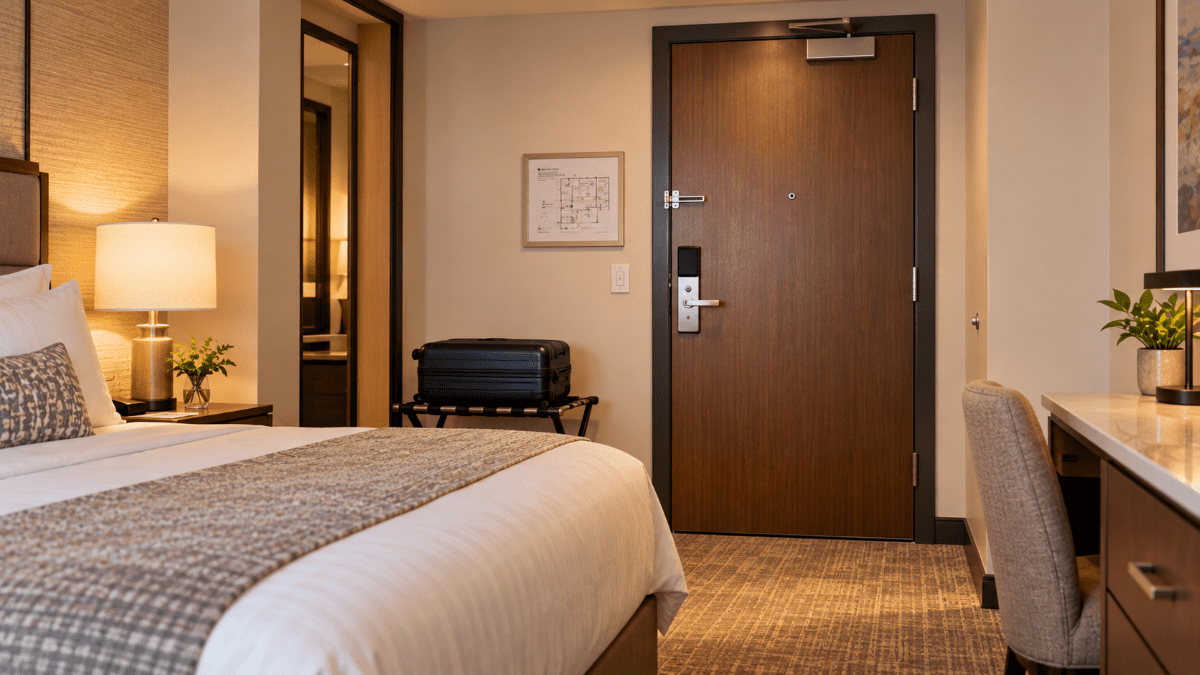
Hotel safe room basics begin with understanding how to make a temporary space safer without turning travel into a stressful experience. Whether staying in a hotel, vacation rental, or other short-term accommodation, travelers should know how to evaluate door security, identify emergency exits, and communicate with hotel staff when necessary.
Even though a hotel room feels like it could be a home away from home, the safety elements of the room could be very different than those in your own home. Therefore, travelers need to look at things such as door lock functionality, windows and doors you can open, the room’s location relative to the rest of the facility, and emergency response plans as soon as you arrive at a new destination.
Simple precautions can help travelers feel more confident. Checking that the door locks correctly, reviewing the evacuation map, and keeping a phone accessible are practical steps that take little effort.
The goal is not to expect danger during every trip. It is to understand the space, prepare for unexpected situations, and maintain a calm routine that supports personal and family safety without interfering with the enjoyment of travel.
What Do Hotel Safe Room Basics Actually Mean?
Hotel safe room basics refer to simple precautions that help travelers understand the protective features and limitations of their temporary accommodation.
A hotel room may offer a place to temporarily shelter during certain security emergencies, but it should not be assumed to be a certified safe room or a suitable shelter for every hazard.
The most important features include:
- Functional door locks
- Secure windows
- Clear exit routes
- Reliable communication
- Accessible emergency information
A safe travel plan also includes knowing when to leave rather than remain inside. For example, a building fire generally requires prompt evacuation when a safe route is available.
Travelers should understand the layout of their accommodation and identify who to contact if something appears unsafe.
The U.S. Department of State’s lodging safety guidance recommends checking room locks, communication options, and emergency exits after arrival.
How Can You Choose a Safer Hotel Room?
Room selection can influence privacy, accessibility, and emergency preparedness. Before booking, travelers should review the property’s safety features and consider their individual needs.
When applying hotel safe room basics, choose accommodation with reliable guest services, appropriate fire protection, and accessible exit routes.
Consider asking about:
- Smoke alarms
- Fire sprinklers
- Accessible stairways
- Room security features
- Staff availability
Room location deserves attention, but there is no universally safest floor. A ground-floor room may provide convenient access while also having windows that are easier to approach. Higher floors may reduce some access concerns but make evacuation more demanding.
Travelers with mobility needs should ask about accessible rooms and evacuation assistance before booking.
The U.S. Fire Administration’s hotel safety guidance recommends selecting hotels with appropriate smoke alarms and automatic fire sprinklers.
Choosing accommodation thoughtfully provides a stronger starting point for a calm, practical travel safety plan.
What Should You Check When Entering a Hotel Room?
A short arrival inspection is one of the most useful parts of hotel safe room basics. Before unpacking, confirm that the room’s essential security features work correctly.
Close the entry door and check that it latches and locks as intended. Test any built-in secondary locking mechanism without forcing or modifying the hardware.
Also inspect accessible windows, balcony doors, and privacy curtains. Report faulty locks or damaged hardware to the front desk and request another room if the issue cannot be promptly resolved.
Simple Arrival Checklist
- Check entry locks
- Inspect balcony doors
- Test room telephone
- Locate emergency information
- Confirm window security
Keep the room key secure and avoid sharing your room number unnecessarily.
Travelers should also avoid opening the door to unexpected visitors without verifying their identity through the hotel.
Additional portable locking devices should not be installed or used if they violate property rules, obstruct emergency egress, or prevent necessary emergency access. Never modify a hotel’s fire-rated door or its hardware without authorization.
Why Should Emergency Exits Come Before Extra Security?
Fire safety is essential because some emergencies require people to leave the building rather than remain behind a locked door.
Understanding hotel safe room basics means knowing both how to secure a room appropriately and how to exit safely.
After checking in, locate the evacuation map and identify two routes out of the building when available. Find the nearest stairwells and learn how to reach them without relying solely on elevators.
The U.S. Fire Administration recommends locating the two closest exits and counting the doors between the guest room and those exits.
During a fire, follow alarms, staff instructions, and emergency procedures. Use the stairs rather than elevators unless emergency officials direct otherwise.
If smoke or fire blocks safe evacuation, remain away from the hazard, close the door, and contact emergency services to report your location and request assistance.
Security should never come at the expense of escape.
How Can Families Prepare Calmly While Traveling?
Families benefit from simple travel routines that make unfamiliar surroundings easier to navigate.
Hotel safe room basics should include a brief conversation about where the room is located, how to contact the front desk, and where family members should meet if separated.
Children do not need frightening explanations. They need reassurance that adults understand the plan and will guide them during unexpected situations.
Useful habits include:
- Keep phones charged
- Save emergency contacts
- Review meeting locations
- Know the hotel address
- Secure doors nightly
For international travel, the U.S. Department of State’s travel checklist recommends reviewing destination information, organizing important documents, and preparing for unexpected disruptions.
A short check-in routine can help travelers enjoy their stay without constantly worrying about security.
Similar principles also apply at home. Learn more about creating safe spaces at home without panic through dependable door security and familiar household routines.
FAQ
What Are the Most Important Hotel Safe Room Basics?
The most important hotel safe room basics include checking entry door locks, securing accessible windows, locating emergency exits, and knowing how to contact hotel staff. Travelers should also confirm that smoke alarms and other essential safety features are present. A practical plan accounts for both temporary shelter and safe evacuation.
Is It Safer to Stay on a Higher Hotel Floor?
Not necessarily. Higher floors may offer more separation from street-level access, but they can also make evacuation more difficult. The best location depends on the building, its fire protection systems, accessibility requirements, and the traveler’s individual circumstances. Prioritize working safety features and usable exits over a particular floor number.
Should I Bring an Extra Door Lock When Traveling?
An additional device is not always necessary or appropriate. First, check the hotel’s existing locking hardware and report problems to management. Avoid accessories that interfere with emergency escape, damage the door, or prevent authorized emergency access. Travelers should follow property policies and applicable safety requirements before considering supplemental hardware.
Can a Hotel Room Be Used as a Temporary Safe Space?
Sometimes, a hotel room may provide temporary protection during a security emergency when leaving would be unsafe. However, ordinary guest rooms are not certified safe rooms, and staying inside is not appropriate for every hazard. Follow hotel emergency procedures and instructions from responders, particularly during fires, floods, and evacuation orders.
How Can Parents Explain Hotel Safety to Children?
Parents can explain hotel safety through simple, reassuring instructions. Show children where the room is located, how to contact a trusted adult, and what to do if they become separated. Avoid dramatic scenarios or lengthy warnings. The goal is to make travel safety feel like a normal family routine.
Hotel Safe Room Basics: Travel With Confidence
Hotel safe room basics help travelers feel more prepared by combining dependable door security, awareness of emergency exits, clear communication, and simple routines. Understanding when to secure a room and when to evacuate is essential to a balanced safety plan.
FlipLok believes reliable protection should be practical and easy to use. Our residential locking solutions support stronger door security at home and in compatible rental properties where installation is permitted.
Contact FlipLok to learn more about our residential solution and how layered protection can support everyday safety.