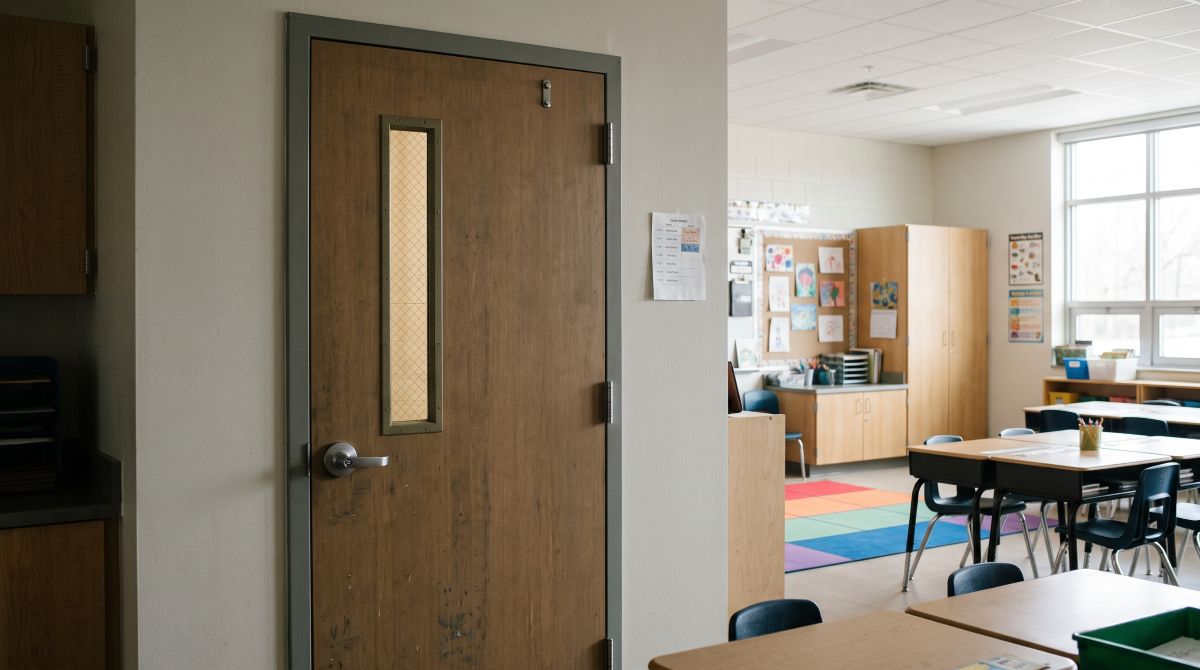
What makes a space defensible is the combination of physical barriers, reliable locking systems, controlled access, and clear emergency procedures that help protect people inside. In schools, a defensible classroom is one that can be secured quickly, resists unauthorized entry, and allows teachers and students to follow established safety plans.
A strong lock alone does not make a classroom secure. Doors, frames, hinges, glass, and interior hardware must work together to create a dependable protective boundary. If one component is vulnerable, the entire system may be easier to compromise.
Defensible spaces should also remain practical. Teachers need security tools they can operate without complicated steps, while students need a learning environment that feels comfortable and welcoming.
The goal is not to promise that a room can withstand every threat. It is to strengthen the physical environment, reduce hesitation, and provide additional time for communication and emergency response. A truly effective safety strategy makes protection easier without making daily school life more difficult.
What Makes a Space Defensible in a School?
A defensible classroom provides a stronger physical boundary between occupants and potential threats while supporting safe, organized emergency procedures.
Understanding what makes a space defensible begins with identifying the features that help control access and maintain protection.
Important elements include:
- Strong classroom doors
- Reliable interior locks
- Reinforced door frames
- Protected glass areas
- Clear emergency procedures
These layers work together. A sturdy door may offer little additional protection if its frame is weak or if adjacent glass allows access to the locking hardware.
The CISA K-12 School Security Guide recommends evaluating school security through a layered approach that addresses vulnerabilities across buildings and campuses.
The strongest classroom improvements focus on how the entire space functions rather than relying on a single security product.
How Do Doors and Locking Systems Create a Defensible Space?
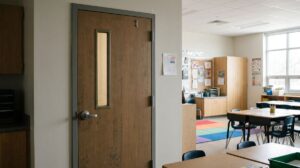
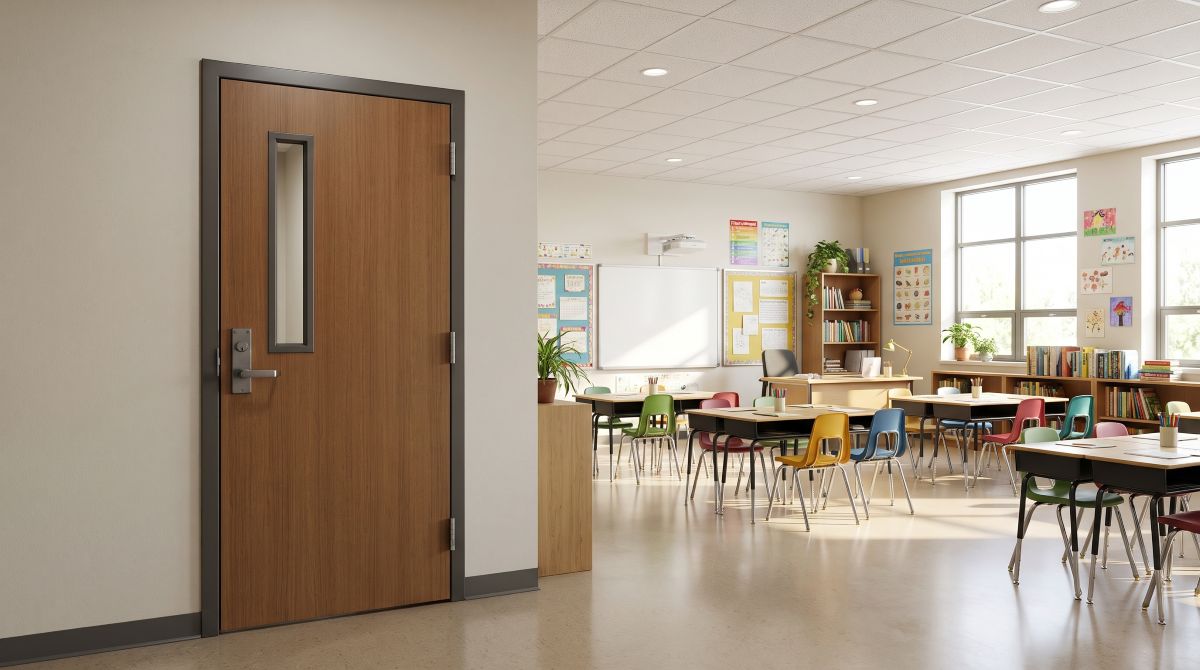
Classroom doors are essential because they create physical separation between occupants and someone attempting unauthorized entry.
A dependable locking system should allow teachers to secure the door from inside without stepping into the hallway. The process should be intuitive and consistent so staff can act without unnecessary hesitation.
When evaluating what makes a space defensible, schools should consider both locking speed and the strength of the complete door assembly.
FlipLok provides a one-motion mechanical classroom locking solution designed to operate without electricity, batteries, or Wi-Fi. Its simple operation helps teachers secure classroom doors quickly while focusing on students.
However, locks should always be evaluated alongside door frames, strikes, hinges, and installation requirements.
For more information, explore how classroom locking systems contribute to stronger physical protection.
Why Are Glass and Entry Points Important?
Glass is often overlooked when evaluating classroom protection. Vision panels, sidelights, and windows near classroom doors can create vulnerabilities even when the primary door is locked.
Understanding what makes a space defensible means examining every accessible opening that could weaken the protective boundary.
Security window film can help hold fractured glass together after impact. When properly specified and installed, particularly with an appropriate attachment system, it may help delay the creation of a usable opening.
The International Window Film Association explains that security film can slow forced entry, although it does not make ordinary glass unbreakable.
Schools should evaluate glass protection alongside doors, frames, and locking hardware.
For additional details, read how security film works during forced entry attempts.
How Do Accessibility and Safe Egress Affect Security?
A defensible classroom must protect occupants without preventing them from leaving during an emergency that requires evacuation.
Safety improvements should support both controlled access and appropriate emergency egress. Locking hardware should be easy to operate, accessible to intended users, and compatible with applicable building and fire codes.
The U.S. Access Board’s ADA guidance explains important requirements for accessible door hardware, including one-hand operation and limits on movements requiring tight grasping or wrist twisting.
These considerations are essential when determining what makes a space defensible in a school.
A security device should never create unnecessary obstacles for students, teachers, or emergency personnel.
Administrators should consult local building and fire authorities before installing or modifying classroom locking hardware to confirm that the complete installation satisfies applicable requirements.
Why Do Preparation and Maintenance Matter?
Physical protection is only useful when the equipment functions correctly and people understand how to use it.
A classroom door may have strong hardware but still perform poorly if the latch is misaligned, the frame is damaged, or staff are unfamiliar with the locking mechanism.
Effective school planning includes:
- Routine door inspections
- Hardware maintenance
- Staff safety training
- Clear communication procedures
- Age-appropriate student instruction
This is another important aspect of what makes a space defensible. Protection depends on consistent performance during ordinary school days, not only during scheduled drills.
Schools can strengthen preparedness by checking existing doors, addressing damaged hardware, and ensuring that substitute teachers and other authorized staff understand classroom procedures.
The SchoolSafety.gov physical security resources provide additional guidance on how buildings, equipment, policies, and training contribute to school security.
Preparedness and dependable physical security should reinforce each other.
FAQ
What Makes a Space Defensible During an Emergency?
A defensible space combines dependable physical barriers, controlled access, reliable door hardware, and procedures that support safe response. In classrooms, this often means securing the door from inside while maintaining an accessible exit. The space should be evaluated as a complete system rather than judged by the strength of its lock alone.
Can Any Classroom Become a Defensible Space?
Many classrooms can be strengthened through improvements to door hardware, frames, glazing, and emergency procedures. However, the appropriate upgrades depend on the building’s construction and existing vulnerabilities. A strengthened classroom is not automatically a certified storm safe room, and no individual product can guarantee complete protection against every threat.
Are Mechanical Locks Effective for Defensible Classrooms?
Mechanical locks can support dependable classroom security because they do not require electricity or network connectivity. Their effectiveness still depends on proper installation, compatible door construction, routine maintenance, and appropriate emergency operation. Schools should evaluate the complete locking system and verify compliance with applicable safety requirements.
Does Security Window Film Make a Classroom Defensible?
Security film can contribute to a stronger protective boundary by helping fractured glass remain together after impact. It should not be considered a substitute for dependable doors and locks. Its performance depends on the complete glazing system, including the glass, frame, film, anchoring, and installation.
Is a Defensible Classroom the Same as a Safe Room?
Not necessarily. A defensible classroom generally refers to a space strengthened against unauthorized entry. A formally designed storm safe room must meet separate engineering and construction requirements. Schools should avoid treating these terms as interchangeable when evaluating security products or building upgrades.
What Makes a Space Defensible: Building Stronger Classrooms
Understanding what makes a space defensible helps schools prioritize improvements that strengthen protection without compromising everyday usability. Reliable doors, intuitive locks, maintained frames, protected glass, and clear procedures all contribute to a more secure classroom environment.
FlipLok supports layered classroom protection through a one-motion mechanical locking solution designed for fast interior operation. Schools can improve readiness by combining dependable hardware with thoughtful security planning.
Contact FlipLok to learn more about our school safety solution and how practical classroom security can support safer learning environments.
What makes a space defensible is the combination of physical barriers, reliable locking systems, controlled access, and clear emergency procedures that help protect people inside. In schools, a defensible classroom is one that can be secured quickly, resists unauthorized entry, and allows teachers and students to follow established safety plans.
A strong lock alone does not make a classroom secure. Doors, frames, hinges, glass, and interior hardware must work together to create a dependable protective boundary. If one component is vulnerable, the entire system may be easier to compromise.
Defensible spaces should also remain practical. Teachers need security tools they can operate without complicated steps, while students need a learning environment that feels comfortable and welcoming.
The goal is not to promise that a room can withstand every threat. It is to strengthen the physical environment, reduce hesitation, and provide additional time for communication and emergency response. A truly effective safety strategy makes protection easier without making daily school life more difficult.
What Makes a Space Defensible in a School?
A defensible classroom provides a stronger physical boundary between occupants and potential threats while supporting safe, organized emergency procedures.
Understanding what makes a space defensible begins with identifying the features that help control access and maintain protection.
Important elements include:
- Strong classroom doors
- Reliable interior locks
- Reinforced door frames
- Protected glass areas
- Clear emergency procedures
These layers work together. A sturdy door may offer little additional protection if its frame is weak or if adjacent glass allows access to the locking hardware.
The CISA K-12 School Security Guide recommends evaluating school security through a layered approach that addresses vulnerabilities across buildings and campuses.
The strongest classroom improvements focus on how the entire space functions rather than relying on a single security product.
How Do Doors and Locking Systems Create a Defensible Space?
Classroom doors are essential because they create physical separation between occupants and someone attempting unauthorized entry.
A dependable locking system should allow teachers to secure the door from inside without stepping into the hallway. The process should be intuitive and consistent so staff can act without unnecessary hesitation.
When evaluating what makes a space defensible, schools should consider both locking speed and the strength of the complete door assembly.
FlipLok provides a one-motion mechanical classroom locking solution designed to operate without electricity, batteries, or Wi-Fi. Its simple operation helps teachers secure classroom doors quickly while focusing on students.
However, locks should always be evaluated alongside door frames, strikes, hinges, and installation requirements.
For more information, explore how classroom locking systems contribute to stronger physical protection.
Why Are Glass and Entry Points Important?
Glass is often overlooked when evaluating classroom protection. Vision panels, sidelights, and windows near classroom doors can create vulnerabilities even when the primary door is locked.
Understanding what makes a space defensible means examining every accessible opening that could weaken the protective boundary.
Security window film can help hold fractured glass together after impact. When properly specified and installed, particularly with an appropriate attachment system, it may help delay the creation of a usable opening.
The International Window Film Association explains that security film can slow forced entry, although it does not make ordinary glass unbreakable.
Schools should evaluate glass protection alongside doors, frames, and locking hardware.
For additional details, read how security film works during forced entry attempts.
How Do Accessibility and Safe Egress Affect Security?
A defensible classroom must protect occupants without preventing them from leaving during an emergency that requires evacuation.
Safety improvements should support both controlled access and appropriate emergency egress. Locking hardware should be easy to operate, accessible to intended users, and compatible with applicable building and fire codes.
The U.S. Access Board’s ADA guidance explains important requirements for accessible door hardware, including one-hand operation and limits on movements requiring tight grasping or wrist twisting.
These considerations are essential when determining what makes a space defensible in a school.
A security device should never create unnecessary obstacles for students, teachers, or emergency personnel.
Administrators should consult local building and fire authorities before installing or modifying classroom locking hardware to confirm that the complete installation satisfies applicable requirements.
Why Do Preparation and Maintenance Matter?
Physical protection is only useful when the equipment functions correctly and people understand how to use it.
A classroom door may have strong hardware but still perform poorly if the latch is misaligned, the frame is damaged, or staff are unfamiliar with the locking mechanism.
Effective school planning includes:
- Routine door inspections
- Hardware maintenance
- Staff safety training
- Clear communication procedures
- Age-appropriate student instruction